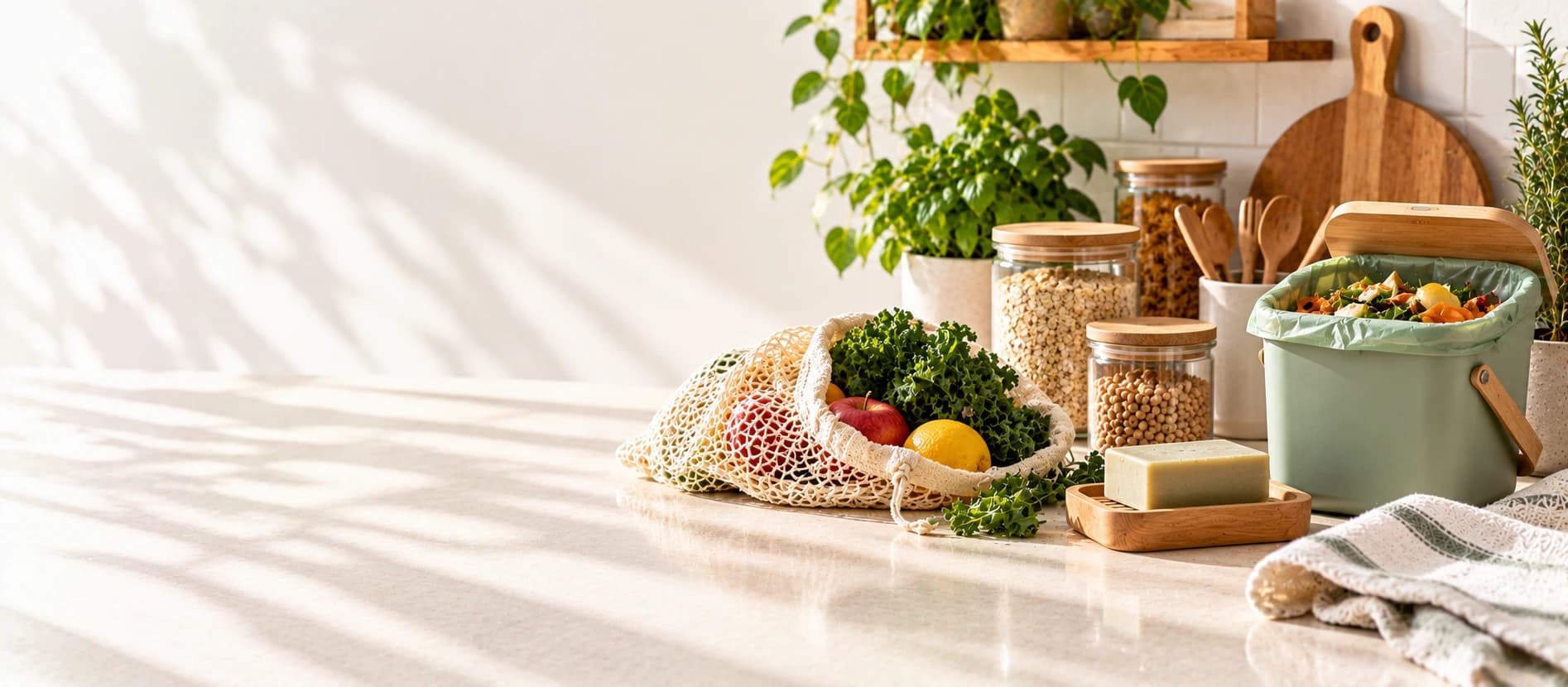
If every zero-waste guide makes it sound like you need to fit a year of trash in a jam jar by Friday, take a breath — that is not how this works, and that all-or-nothing pressure is exactly what makes most people quit in week one. Zero waste is a direction, not a destination. It is about paying attention and making the next better choice when you can, then letting those choices add up.
This is the beginner's roadmap: what it actually means, where to start, and a room-by-room plan you can follow at your own pace.
What "zero waste" actually means
Nobody sends zero to landfill. A more honest name is low-waste living: refusing what you do not need, reducing what you do, reusing what you already own, and sending as little as possible to the bin. The goal is progress, not perfection — aiming for "better this month than last" beats chasing an impossible 100%.
Why it is worth doing
- It cuts real waste. The average household bins a startling amount of plastic and food each year.
- It saves money. Reusables and refills are cheaper per use than the disposable version, and buying less is the biggest saving of all — the honest maths is in our guide to reusable vs disposable.
- It is often healthier and nicer. Fewer mystery chemicals, less clutter, and swaps that usually work better and last longer.
The 5 Rs, in one minute
The framework underneath all of it is the 5 Rs, in priority order: Refuse, Reduce, Reuse, Recycle, Rot. The order matters — recycling is near the bottom, not the answer people assume. It is worth understanding properly, so we broke it down in the 5 Rs of zero waste.
Start with a trash audit
Before you buy a single "eco" product, look at what you actually throw away for a week. Whatever fills your bin fastest — food scraps, plastic packaging, coffee cups — is your highest-impact place to start. Following your own bin beats any generic checklist.
The one-swap-at-a-time rule
The fastest way to fail is to overhaul everything at once. The habit sticks when you:
- Swap as things run out — replace the empty shampoo bottle with a bar, don't bin a half-full one.
- Change about three things per room, then live with them for a month before adding more. Fewer than that and you lose momentum; more and it gets overwhelming.
- Start with your biggest frustration, not the trendiest swap.
Your room-by-room roadmap
Work through these at your own pace — each links to a full how-to:
- Kitchen (usually the most trash): plastic-free kitchen swaps, a plastic-free pantry, and package-free grocery shopping.
- Food (the single biggest win): reduce food waste at home, plus how to store herbs and greens and root vegetables without plastic.
- Bathroom (the easiest room to start): plastic-free bathroom swaps that actually stick.
- Cleaning: homemade natural cleaning products and a refillable cleaning system.
- Laundry: organise a zero-waste laundry room.
- Your household: lower-waste habits for a baby, kids and pets.
- The other rooms: the bedroom, home office and sustainable decor.
- The bin itself: start composting — even in an apartment — to keep food scraps out of landfill.
Common beginner mistakes
- Binning usable things to "go zero waste" faster. Throwing out a working plastic container to buy a glass one is more waste. Use what you own first.
- Buying a pile of new gear at once. A "zero-waste starter kit" you never fully use creates more than it saves.
- All-or-nothing thinking. One packaged item does not ruin your week. Aim for 90%.
- Trusting "eco" labels. Plenty are greenwashing — check for real credentials, not just green packaging.
Does it cost more?
Usually the opposite, over time. The upfront cost of a reusable is offset fast because you stop rebuying the disposable — and the biggest saving is simply needing less. See the honest, item-by-item breakdown in reusable vs disposable: what actually saves you money.
Frequently asked questions
How do I start being zero waste? Do a one-week trash audit, then swap the single thing that fills your bin fastest. Change about three things, live with them for a month, then add more. Start with the bathroom or kitchen — the easiest and highest-impact rooms.
Is a zero-waste lifestyle expensive? No — it usually saves money once you factor in not rebuying disposables and simply buying less. Start with swaps you already half-own (a jar, a cloth bag) before buying anything new.
Do I have to be perfect? Not at all, and trying to be is the main reason people give up. Zero waste is about steady progress; a realistic 90% beats an unsustainable sprint at 100%.
What is the easiest first swap? A reusable water bottle, cloth shopping bags, or bar soap — cheap, instant, and things you use daily.
The bottom line
You do not need a jar of trash or a perfect pantry. Pick the one thing that annoys you most about your bin, swap it, and let the habit build from there. Work through the rooms above at your own pace, lean on the 5 Rs as your guide, and within a year your weekly bin will be noticeably lighter — without a single dramatic overhaul.
Keep reading: Zero Waste with Kids: Easy Family Habits, Zero-Waste Baby: A Guide for New Parents, and Zero-Waste Bedroom: Bedding, Wardrobe & More.


