You do not need a garden — or even a balcony — to compost. Apartment composting is one of the highest-impact zero-waste habits there is, because food scraps rotting in landfill release methane, while composted scraps become something useful. The two things that stop most people are the fear of smell and fruit flies, and both are completely avoidable once you pick the right method.
Here are the four best ways to compost in an apartment, honestly compared, so you can match one to your space.
Keep a lidded tub of scraps in the freezer. Frozen scraps do not smell, do not attract flies, and break down faster once composted. This one trick solves most apartment-composting worries on its own.
The 4 ways to compost in an apartment
1. Bokashi bin — the small-space all-rounder
A bokashi bin ferments your scraps in a sealed, airtight bucket using bran inoculated with microbes. Because it is anaerobic (no air), it is genuinely odour-free, it works in a cupboard, and — unusually — it can take meat, dairy, and cooked food that other methods cannot. The catch: bokashi does not finish the job on its own. After about two weeks of fermenting, the pickled scraps still need to be buried in soil or a planter to become true compost, or handed to someone who can.
2. Worm bin — the richest compost
A worm bin (vermicomposting) is a compact, self-contained system where composting worms turn scraps into worm castings, one of the richest soil amendments you can make. Kept balanced, it lives happily under a sink or on a shaded balcony with no smell. It will not take meat or dairy, and it needs a little more attention than a bin you ignore — but the results are unbeatable. See our full guide to starting a worm composting bin.
3. Electric composter — convenient, but read this first
Countertop electric composters (Lomi, Vitamix FoodCycler and the like) are marketed as one-button composting. Here is the honest truth: most of them do not actually make compost. They heat, dry, and grind your scraps into a dry, soil-like amendment — which still has to break down in soil before it feeds plants. They are quiet, odour-controlled, and effortless, which is a real draw in a tiny flat, but they use electricity, cost the most, and the output is a "pre-compost," not the finished article. Only newer microbial machines get close to real compost.
4. Freeze and drop off — the simplest of all
No equipment, no processing, no risk of doing it wrong: freeze your scraps and drop them at a community compost site, farmers market collection, or municipal food-waste pickup. For very small apartments, or anyone who just wants the scraps gone responsibly, this is the easiest option and it makes zero mess at home.
Which apartment composter is right for you?
| Method | Space needed | Meat & dairy? | Makes real compost? | Effort | Cost |
|---|---|---|---|---|---|
| Bokashi bin | Under-sink | Yes | After burial | Low | $ |
| Worm bin | Cupboard / balcony | No | Yes (castings) | Medium | $$ |
| Electric composter | Countertop | Some | No (pre-compost) | Very low | $$$ |
| Freeze + drop-off | Freezer | Program-dependent | Handled off-site | Very low | Free |
How to keep it odour-free and pest-free
The horror stories come from a bin that is out of balance. Avoid them by:
- Balancing greens and browns. Wet food scraps (greens) need dry material (browns) like shredded cardboard, paper, or dry leaves. Too many greens is what causes smell.
- Burying fresh scraps in a worm bin rather than leaving them on top.
- Keeping a tight lid and, for bokashi, pressing the air out.
- Freezing scraps until you are ready to add them.
Done right, a worm bin smells like damp earth and a bokashi bin smells faintly sweet-sour — neither smells of rot.
What you can and can't compost
A quick reference for apartment scraps:
- Always fine: fruit and vegetable scraps, coffee grounds and paper filters, tea, crushed eggshells, and plenty of "browns" (shredded cardboard, paper, dry leaves).
- Method-dependent: meat, dairy and cooked food go in a bokashi bin but not a worm bin; check your drop-off programme's rules too.
- Leave out: anything oily or heavily salted in a worm bin, glossy or plastic-coated paper, and compostable-labelled packaging unless your system genuinely reaches the heat it needs.
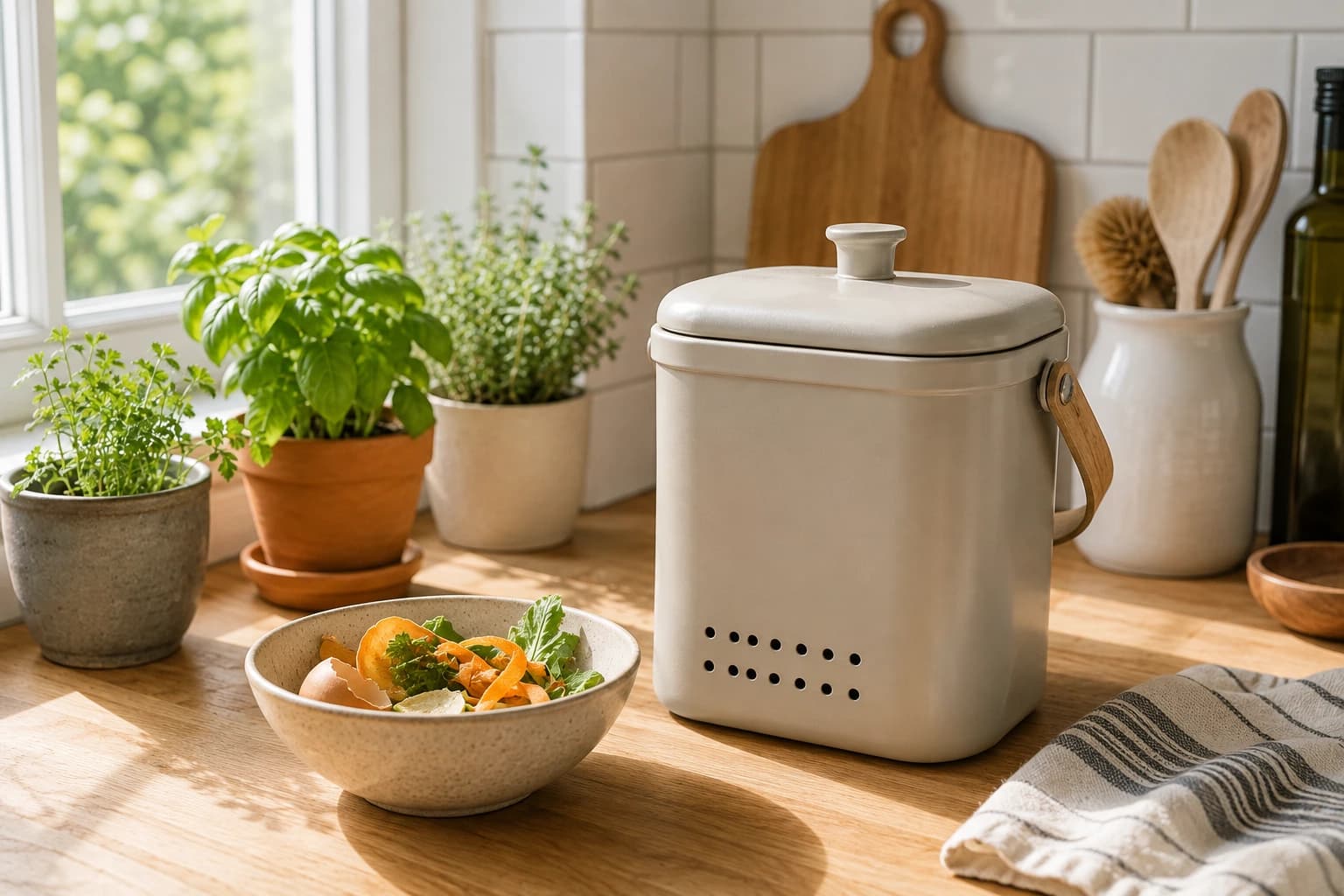
Whichever method you choose, a lidded countertop caddy makes collecting scraps mess-free between trips — line it with a certified compostable bag if you like, and freeze the scraps if you won't empty it for a few days.
Ecoxee is an Amazon Associate and may earn from qualifying purchases through these links. Learn more.

Epica Countertop Compost Bin (1.3 Gallon)
A durable stainless-steel countertop caddy with an airtight lid and charcoal filter to collect food scraps odor-free. The bin that makes kitchen composting livable, if you have somewhere to compost the scraps.
Read our full review →No garden? Here is where the compost goes
This is the question every apartment composter asks, and there are plenty of homes for finished compost:
- Houseplants and balcony pots — a little goes a long way as a top-dressing.
- A neighbour, friend, or family member with a garden.
- A community garden or allotment — most will happily take it.
- A local compost drop-off — many cities and farmers markets collect it.
Where to start
If you want it truly effortless, freeze and drop off. If you want to make your own rich compost in a small space, start a worm bin. If you cook meat and dairy and want everything handled at home, go bokashi. Any of them keeps a surprising amount of waste out of landfill — the best method is simply the one you will actually stick with.
For more small-space growing and soil ideas, browse our garden guides, and for the rest of the house, our zero-waste home guides.
Keep reading: How to Make Seed Envelopes (DIY Seed Packets), DIY Upside-Down Tomato Planter (Bucket), and Creative Layouts for a Tiny Zero-Waste Herb Garden.