Most of your cleaning cupboard can be replaced by four cheap pantry staples — and you'll skip the plastic bottles, the mystery chemicals, and the markup. Homemade cleaning products are simple, effective, and endlessly refillable, which makes them a zero-waste kitchen's best friend.
Here are the natural recipes worth keeping, the one safety rule you must never break, and exactly where to use each.
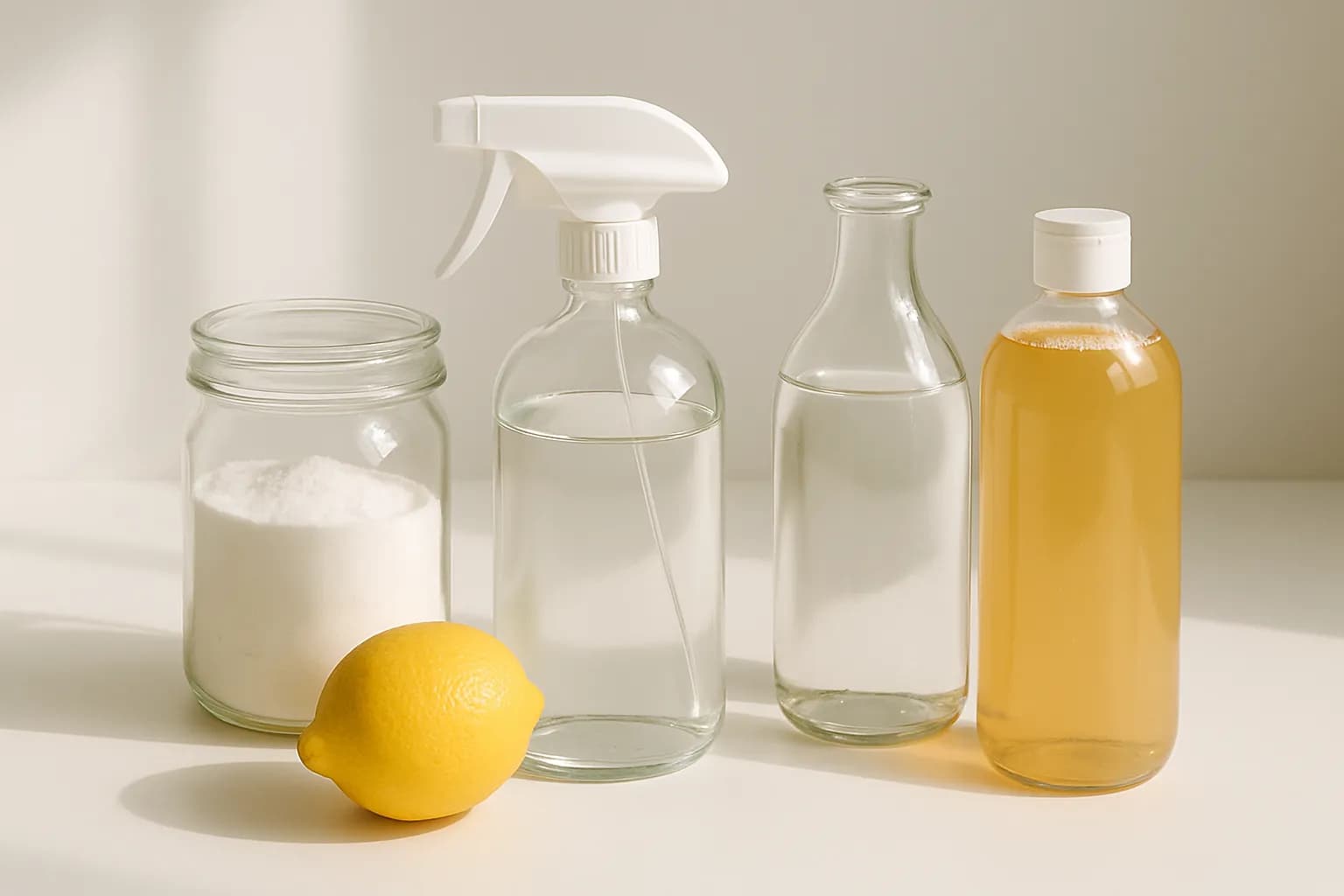
The four ingredients that do almost everything
- White vinegar — cuts grease, limescale, and shines glass.
- Baking soda — scrubs and deodorizes.
- Castile soap — a gentle all-purpose wash for stone and wood.
- Lemon — fresh scent and a mild natural degreaser.
Never mix cleaners. Never combine vinegar (or any acid) with bleach — together they release toxic chlorine gas. Never mix bleach with ammonia either. Keep any bleach-based product well away from your vinegar sprays, and don't combine homemade and store-bought cleaners.
The recipes
All-purpose spray
Mix equal parts water and white vinegar in a reusable spray bottle, with a squeeze of lemon or a few drops of essential oil. Great on glass, tile, and greasy surfaces — but not on natural stone or waxed wood (see below).
Soft scrub
Make a paste of baking soda with a little castile soap or water. Perfect for sinks, tubs, ovens, and grout.
Glass and mirror cleaner
Equal parts vinegar and water, sprayed on and buffed with a reused cloth or crumpled newspaper for a streak-free finish.
Gentle floor and general wash
A squirt of castile soap in a bucket of warm water — this is your go-to for the surfaces vinegar can't touch.
A few more useful mixes
Once you have the four staples, a couple more mixes cover the odd jobs:
- Drain refresher: pour in half a cup of baking soda, then a cup of hot vinegar, leave it to fizz for ten minutes, and flush with boiling water. (Do this as two steps, never pre-mixed in a bottle.)
- Wood conditioner: a little olive oil with a squeeze of lemon, buffed in with a cloth, revives dull wooden boards and spoons.
- Deodorising sprinkle: plain baking soda on carpets or mattresses, left an hour then vacuumed, lifts stale smells.
Where NOT to use vinegar
Vinegar is acidic, so keep it off natural stone (marble, granite, travertine), unsealed grout, and waxed or hardwood floors — it can etch and dull them. Use castile soap and water on those instead.
Ecoxee is an Amazon Associate and may earn from qualifying purchases through these links. Learn more.

Swedish Dishcloths (6-pack)
Super-absorbent cellulose-and-cotton cloths that soak up far more than a paper towel, wash clean, and compost at the end: the swap that finally replaces the paper-towel roll.
Read our full review →
Skoy Reusable Dish Scrubbers (4-pack)
Flat, quick-drying cellulose-and-cotton scrubbers that replace disposable sponges: non-scratch, dishwasher-safe, and compostable at the end of their long life.
Read our full review →Storing and labeling
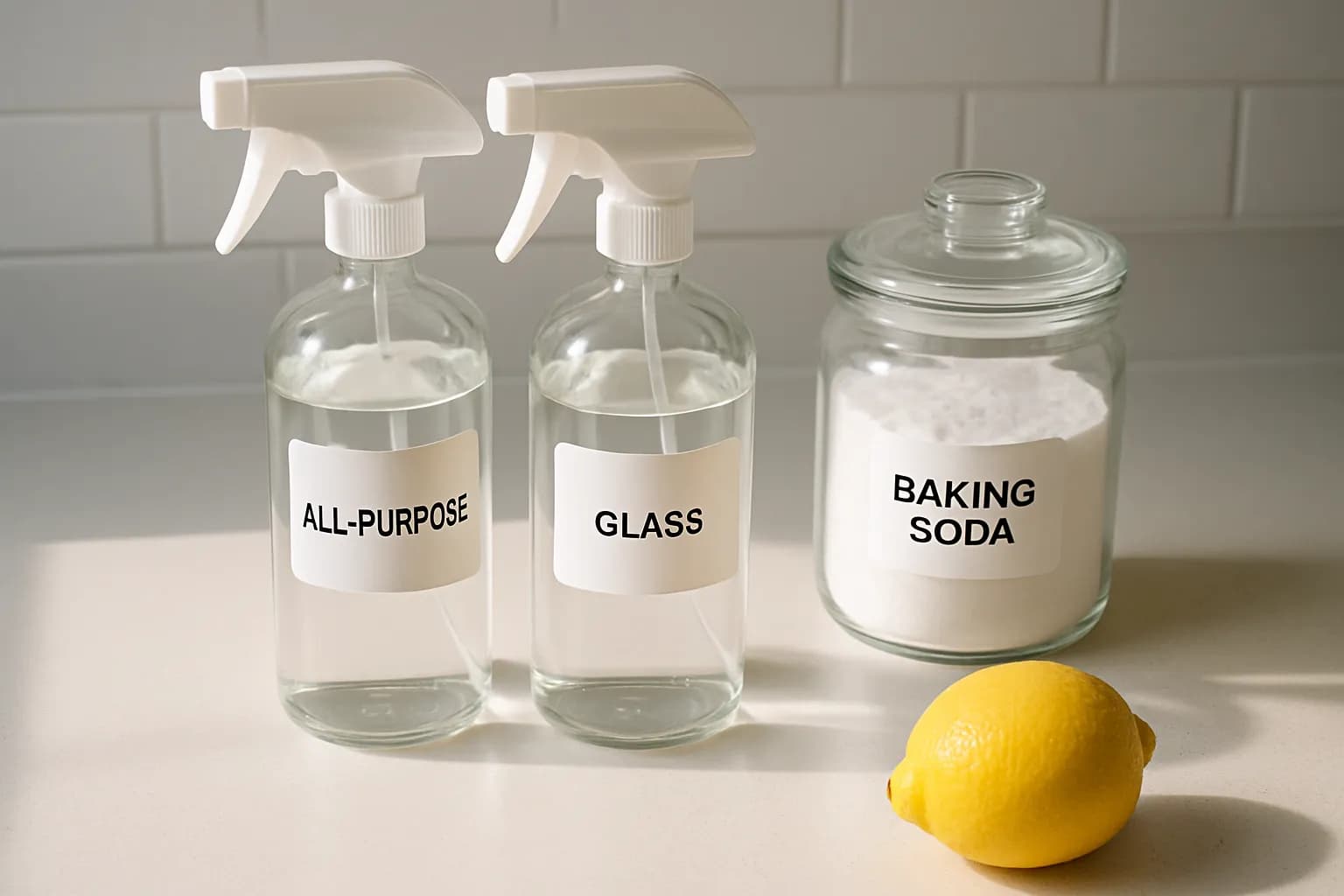
- Reuse spray bottles and label each by contents and surface.
- Keep everything out of reach of children.
- Use citrus mixes up within a few weeks — natural means they don't last forever.
Bottle them from a refill station and pair them with a plastic-free pantry system and your kitchen's plastic all but disappears.
Got a natural cleaning recipe you swear by? Share it in the comments at ecoxee.com — we're always testing new ones.
Do they disinfect?
Homemade cleaners clean well, but cleaning and disinfecting aren't the same thing — most natural ingredients don't disinfect to a registered standard. If you're wondering when that actually matters, see do natural cleaners actually disinfect?
Keep reading: How to Make Reusable Beeswax Wraps at Home, How to Store Herbs & Greens Without Plastic, and Plastic-Free Bathroom Swaps That Actually Stick.