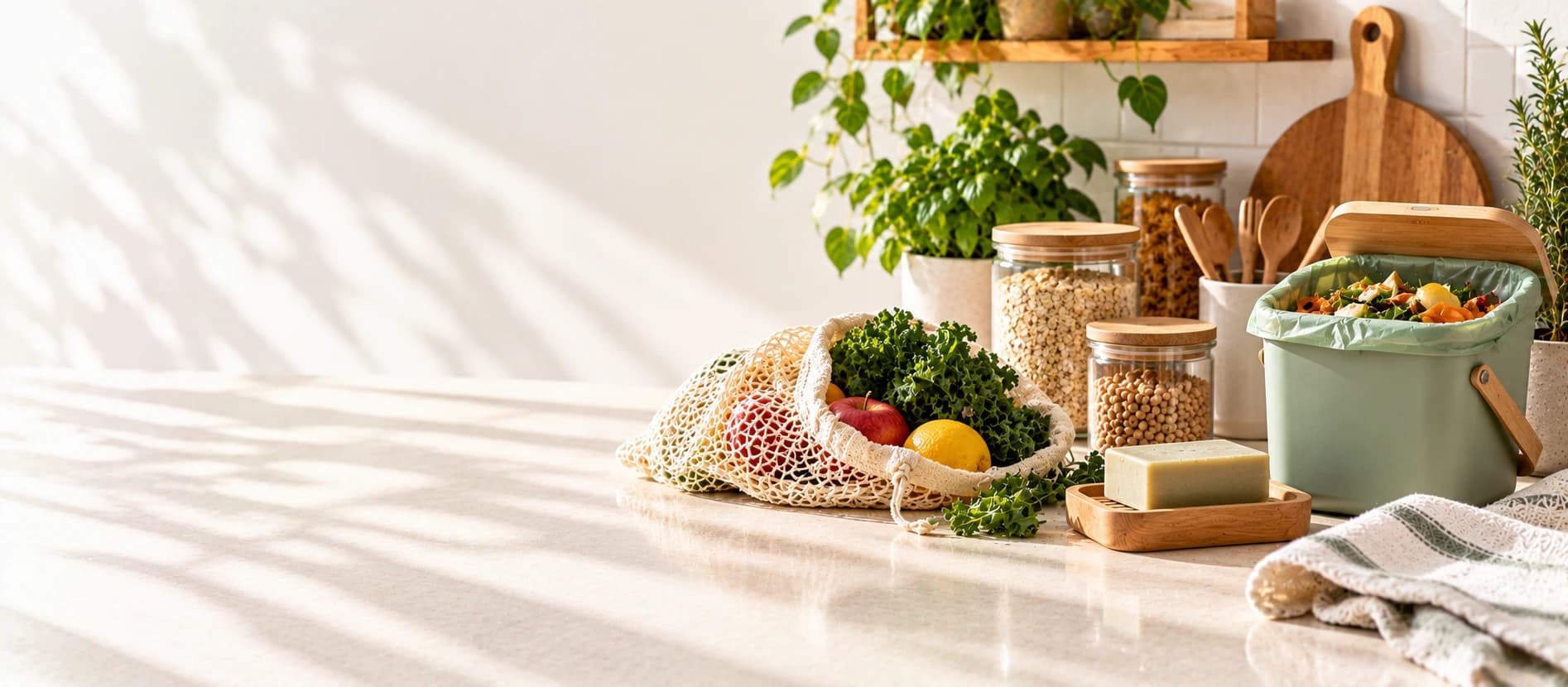
Home decor is one of the most throwaway categories going — cheap, trend-driven homeware that's here this season and landfill the next. Decorating sustainably is easy on both the planet and your wallet, because the greenest choices (secondhand, natural, upcycled) are also the cheapest and the most characterful. Here's how to style a space without the waste.
Buy secondhand and vintage
The single best move — and it gives a room personality no flat-pack can:
- Charity shops, marketplaces, flea markets and vintage stores are full of quality homeware for a fraction of new.
- Older pieces are often better made — solid wood, real ceramic, proper glass.
- See how to shop secondhand for finding the good stuff.
Choose natural materials
When you do buy new, favour materials that age well and biodegrade:
- Wood, wool, cotton, linen, ceramic, glass, rattan and jute over plastic and MDF.
- Natural textures make a space feel warm and last far longer than synthetic trend pieces.
Upcycle and DIY
Transform what you (or the charity shop) already have:
- A coat of paint revives tired furniture and frames.
- Repurpose jars, crates, ladders and offcuts into storage and display — our upcycling section is full of ideas.
- Thrifted art and textiles add character for pennies.
Decorate with plants
Living decor is genuinely zero-waste and improves as it grows — houseplants, herbs on a windowsill, foraged branches or dried flowers all style a space with nothing to throw away.
Buy timeless, not trendy
The most sustainable decor decision is to stop chasing trends. Trend-led homeware is designed to be replaced; choosing pieces you'll still love in ten years avoids the churn entirely. Run purchases through the questions to ask before you buy, and remember Reduce and Reuse sit at the top of the 5 Rs.
Frequently asked questions
How can I decorate my home sustainably on a budget? Buy secondhand and vintage, choose natural materials when buying new, upcycle what you have with paint and repurposing, and decorate with plants. All are cheaper than new trend-led homeware.
Is secondhand furniture better for the environment? Yes — it reuses something already made, keeps it out of landfill, and older pieces are often more durable. It's also far cheaper and full of character.
What materials are most sustainable for decor? Wood, wool, cotton, linen, ceramic, glass, rattan and jute — natural materials that last and biodegrade, over plastic and MDF that break down and can't be recycled.
How do I avoid throwaway decor? Buy timeless pieces rather than trends, choose quality over cheap, upcycle before replacing, and pause before purchases so your style doesn't churn with the seasons.
The bottom line
Sustainable decorating isn't expensive — it's the opposite of the fast-homeware treadmill. Shop secondhand, favour natural materials, upcycle and add plants, and buy timeless over trendy. You'll end up with a warmer, more personal home for less money and almost no waste — the rare case where the greenest choice is also the cheapest and the nicest.
Keep reading: The 5 Rs of Zero Waste (Explained Simply), What Is Greenwashing (and How to Spot It), and What the Recycling Numbers (1-7) Mean.