Root vegetables come home in plastic, sweat in the crisper drawer, and sprout or rot before you get to them. The fix is almost embarrassingly simple: store root vegetables without plastic bags and they last for weeks, not days. Plastic traps moisture and speeds spoilage — breathable storage does the opposite.
Here's how to keep potatoes, carrots, onions, and the rest firm and fresh the zero-waste way, no crisper drawer required.
The golden rule: cool, dark, dry, airy
Root vegetables want the conditions of an old-fashioned root cellar — cool (ideally around 45–55°F / 7–13°C), dark, and with air moving around them. Plastic bags do the exact opposite: they trap moisture and warmth, which is what turns a firm potato into a sprouting, soft one.
What to store them in
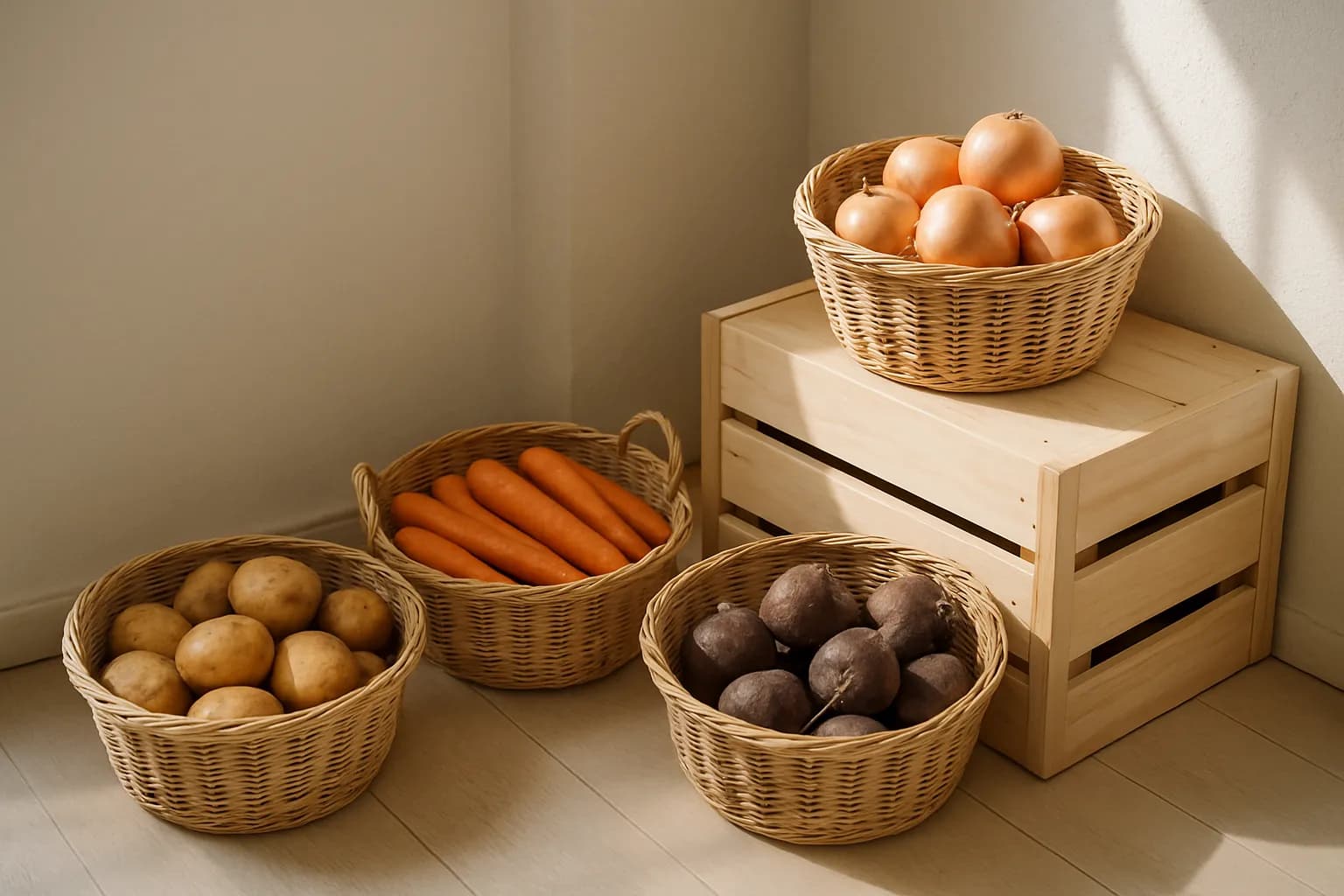
- Woven baskets or wooden or cardboard crates — air flows through.
- Paper bags with the top rolled, not sealed.
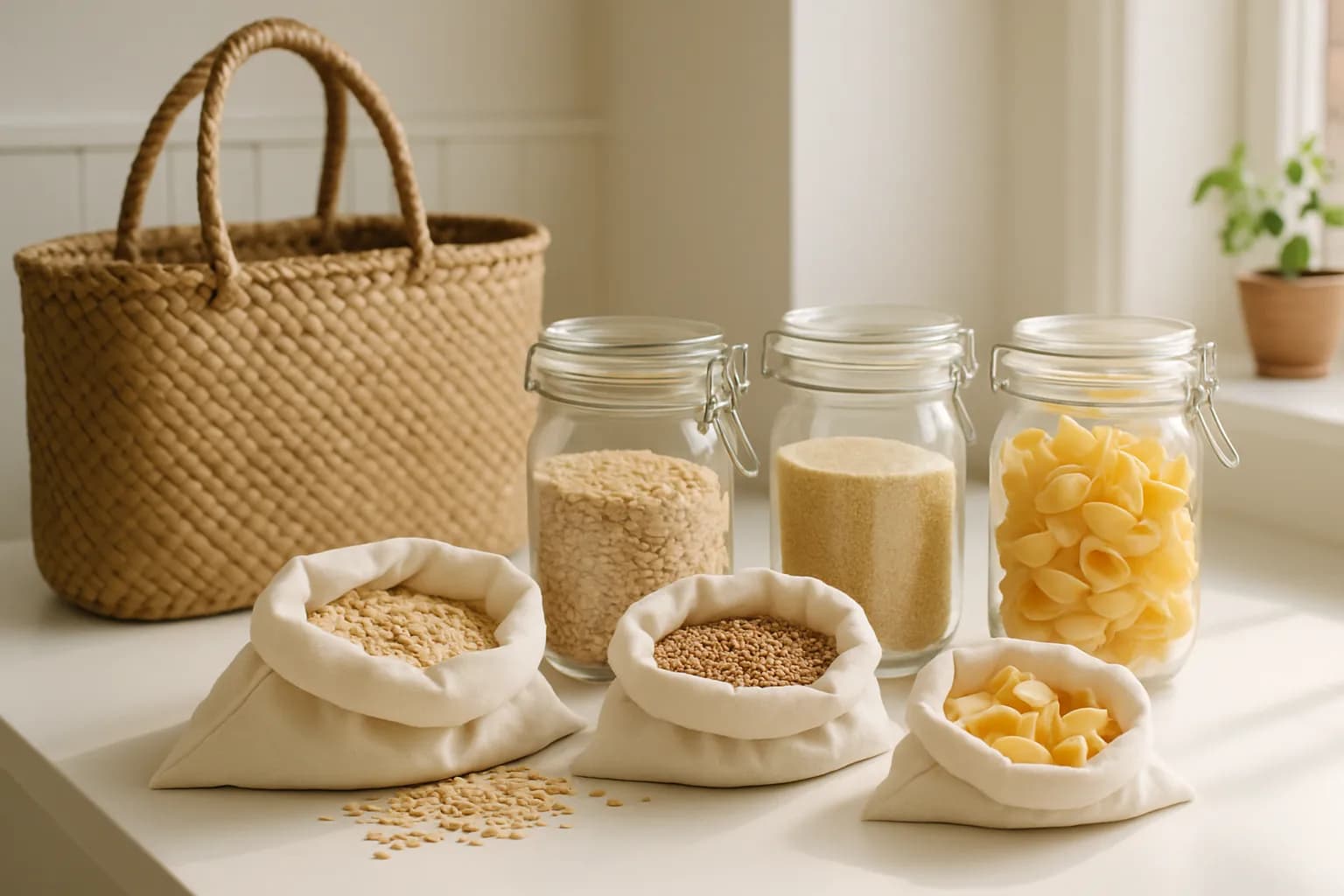
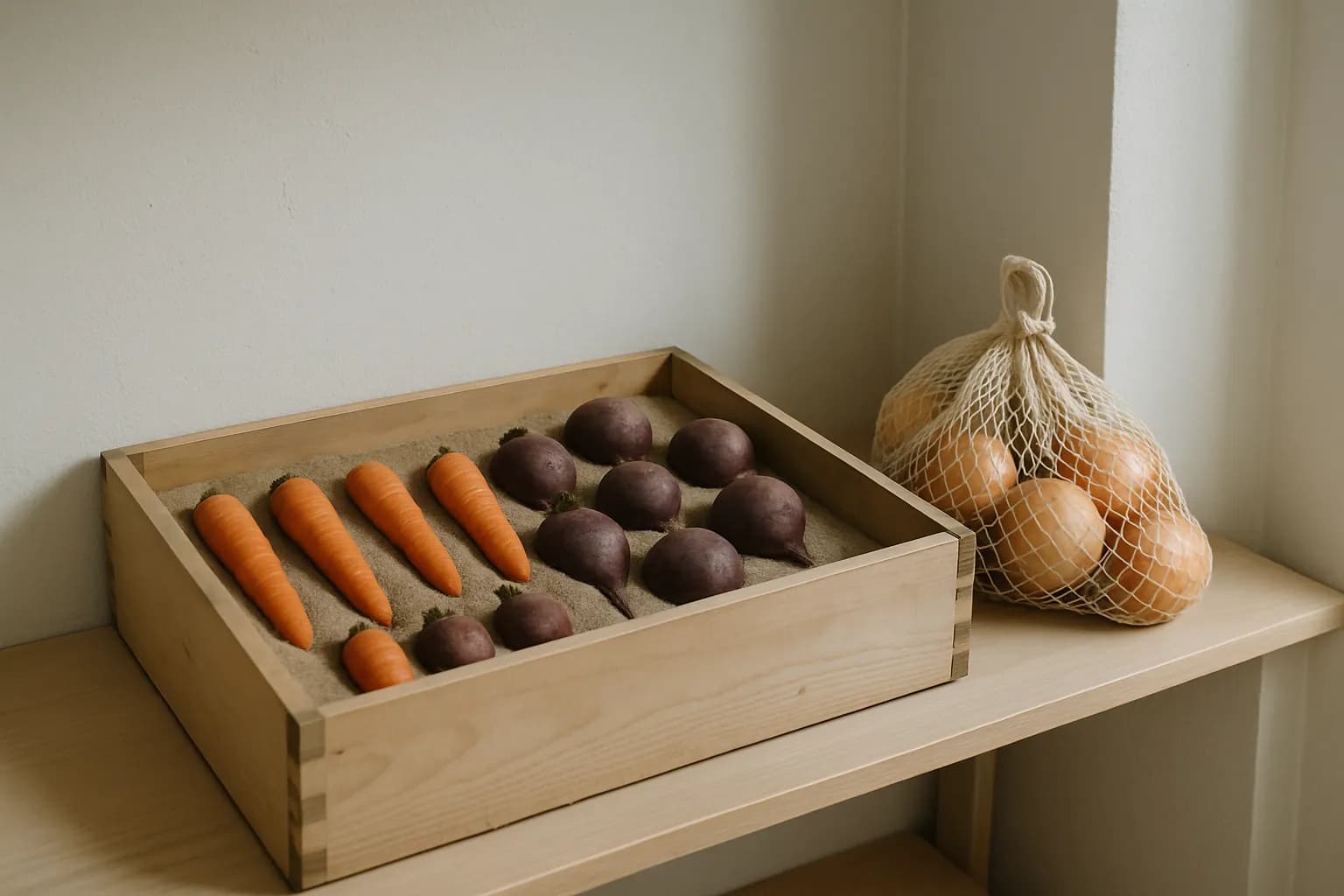
- Mesh produce bags or a hessian sack for onions and garlic.
- Ventilated bins in a cool cupboard.
Anything breathable beats sealed plastic.
Ecoxee is an Amazon Associate and may earn from qualifying purchases through these links. Learn more.

Organic Cotton Mesh Produce Bags (13-pack)
A washable set of organic-cotton mesh bags that replace the flimsy plastic produce bags at the grocery store. One of the cheapest, easiest zero-waste swaps, and one you will use every week.
Read our full review →Step by step
- Sort first. Pull out any bruised or damaged pieces — one soft potato spoils its neighbors. Use those up first.
- Don't wash before storing. A little soil actually protects the skin; wash right before you cook.
- Keep the culprits apart. Store potatoes and onions in separate spots — kept together, each makes the other spoil faster.
- Give them air. Loose in a breathable container, not piled airtight in a sealed tub.
- Find the right spot. A pantry, cellar, or low cupboard away from the oven's heat. Skip the fridge for potatoes, onions, and winter squash.
Quick guide by vegetable
- Potatoes: cool, dark, airy basket or paper sack. Never the fridge (cold turns their starch to sugar), never next to onions.
- Onions & garlic: cool, dry, and airy — a hanging mesh bag is ideal. Keep away from potatoes.
- Carrots, beets, parsnips: twist off the leafy tops (they draw out moisture), then store in damp sand or a container in a cool spot; a damp cloth in the fridge works too.
- Sweet potatoes & winter squash: room temperature and dark. The fridge shortens their life.
- Ginger & turmeric: cool and dry for a couple of weeks, or freeze for months.
How long they'll keep
Stored right, root veg outlast the fridge by weeks:
- Potatoes: 2-3 months in a cool, dark, airy spot.
- Onions & garlic: 3-6 months hung somewhere cool and dry.
- Carrots, beets, parsnips: several weeks in a container, or months layered in damp sand.
- Winter squash & sweet potatoes: 1-3 months at room temperature.
- Ginger & turmeric: a couple of weeks cool and dry, or months frozen.
Reading the signs
- Sprouting or green potatoes mean too much warmth or light — move them somewhere cooler and darker.
- Slimy or soft means too much moisture — improve airflow and check for a hidden bad one.
- Shriveled means too dry — a damp-sand crate fixes it.
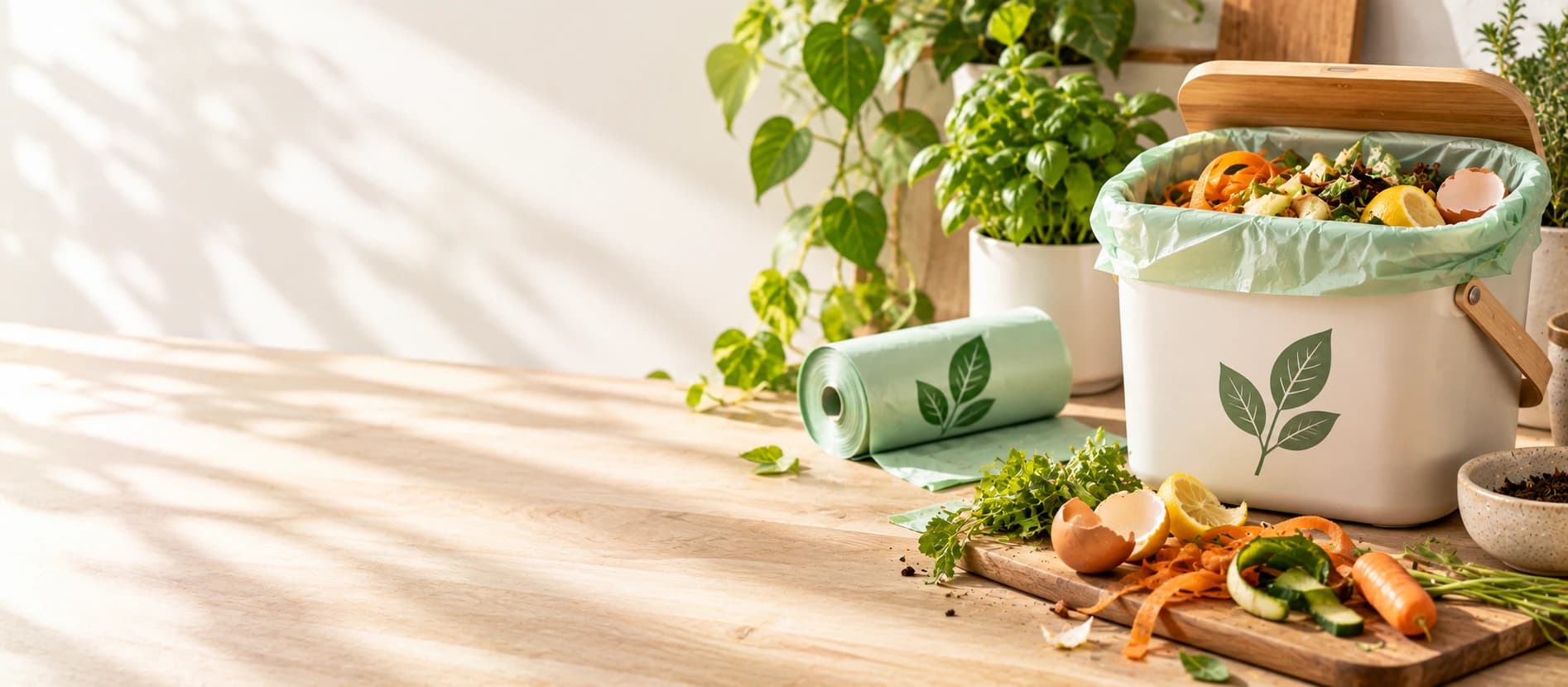
Trimmings and peels don't have to be waste, either — they're the perfect first customers for a countertop compost bin.
Fresher veg, less plastic
Ditching the plastic bag isn't just greener — it genuinely makes your vegetables last longer, which means less food waste and fewer trips to the shop. A basket and a cool cupboard do what a whole drawer of plastic never could.
Got a storage trick that keeps your veg going? Share it in the comments at ecoxee.com — your grandmother's method might be the best one yet.
Keep reading: A Beginner's Guide to Package-Free Grocery Shopping, Are Compostable Plastics Actually Eco-Friendly?, and Common Recycling Myths, Debunked.