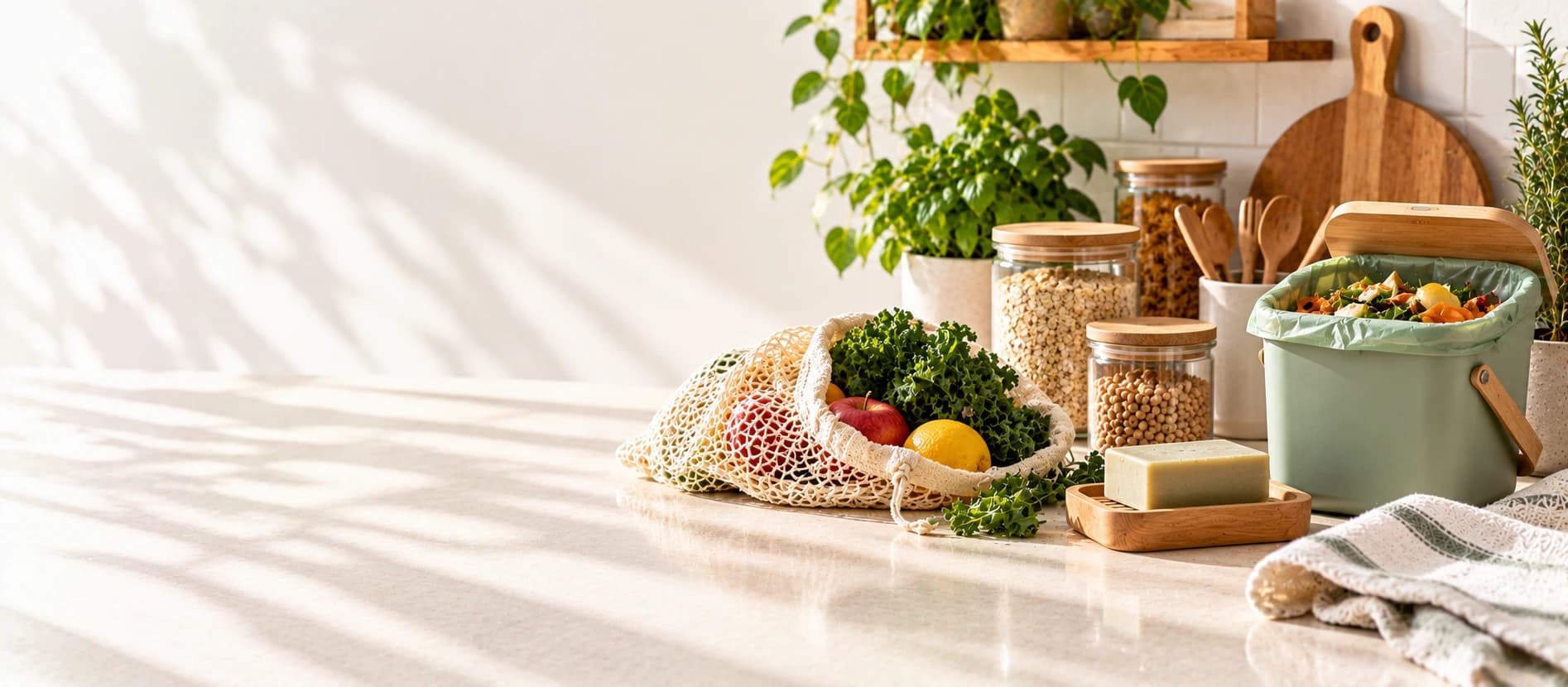
If a product is wrapped in leaf imagery, earthy colours and words like "natural" and "eco-friendly," your instinct is to trust it. That instinct is exactly what greenwashing exploits. Learning to see through it is the single most useful skill for shopping sustainably — and it's the lens we apply to every product on this site.
What greenwashing is
Greenwashing is when a company spends more effort looking environmentally friendly than actually being it — using vague claims, imagery and selective facts to seem greener than the product really is. It works because we want to make the better choice, and a green label lets us feel we have without checking.
The common tricks
- Vague, undefined words. "Eco-friendly," "green," "natural," "non-toxic," "conscious" — none of these are regulated or mean anything specific on their own.
- Green imagery. Leaves, earth tones and nature photos on packaging that has nothing to do with the product's actual footprint.
- The hidden trade-off. Highlighting one green feature (recyclable packaging) while ignoring a much bigger problem (a fast-fashion product inside).
- "Free from" theatre. Boasting a product is free from something that was never in that category anyway.
- Fake or self-made labels. Official-looking badges the company invented, with no third-party audit behind them.
- Vague "biodegradable" or "compostable" claims with no certification — see compostable vs biodegradable.
- Carbon-neutral by offset. Claiming neutrality by buying offsets rather than actually cutting emissions.
The words that mean nothing
Treat these as marketing until proven otherwise, because no regulator defines them for general use: eco-friendly, natural, green, non-toxic, sustainable, conscious, clean. A product can legally say all of them and change nothing.
The labels that do mean something
Real credentials are third-party certified and audited — not self-declared. Look for names like:
- B Corp — whole-company social and environmental accountability.
- Ecocert / COSMOS — organic and natural cosmetics standards.
- Leaping Bunny — genuinely cruelty-free.
- EWG Verified / MADE SAFE — ingredient safety.
- FSC — responsibly-sourced wood and paper.
- BPI / OK Compost HOME — genuine compostability (see the recycling guide for why this matters).
How to spot it in three questions
- Certified by whom? A specific, independent certification beats any adjective.
- What about the whole product? One green feature doesn't offset a dirty rest.
- Is the claim specific and measurable? "30% recycled content" means something; "eco-friendly" doesn't.
The honest takeaway
The most sustainable move isn't finding the perfect "green" product — it's buying less and reusing more in the first place, and treating every eco claim with friendly skepticism. When you do buy, look past the leaf imagery to the certifications and the specifics. (It's why our reviews rate products on real credentials, and say so plainly when a brand is "responsible" rather than genuinely green.)
Frequently asked questions
What is greenwashing in simple terms? It's when a company markets itself as more environmentally friendly than it actually is — using vague claims, nature imagery and selective facts to seem green without the substance to back it up.
How can I tell if a product is really eco-friendly? Ignore adjectives like "natural" and "eco" and look for third-party certifications (B Corp, Ecocert, FSC, Leaping Bunny), specific measurable claims, and honesty about the whole product, not just one feature.
Are "natural" and "non-toxic" regulated terms? No — for most products they have no legal definition, so a brand can use them freely. They're marketing signals, not guarantees.
Is carbon-neutral the same as sustainable? Not necessarily. Many "carbon-neutral" claims rely on buying offsets rather than actually reducing emissions, so treat them with the same scrutiny as any other green claim.
The bottom line
Greenwashing thrives on vague words and pretty packaging. Ignore the adjectives, look for audited third-party certifications and specific numbers, judge the whole product not one feature — and remember that reducing and reusing beats buying anything labelled "green." Skepticism isn't cynicism here; it's how you actually shop sustainably.
Keep reading: What the Recycling Numbers (1-7) Mean, Zero Waste for Beginners: How to Start, and Zero Waste with Kids: Easy Family Habits.