The laundry room is a quiet plastic factory — jugs of detergent, throwaway dryer sheets, single-use everything. But a zero-waste laundry room is one of the easiest spaces to green, because the swaps are cheap, they last for years, and most of them clean just as well.
Trade the plastic jugs for refillable jars and a few reusable tools, and you'll cut waste, save money, and end up with a calmer, better-looking room. Here's how to set one up.
Swap the detergent
The single biggest win. Instead of plastic jugs:
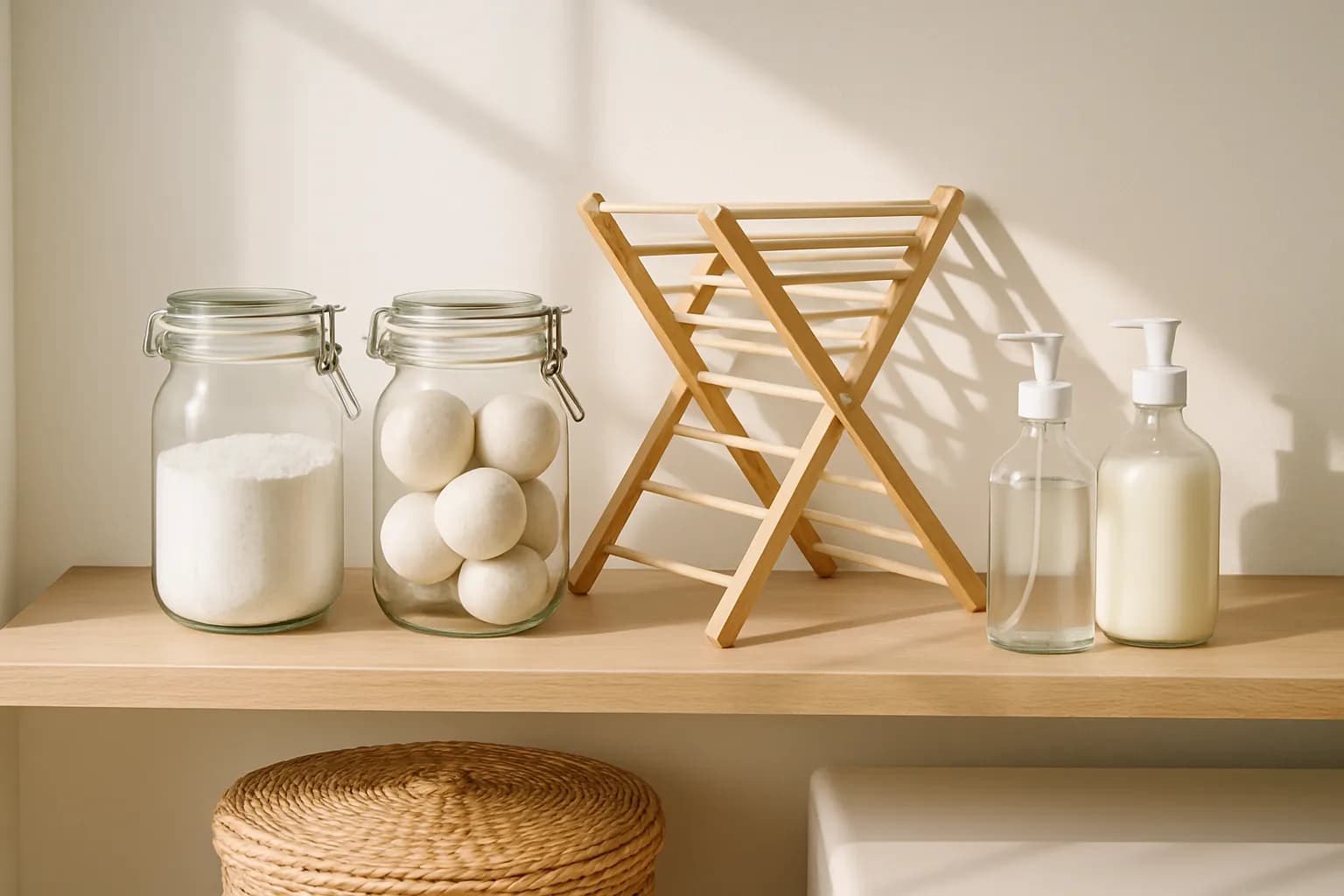
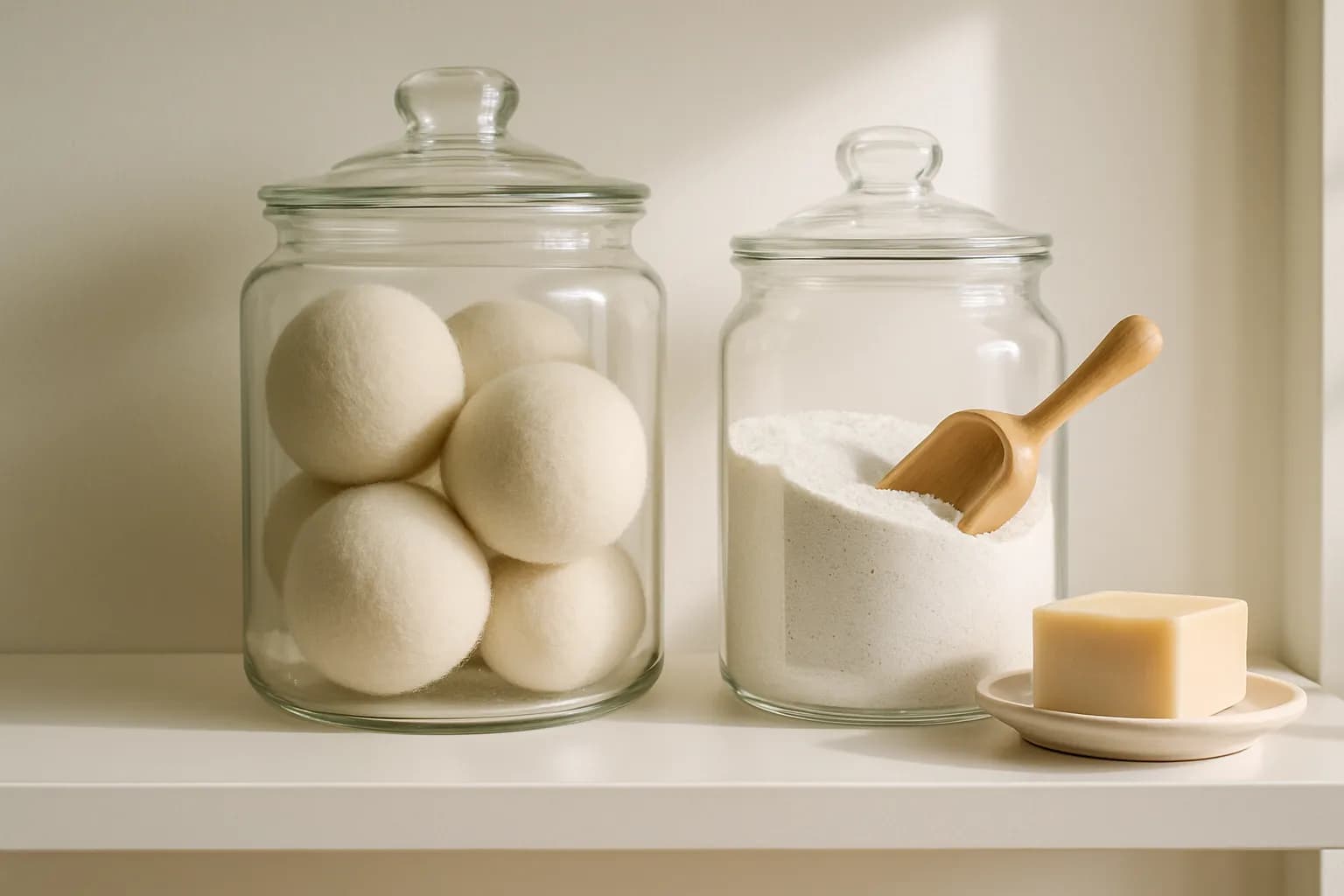
- Powder detergent decanted into a glass jar with a scoop.
- Detergent strips or sheets — lightweight, plastic-free packaging.
- Soap nuts for a truly minimalist, compostable option.
- A local refill station if you have one, topping up the same bottle forever.
Ditch single-use dryer sheets
Wool dryer balls replace an entire box of dryer sheets, soften naturally, cut drying time, and last for years. Add three drops of essential oil to one ball if you want a light scent.
Ecoxee is an Amazon Associate and may earn from qualifying purchases through these links. Learn more.

Friendsheep Wool Dryer Balls (3-pack)
Handmade organic-wool balls that soften laundry, cut static, and shorten drying time, replacing both single-use dryer sheets and plastic-bottled fabric softener.
Read our full review →Line-dry when you can
A wooden drying rack or a retractable line saves energy, is gentler on fabrics, and makes clothes last longer. Even drying half your loads makes a real dent.
Freshen and treat stains naturally
- A bar of stain-remover soap instead of a plastic spray bottle.
- White vinegar in the rinse as a natural softener that won't coat towels.
- Baking soda in the wash to boost freshness.
- A refillable spray bottle of your own pre-treat mix.
Organize the space so you'll use it
- Glass jars for powder, pegs, and dryer balls, lined up on a shelf.
- A woven hamper instead of a plastic basket.
- Hooks for the drying rack, brushes, and bags.
- Label simply and keep everything visible — the swaps only stick if they're easier to reach than the old plastic.
Small habits that seal it
- Wash full loads in cold water — saves energy and is kinder to clothes.
- Use a microfiber-catching wash bag for synthetics to keep plastic fibers out of the water.
- Air garments between wears so you wash less in the first place.
Which swaps make the biggest difference
If you do nothing else, start here, in order of impact:
- Switch the detergent away from plastic jugs (strips, powder in a jar, or a refill station) — it is the biggest, most frequent source of laundry-room plastic.
- Swap dryer sheets for wool dryer balls — one purchase replaces box after box, and they cut drying time too.
- Line-dry when you can — the single biggest energy saving, and it is free.
- Add a microfibre-catching wash bag for synthetics — small effort, keeps plastic fibres out of the water. (How to reduce microplastics from laundry.)
You do not have to do all four at once; each one stands on its own.
A laundry room that pays you back
Zero-waste laundry is the rare upgrade that's cheaper, cleaner, and prettier all at once. Set it up once and it quietly saves you money — and a mountain of plastic — load after load.
Got a favorite laundry swap? Share it in the comments at ecoxee.com — we're always hunting for the next one that actually works.
Keep reading: How to Store Root Vegetables Without Plastic Bags, A Beginner's Guide to Package-Free Grocery Shopping, and Are Compostable Plastics Actually Eco-Friendly?.