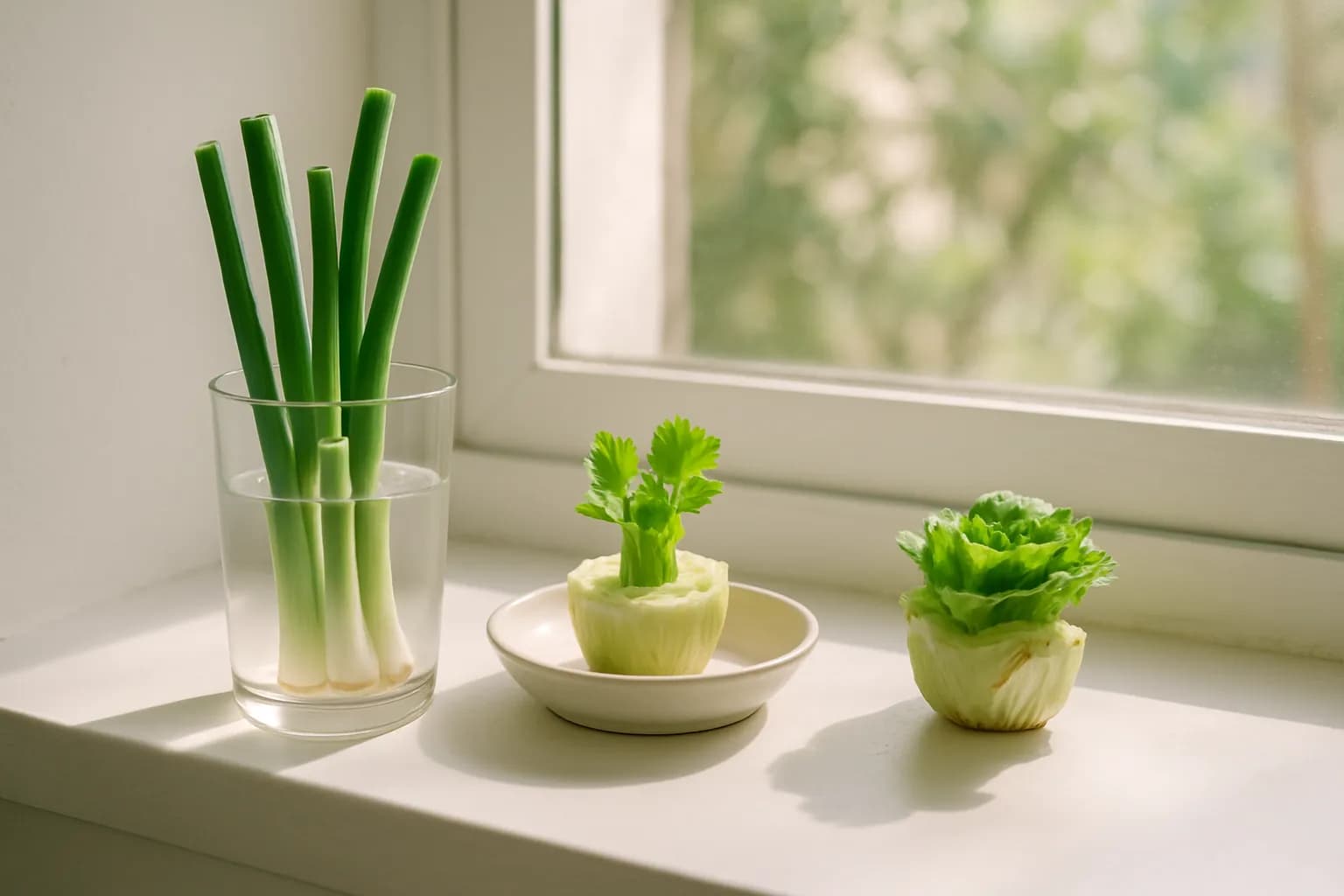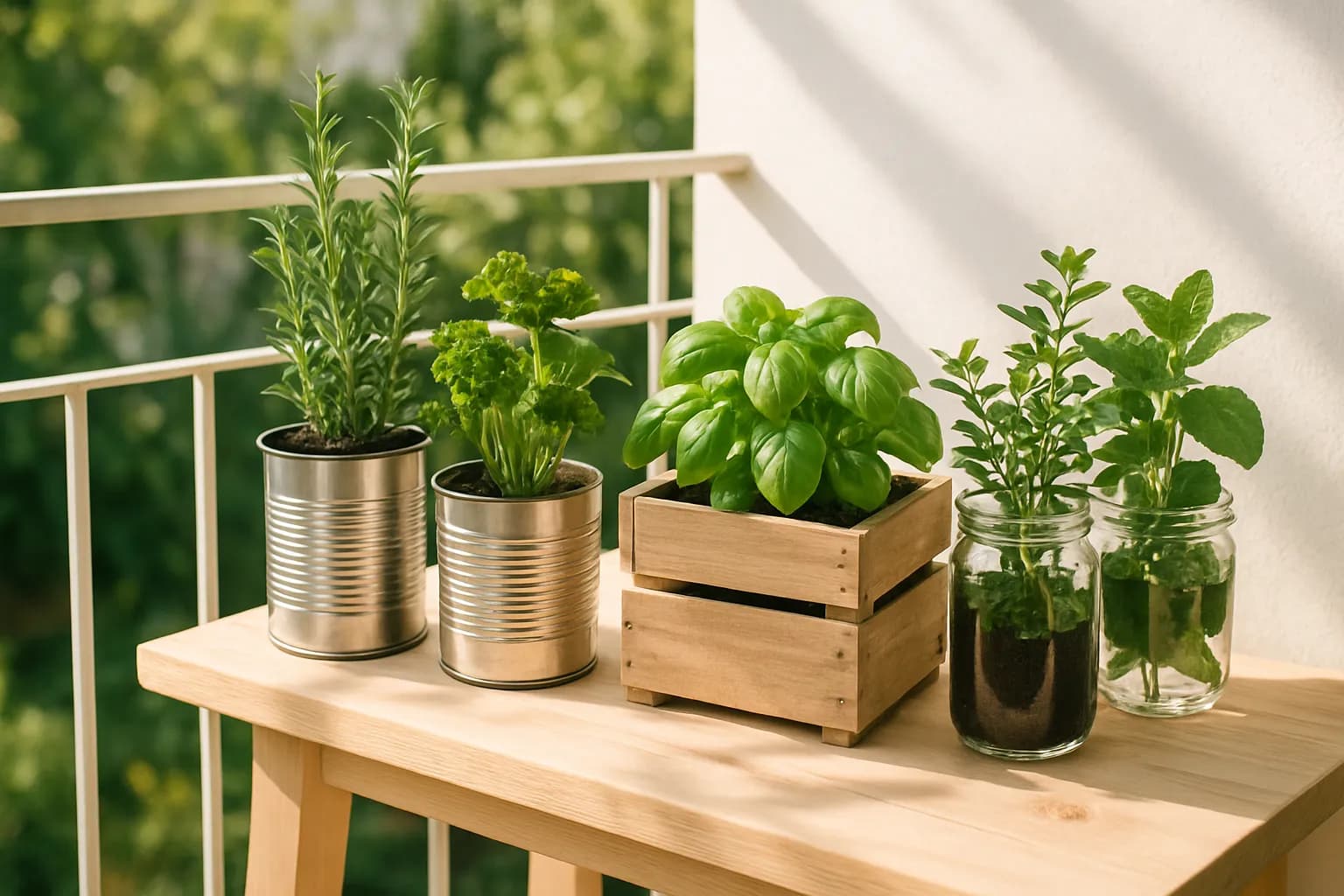
You don't need a yard to grow herbs — a sunny windowsill, a railing, or a square of balcony is plenty. A tiny zero-waste herb garden built from upcycled containers puts fresh basil and mint at arm's reach, cuts packaging waste, and looks gorgeous in a small space.
Here are creative layouts that squeeze a surprising amount of green into almost no room — without buying a single plastic pot.
Zero-waste from the start
- Grow in things you already have: upcycled milk jugs, tin cans, glass jars, and wooden crates.
- Start from saved seeds or split a single supermarket herb pot into several.
- Feed with homemade compost, and snip-and-come-again so nothing goes to waste.
Layout 1: The windowsill row
A line of matching upcycled tins or jars along the sill, grouped by how much sun and water each herb wants. Perfect for renters and tiny kitchens — everything within reach of the chopping board.
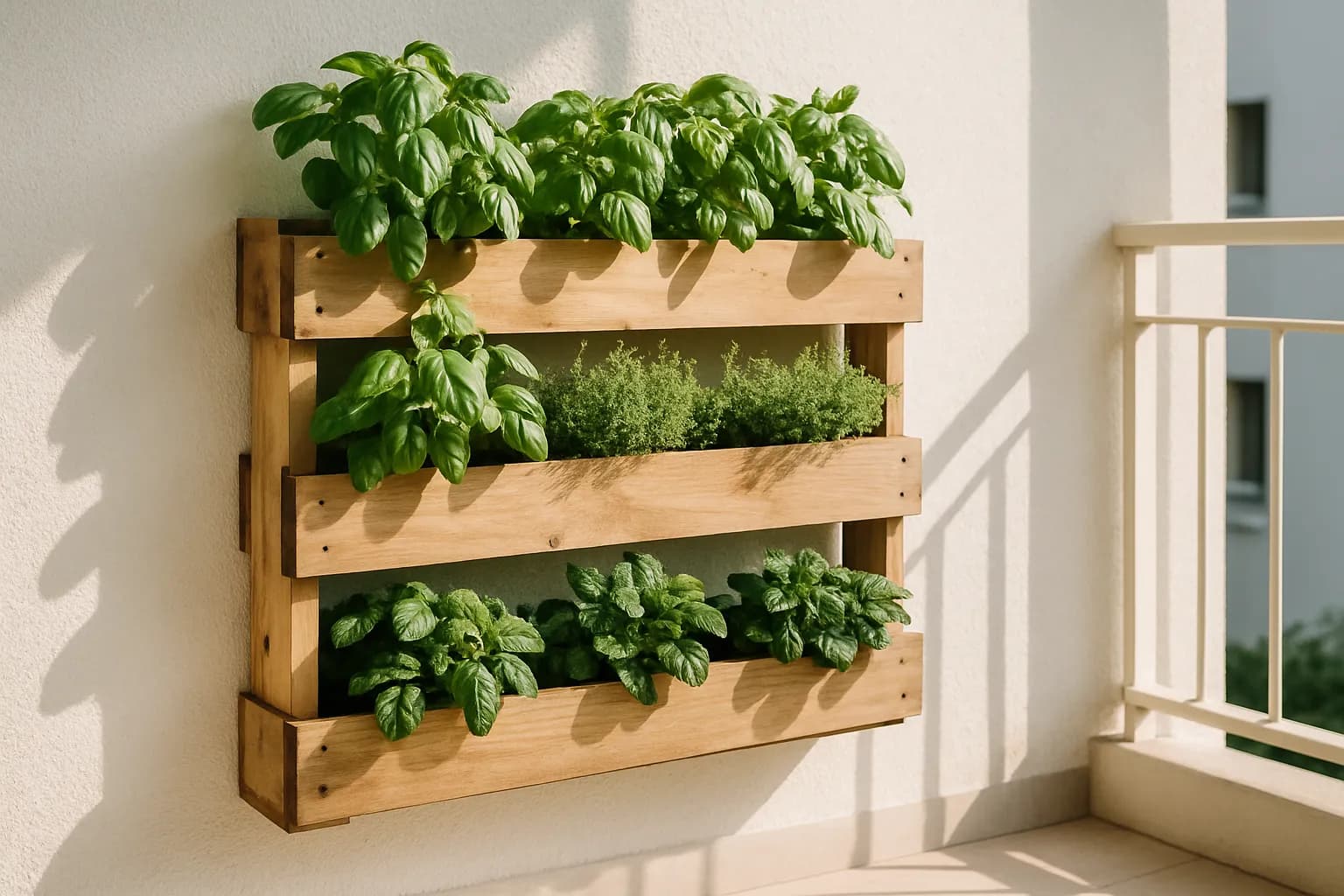
Layout 2: The vertical pallet or ladder
Lean an upcycled pallet against a sunny wall, or set crates on the rungs of an old stepladder. You grow up instead of out — ideal for balconies and narrow patios.
Layout 3: The hanging tier
Suspend jars, a rail planter, or a tiered t-shirt-yarn plant hanger to free up every inch of floor and counter space.
Layout 4: The single crate herb box
Line one wooden crate with cloth and plant a mixed "kitchen crew" — the herbs you cook with most, all in one grab-and-snip box.
Group herbs by what they want
This is the secret to herbs that actually thrive together:
- Mediterranean herbs (rosemary, thyme, oregano, sage) want full sun, dry-ish soil, and sharp drainage — group them and resist overwatering.
- Leafy, thirsty herbs (basil, parsley, cilantro, chives) want richer soil and more water.
- Vigorous spreaders (mint, lemon balm) belong in their own container.
The easiest herbs to start with
If you are new to growing, start with the herbs that all but grow themselves:
- Mint — almost impossible to kill (keep it in its own pot).
- Chives — hardy, come back year after year, happy in a small container.
- Basil — fast from seed and loves a warm windowsill.
- Parsley — forgiving and productive, and tolerates a little shade.
Starting from seed is the cheapest, lowest-waste way in, and a few zero-waste tools make it far more reliable: biodegradable pots you plant straight into the container, coir pellets instead of peat, and a little bottom heat to speed germination.
Ecoxee is an Amazon Associate and may earn from qualifying purchases through these links. Learn more.

Compressed Coco Coir Seed-Starting Pellets (55-pack)
Compressed coconut-fibre pellets that expand with water into ready-to-sow plugs: a peat-free, renewable seed-starting medium that skips the plastic pots.
Read our full review →
Esschert Design Wooden Paper Pot Maker
A simple wooden tool that rolls old newspaper into biodegradable seedling pots you plant straight into the ground: pot and all, with zero plastic and zero waste.
Read our full review →
VIVOSUN Waterproof Seedling Heat Mat
A waterproof heat mat that keeps seed trays warm for faster, more reliable germination: a genuinely useful tool for early-season sowing, though it does use electricity.
Read our full review →Keeping it thriving in a small space
- Chase the sun — most herbs want six or more hours; a south-facing spot is gold.
- Add drainage — upcycled containers need holes, or a pebble layer and a careful hand with watering for jars.
- Harvest often — regular snipping is what keeps herbs bushy and productive.
- Rotate the pots so every side gets its turn toward the light.
A tiny herb garden is the perfect first step into growing your own — cheap, fast, and useful every single day.
Set one up in a tricky little space? Share your layout in the comments at ecoxee.com — the more creative the container, the better.
Keep reading: How to Build a Small Backyard Hugelkultur Bed, How to Dry and Save Tomato Seeds for Next Year, and Natural Ways to Keep Pests Out of a Raised Garden Bed.