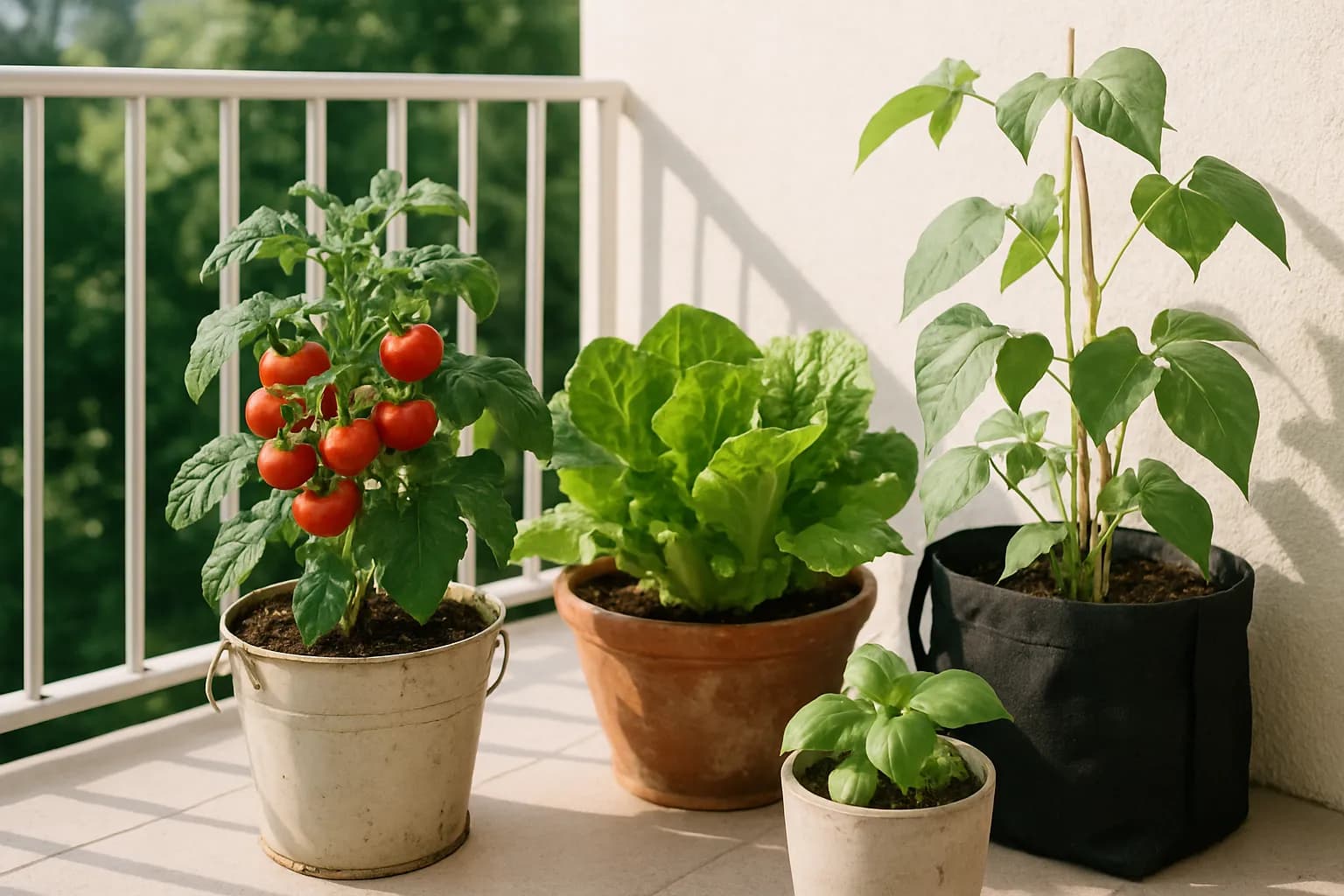
No garden? No problem. Container gardening turns a balcony, doorstep, or sunny windowsill into a surprisingly productive veg patch — you can grow tomatoes, salad, beans, and more in pots, buckets, and upcycled containers.
It's the perfect way to grow your own vegetables in small spaces, with less weeding and total control over your soil. Here's how to start a container veg garden that actually feeds you.
The basics (get these right)
- Drainage holes are essential — roots rot in waterlogged pots.
- Size matters — bigger pots hold more water and grow bigger plants; match the pot to the crop.
- Use potting mix, not garden soil, which is too heavy and compacts.
- Containers dry out fast — check the water daily in hot weather.
- Chase the sun — most veg want six or more hours a day.
- Feed regularly — potting mix runs out of nutrients within weeks.
Best vegetables for containers
- Salad leaves and lettuce — shallow, fast, and cut-and-come-again.
- Radishes — quick and almost foolproof.
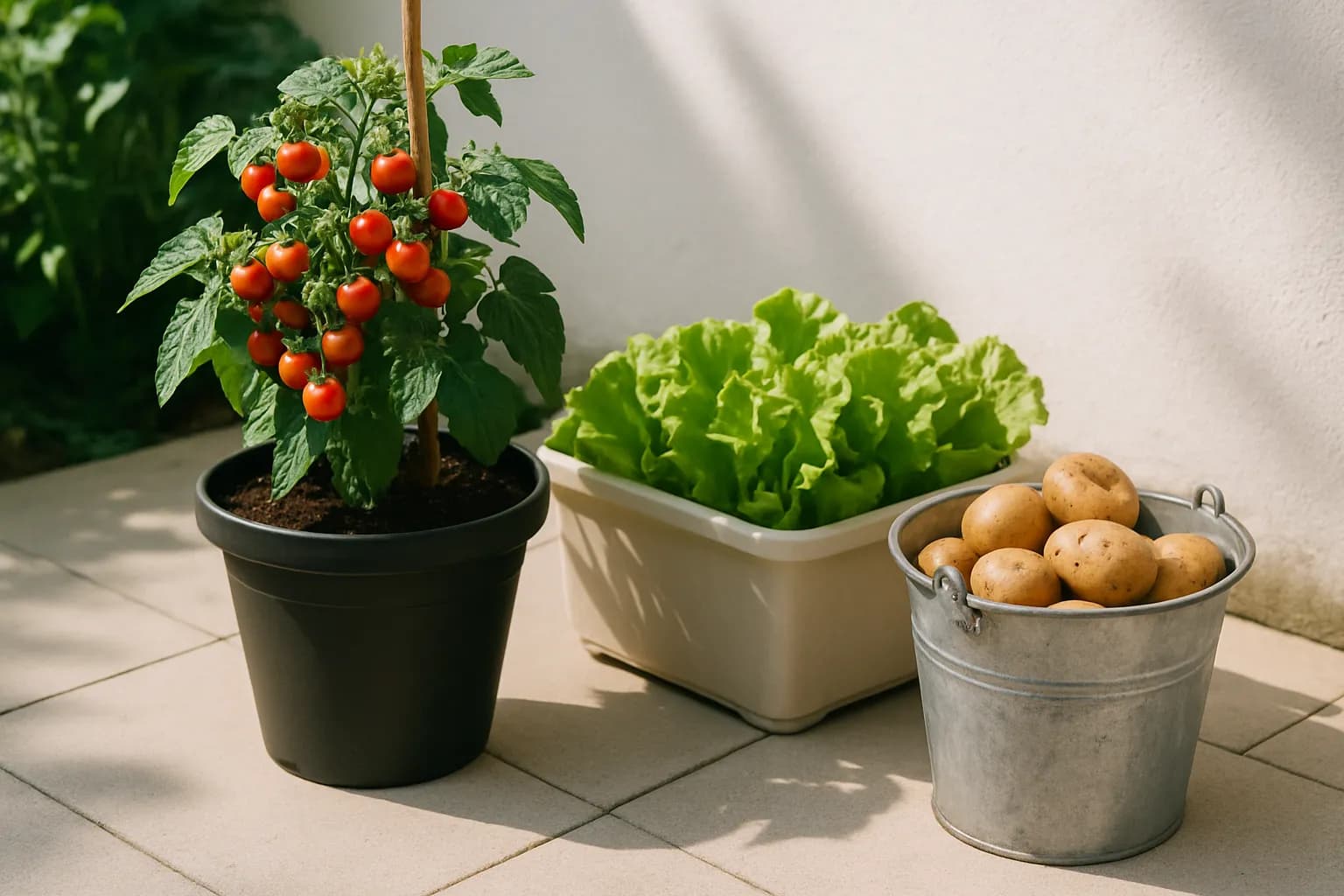
- Bush or cherry tomatoes — one big pot each, with sun and support.
- Chillies and peppers — love a warm, sunny pot.
- Beans and peas — a deep pot with a cane wigwam.
- Potatoes — a bucket or grow bag.
- Herbs — see the tiny herb garden guide.
Ecoxee is an Amazon Associate and may earn from qualifying purchases through these links. Learn more.

Compressed Coco Coir Seed-Starting Pellets (55-pack)
Compressed coconut-fibre pellets that expand with water into ready-to-sow plugs: a peat-free, renewable seed-starting medium that skips the plastic pots.
Read our full review →
Authentic Ladbrooke Mini 4 Soil Blocker
A solid metal hand tool that presses four soil blocks at a time for seed-starting: ending plastic seed trays and pots for good, and lasting for decades.
Read our full review →
Esschert Design Wooden Paper Pot Maker
A simple wooden tool that rolls old newspaper into biodegradable seedling pots you plant straight into the ground: pot and all, with zero plastic and zero waste.
Read our full review →Upcycle your containers
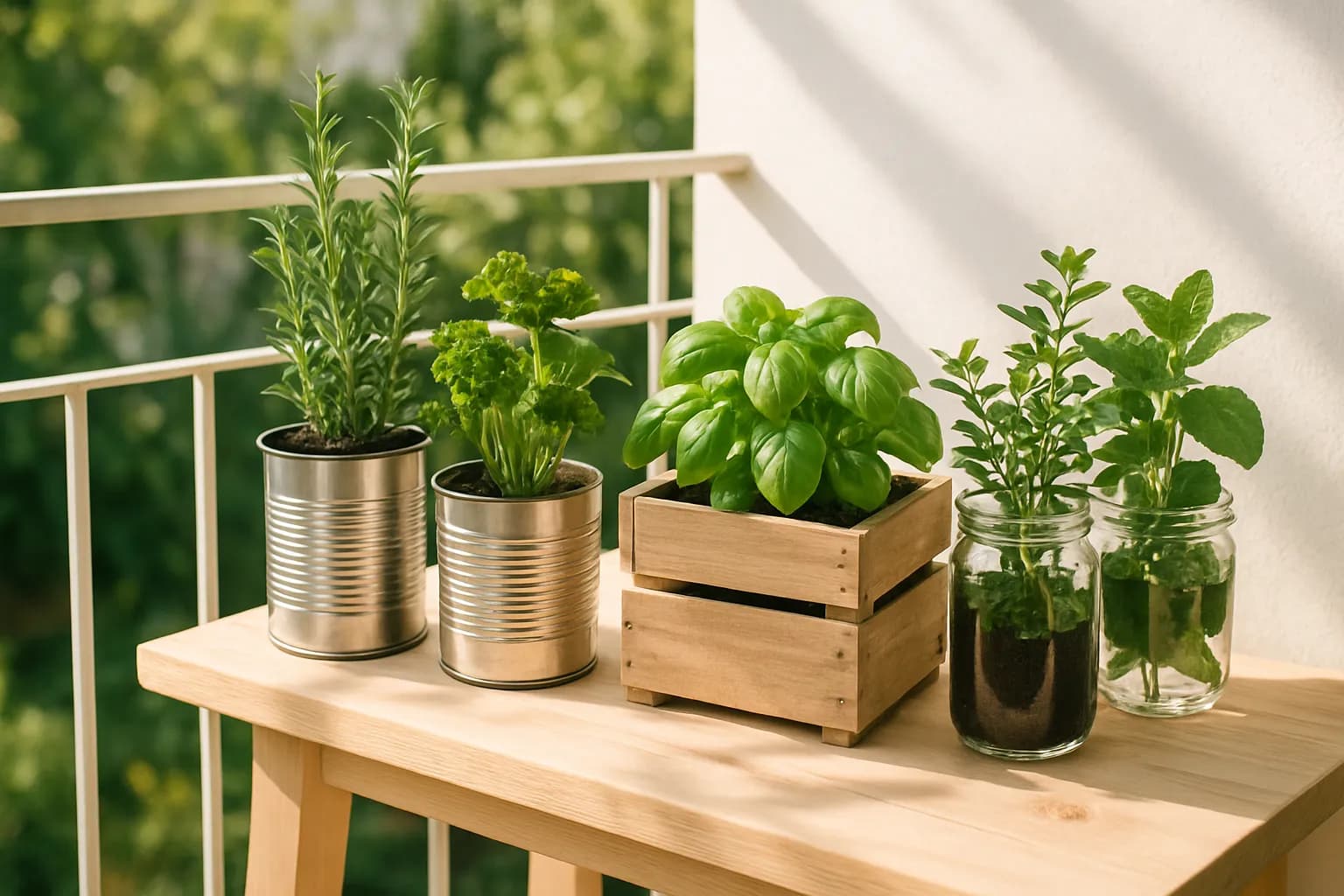
Buckets, tins, crates, grow bags, old sinks, even upcycled milk jugs — anything with drainage holes works. It's free and zero-waste.
The mistakes that kill container veg
Most container failures come down to the same few slip-ups:
- Pots too small. Cramped roots dry out and starve; match the pot to the crop and err bigger.
- Poor drainage. No holes means waterlogged, rotting roots — every container needs them.
- Letting them dry out. Containers dry far faster than beds; in summer, check daily.
- Garden soil instead of potting mix. It compacts and drains badly in pots.
- Forgetting to feed. Potting mix runs out of nutrients within weeks, so feed regularly once plants are growing.
Keeping containers thriving
Water consistently (uneven watering splits tomatoes and roots), feed every week or two, mulch the surface to hold moisture, and harvest often. Watch for trouble and deal with it the natural way.
Growing food in a tiny space? Share your setup in the comments at ecoxee.com — balconies and windowsills welcome.
Keep reading: Apartment Composting: No Garden, No Smell, How to Make Seed Envelopes (DIY Seed Packets), and DIY Upside-Down Tomato Planter (Bucket).