Before you toss that vegetable stump in the compost, try growing it again. Lots of everyday vegetables will regrow from their kitchen scraps — the bit you'd normally throw away sprouts fresh leaves, roots, or stems on your windowsill, for free.
It's a fun, near-effortless project (kids love it), and a genuinely zero-waste way to stretch your groceries. Here's what regrows, and how.
The easiest ones (in water)
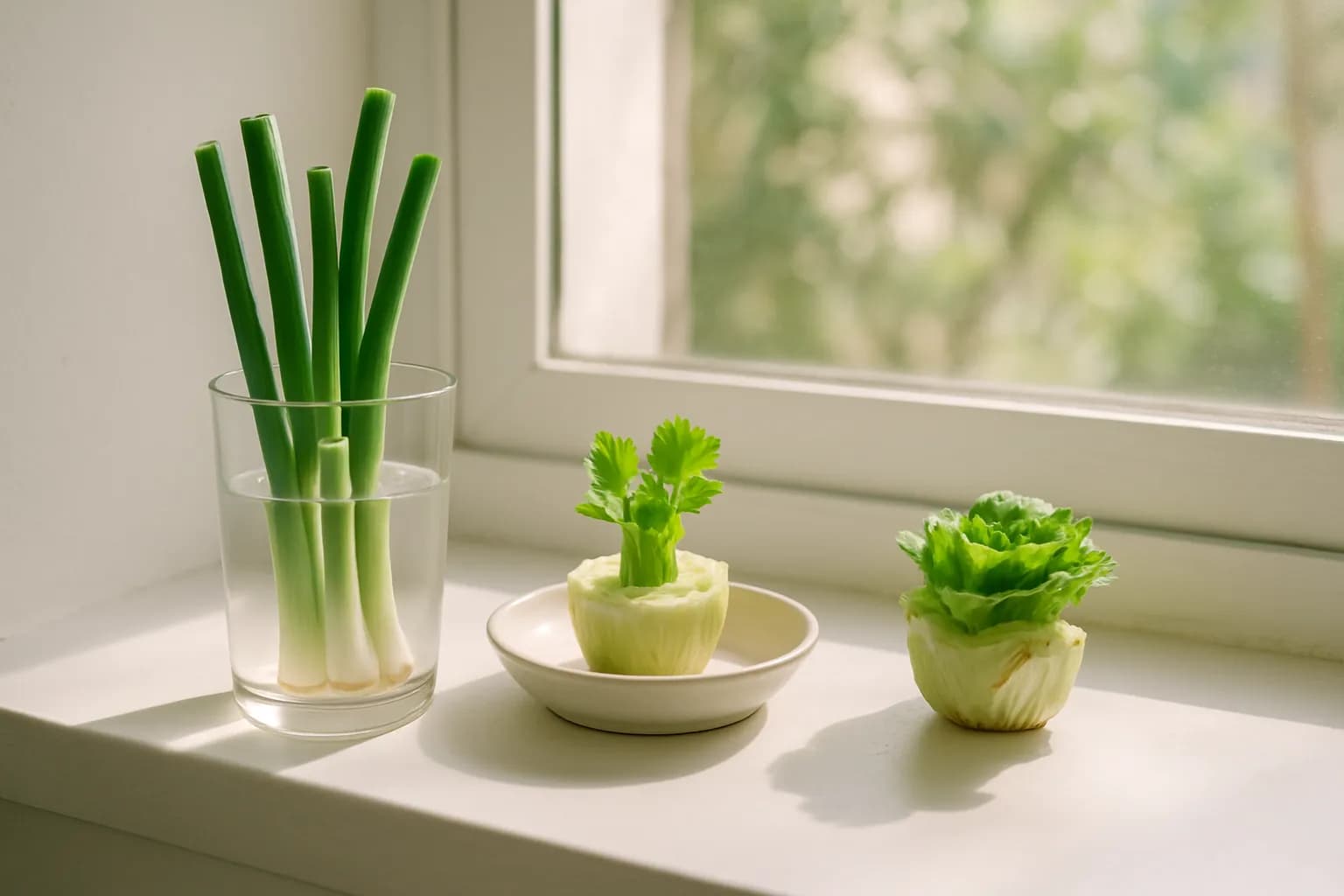
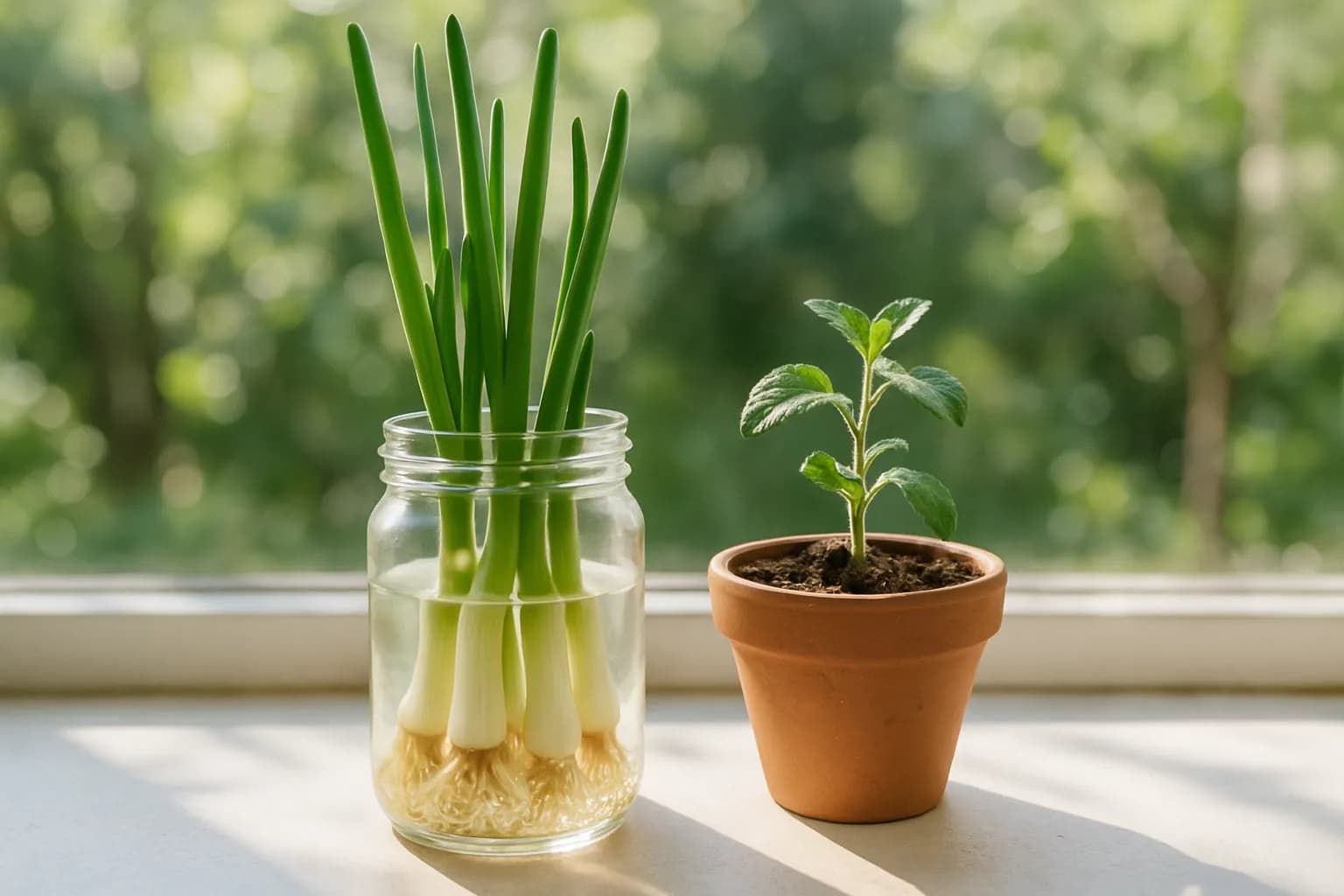
- Green onions and scallions — stand the white root ends in a glass of water and new green shoots appear in days. Snip and they regrow again and again.
- Leeks and lemongrass — exactly the same trick.
- Herbs (basil, mint, coriander) — pop a cutting in water until it roots, then pot it up.
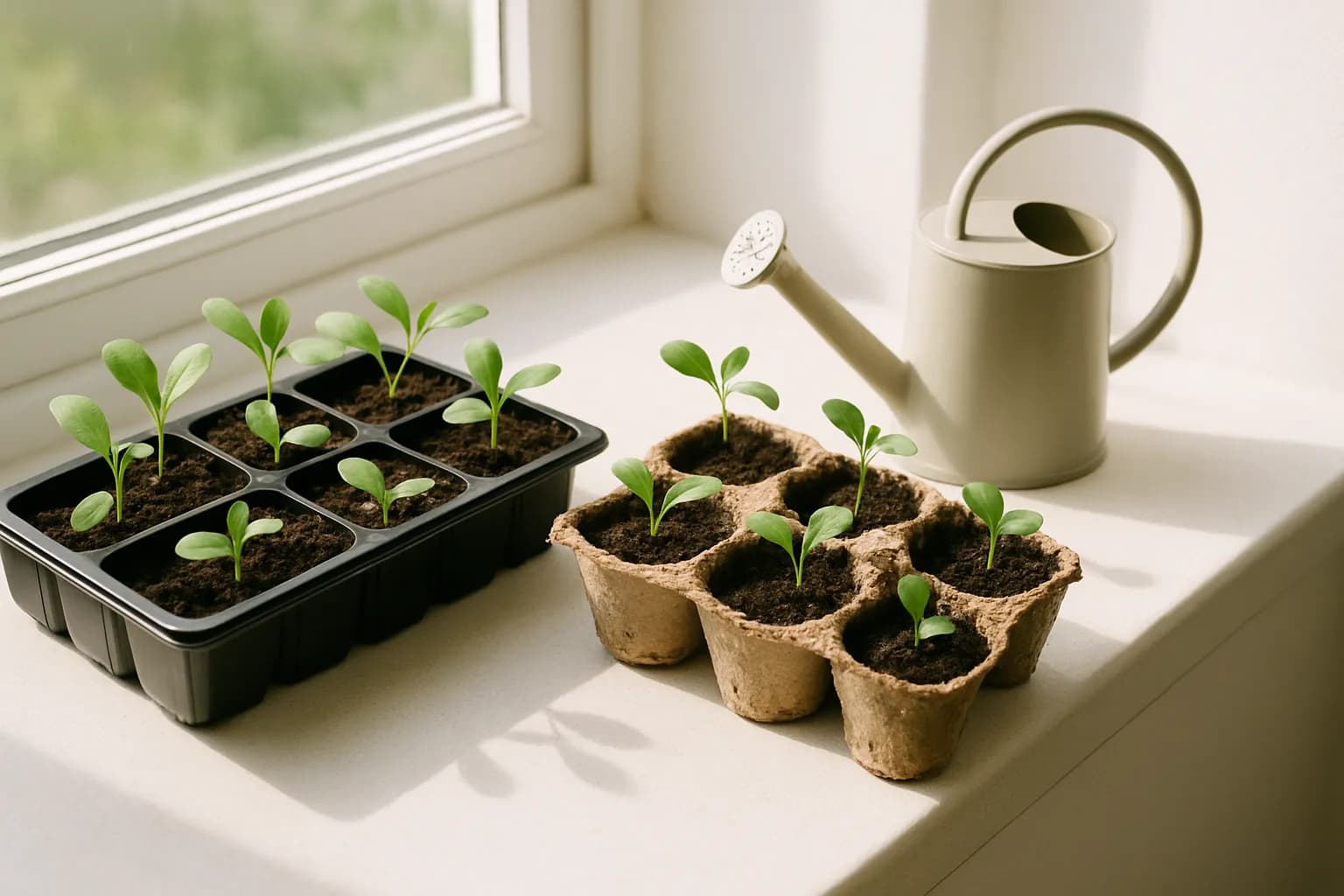
- Celery, lettuce, and bok choy — sit the base in a shallow dish of water and new leaves grow from the center. Move it to soil once rooted for a fuller crop.
From roots and eyes (in soil)
- Ginger and turmeric — plant a knob with a visible bud.
- Garlic — plant a sprouting clove for green garlic or a new bulb.
- Potatoes — plant a piece with an "eye."
The honest truth about tops
Carrot, beet, and radish tops will regrow leafy greens — which are edible and pretty, and they'll flower — but they will not grow a new root vegetable. Enjoy the greens for what they are, not as a second carrot.
Keeping them going
Change the water every day or two so it doesn't turn slimy, give them plenty of light, and move the water-started plants into soil if you want a real, ongoing harvest rather than one quick flush of regrowth.
Troubleshooting your regrows
A few things go wrong the first time, and all are easy to fix:
- Slimy or cloudy water? You left it too long — change the water every day or two and rinse the base.
- Mould or a bad smell? Too little light or air, or water touching cut leaves. Use less water, more light, and only submerge the roots.
- No new roots after a week? Some scraps just will not take; compost that one and try a fresher, firmer base.
- Tall and pale growth? Not enough light. Move it to your brightest windowsill and turn it daily.
Remember that water-regrowing gives one quick flush; for a real, repeating harvest, move the rooted keepers into soil.
The zero-waste win
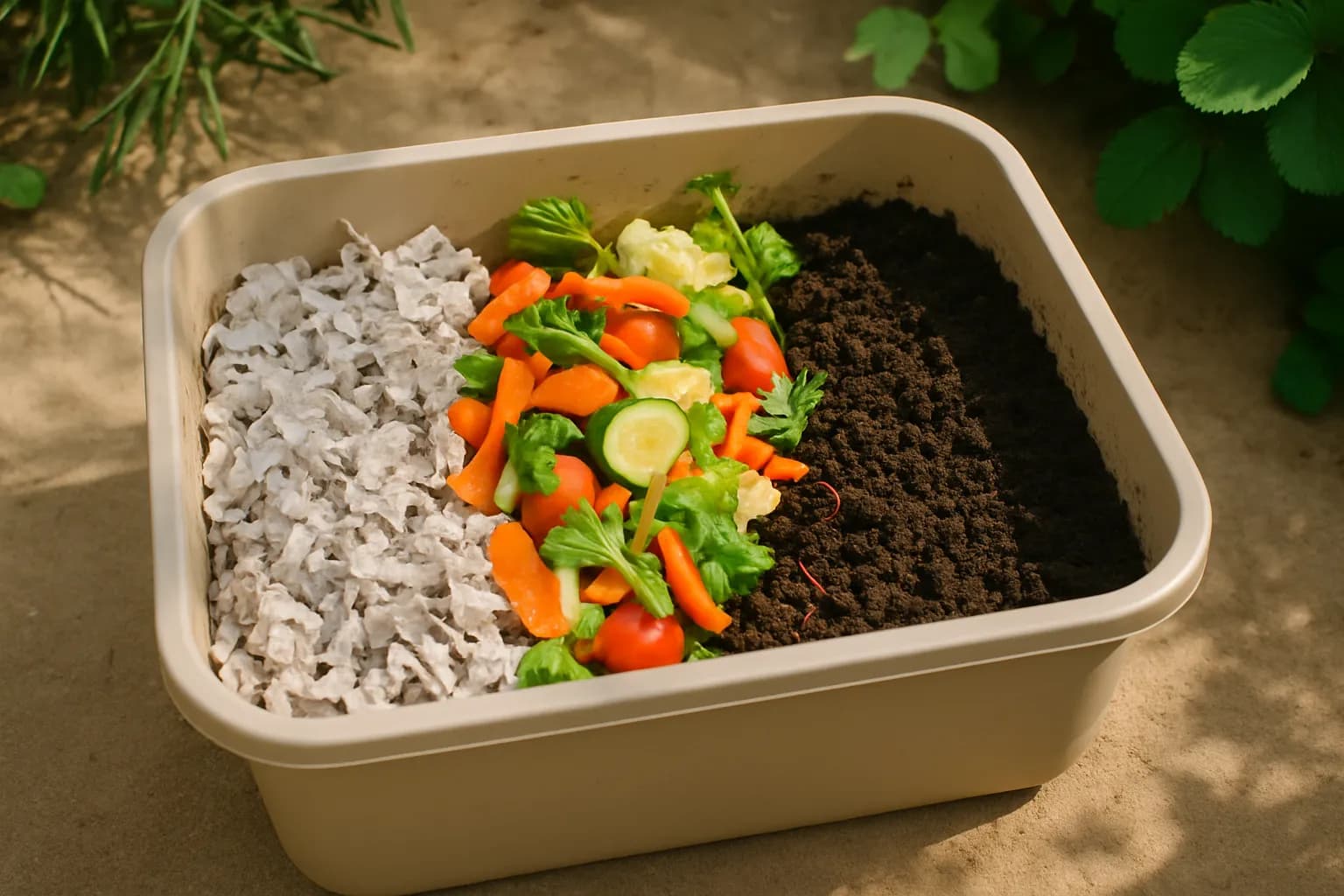
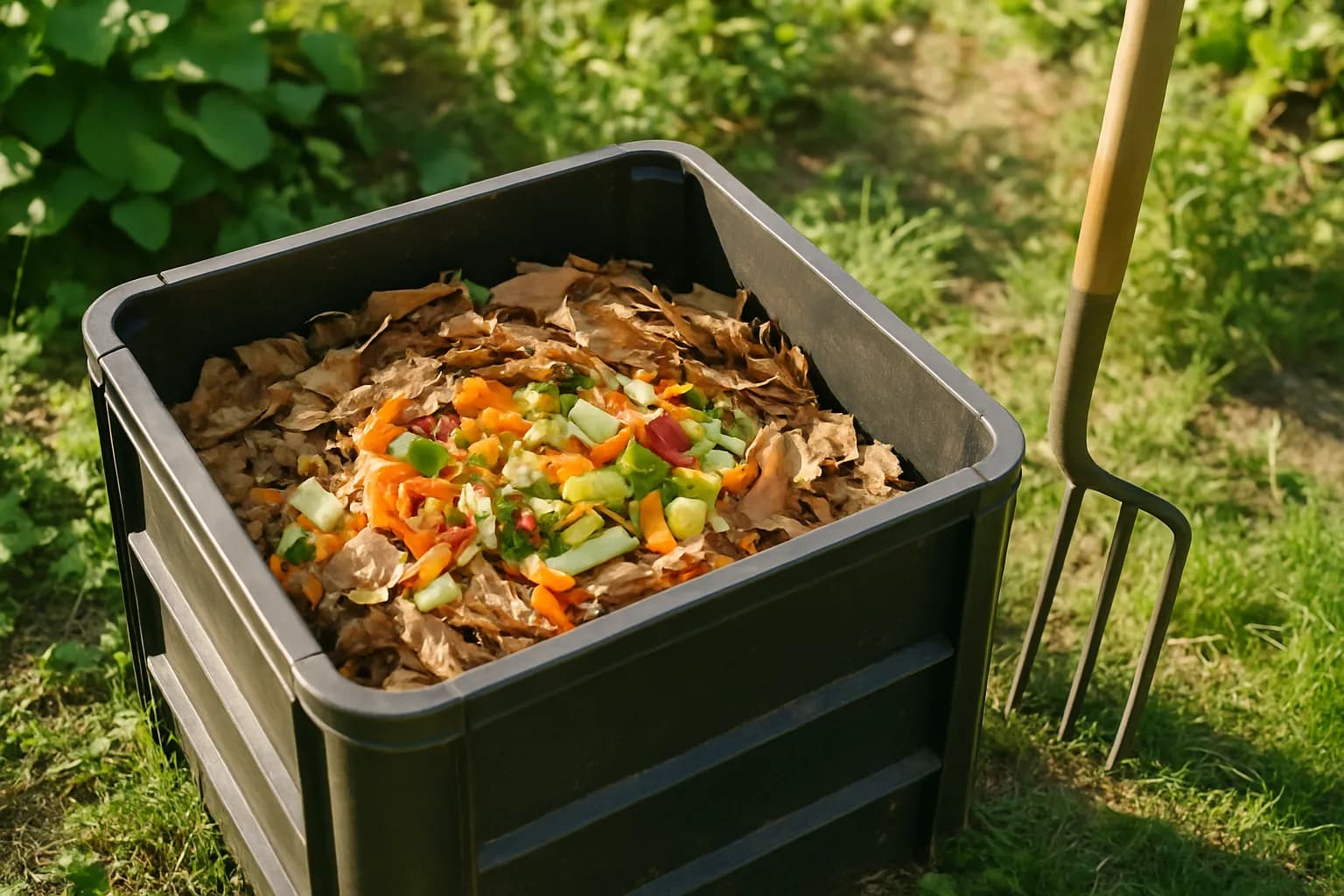
It's free food from what you'd have binned — move the keepers into containers or your herb garden, and send anything that won't regrow to the compost.
What have you regrown from scraps? Share your windowsill wins in the comments at ecoxee.com — green onions to ginger.
Keep reading: How to Start a Worm Composting Bin, How to Start Seeds Indoors, and No-Dig Gardening for Beginners.