"Biodegradable" and "compostable" get used as if they mean the same thing — and marketers love the confusion. They don't mean the same thing, and knowing the difference is the single best defence against greenwashing on eco packaging. Here's the honest breakdown.
The quick answer
- Biodegradable just means something will break down eventually, by natural processes — with no promise of how long or into what. It's a vague, largely unregulated term. Given enough decades, almost anything is "biodegradable."
- Compostable means it breaks down into non-toxic, soil-like matter within a defined time, in specific composting conditions — and it's backed by real standards. It's the stronger, meaningful claim.
So all compostable items are biodegradable, but "biodegradable" on its own tells you almost nothing.
Why "biodegradable" is nearly meaningless
There's no standard time limit or end-state behind the word. A "biodegradable" plastic might take hundreds of years, or fragment into microplastics rather than truly disappear. (For a deeper look at PLA and plant-based single-use, see are compostable plastics actually eco-friendly?.) Watch especially for oxo-biodegradable plastic — it's conventional plastic with an additive that makes it break apart into tiny pieces, not break down. That's worse than useless, and it's why it's banned in some regions. Treat a lone "biodegradable" claim as marketing, not a green credential.
What "compostable" actually requires
Compostable products are tested against standards. Look for these certifications — they're audited, not self-declared:
- BPI / ASTM D6400 (North America) and EN 13432 (Europe) — for industrial/commercial composting.
- OK Compost HOME (TÜV Austria) / NF T51-800 — the stricter mark meaning it'll also break down in a home compost pile.
If packaging claims "compostable" with none of these, be skeptical.
The crucial catch: compostable ≠ landfill-safe
Here's what most people miss, and it matters a lot: a compostable item only composts in the right conditions. Most are certified for industrial composting — hot, managed facilities — and won't break down in a cold backyard pile, let alone a sealed landfill. In landfill, a compostable bag can behave much like ordinary plastic. So "compostable" is only a benefit if you actually have somewhere to compost it: a home system, a municipal food-waste collection, or a commercial composter.
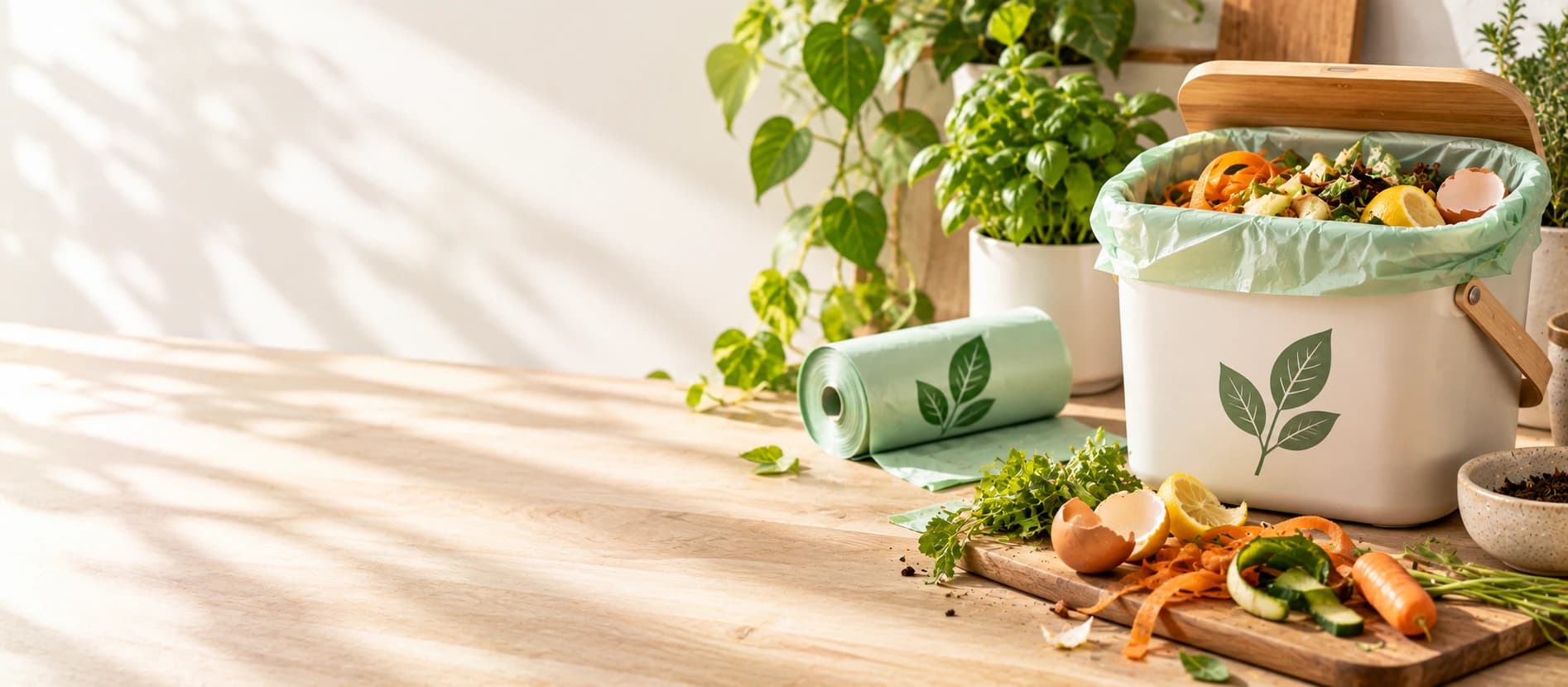
This is exactly why, in our compostable trash bags roundup, we stress that the bags are only worth it if you have a composting route — otherwise they're just expensive plastic.
How to shop smart
- Ignore "biodegradable" as a standalone claim.
- Look for a real compostability certification (BPI/ASTM D6400, EN 13432, OK Compost HOME).
- Check whether it's home or industrial compostable — and whether you can actually access that.
- Best of all, reduce first. A reusable beats a compostable single-use item every time — the 5 Rs put "refuse and reduce" well above disposing of anything, however green the label.
What to do with compostable items you already have
- Home-compostable (certified): add to your home compost or worm bin.
- Industrial-only: use your municipal food-waste collection if it accepts them — don't assume your backyard pile will manage it, and don't put them in recycling (they contaminate it, per our recycling guide).
Frequently asked questions
Is compostable the same as biodegradable? No. Compostable means it breaks down into non-toxic soil within a set time under composting conditions, backed by standards. Biodegradable just means it breaks down eventually, with no guarantee of time or end result.
Is biodegradable plastic good for the environment? Not reliably. Without a compostability certification it may take decades or fragment into microplastics. Oxo-biodegradable plastic in particular just breaks into small pieces — avoid it.
Can I put compostable packaging in my home compost? Only if it's certified home compostable (e.g., OK Compost HOME). Items marked only for industrial composting need a commercial facility and usually won't break down in a backyard pile.
Can compostable items go in recycling? No — they contaminate plastic recycling. Compost them (in the right system) or check your municipal food-waste rules.
The bottom line
"Biodegradable" is marketing; "compostable" is meaningful — but only if it's certified and you have somewhere to compost it. When you see a green claim, look for a real certification, check home vs industrial, and remember the honest hierarchy: reducing and reusing beat any single-use item, compostable or not.
Keep reading: Do Natural Cleaners Actually Disinfect?, Eco-Friendly Gift Wrapping Ideas, and Glass vs Aluminium vs Plastic: What's Greener?.