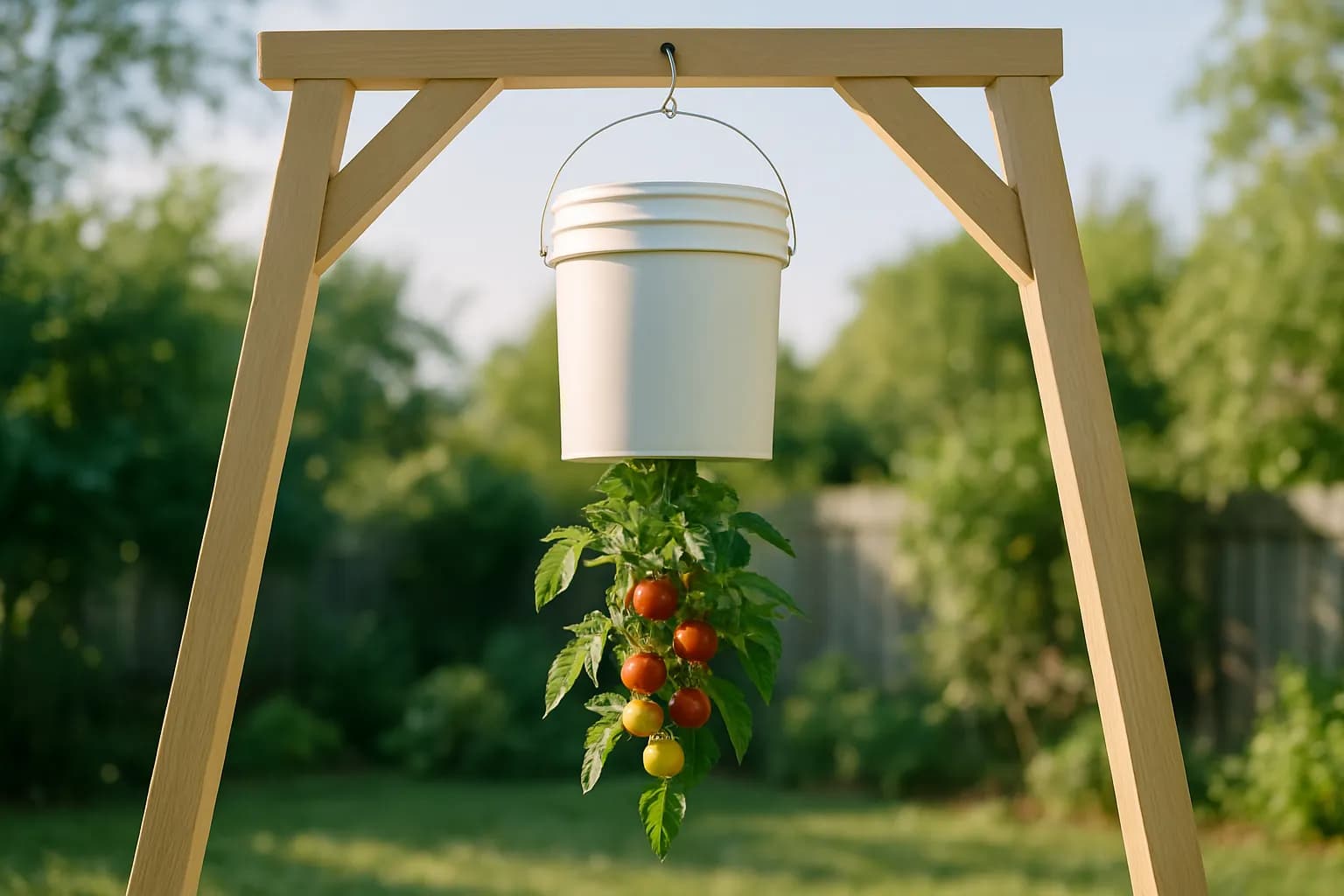
Growing tomatoes upside down from a hanging bucket is a genuine space-saver for a sunny balcony or patio — no bed, no staking, and the fruit hangs at picking height. But let's be honest up front: it isn't magic. Hanging buckets dry out fast, they get heavy, and they need a genuinely strong support. Get those three things right and it works beautifully.
An honest take first
Upside-down growing is a space solution, not a miracle. A bucket in the sun dries out far quicker than a bed, so you'll water often. Full of wet soil and a mature plant it can weigh 40–60 lb, so the support matters. And it suits cherry and compact varieties far better than big beefsteak types. None of that is a dealbreaker — it just pays to know it before you drill.
What you'll need
Essentials
- A clean 5-gallon bucket (food-grade if it once held food)
- A drill with a 2-inch hole saw, or a utility knife (an adult job)
- A tomato seedling — a cherry or compact variety
- Light potting mix (not heavy garden soil)
- A coffee filter or square of landscape fabric to hold the soil around the stem
- A very sturdy hook, bracket, or frame rated for the full watered weight
Optional (fixes the two weak points)
- A watering spike or self-watering globe — buckets dry fast; this is the best upgrade
- A liquid tomato feed — frequent watering flushes nutrients away
You can start the seedling yourself indoors — see how to start seeds indoors — or grow on from your own saved tomato seeds.
Ecoxee is an Amazon Associate and may earn from qualifying purchases through these links. Learn more.
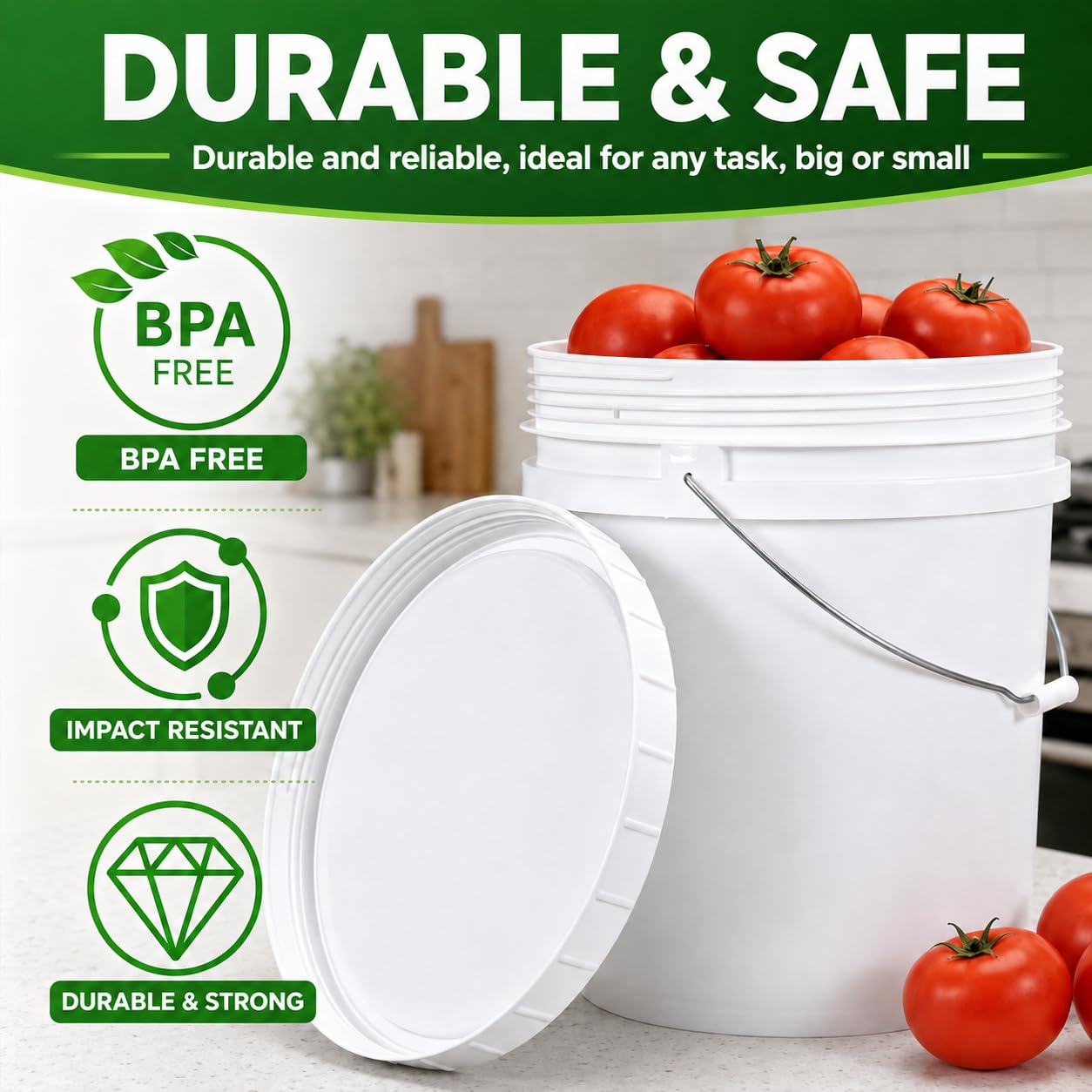
5-gallon bucket with lid (food-grade)
A food-grade bucket with a sturdy metal handle is the foundation of the whole build, and the snap-on lid keeps your potting mix dry between seasons. They stack neatly for storage, and once you have made your first planter you will find a dozen other jobs around the garden for any spare buckets.

2-inch bi-metal hole saw
A 2-inch bi-metal hole saw cuts a clean, round opening in the base of the bucket in seconds, far tidier, safer, and more accurate than sawing at thick plastic with a knife. It chews happily through wood and plastic alike, so it stays genuinely useful long after this one weekend project is finished.

Heavy-duty plant hanger bracket (22 inch)
This is the part people skimp on and later regret. A watered bucket with a mature plant can top forty to sixty pounds, and this heavy-duty 22-inch bracket holds all of it without sagging or working loose, so your tomatoes never come crashing down in a summer storm. Fix it into something solid.

FoxFarm Ocean Forest potting soil (12 qt)
A light, aerated ocean-forest mix is exactly what a hanging bucket needs: it drains freely so roots never sit soggy, yet holds enough moisture between the frequent waterings these planters demand. The fish meal, crab meal, and earthworm castings give your seedlings a rich, well-fed start with no extra feeding needed early on.
Build it
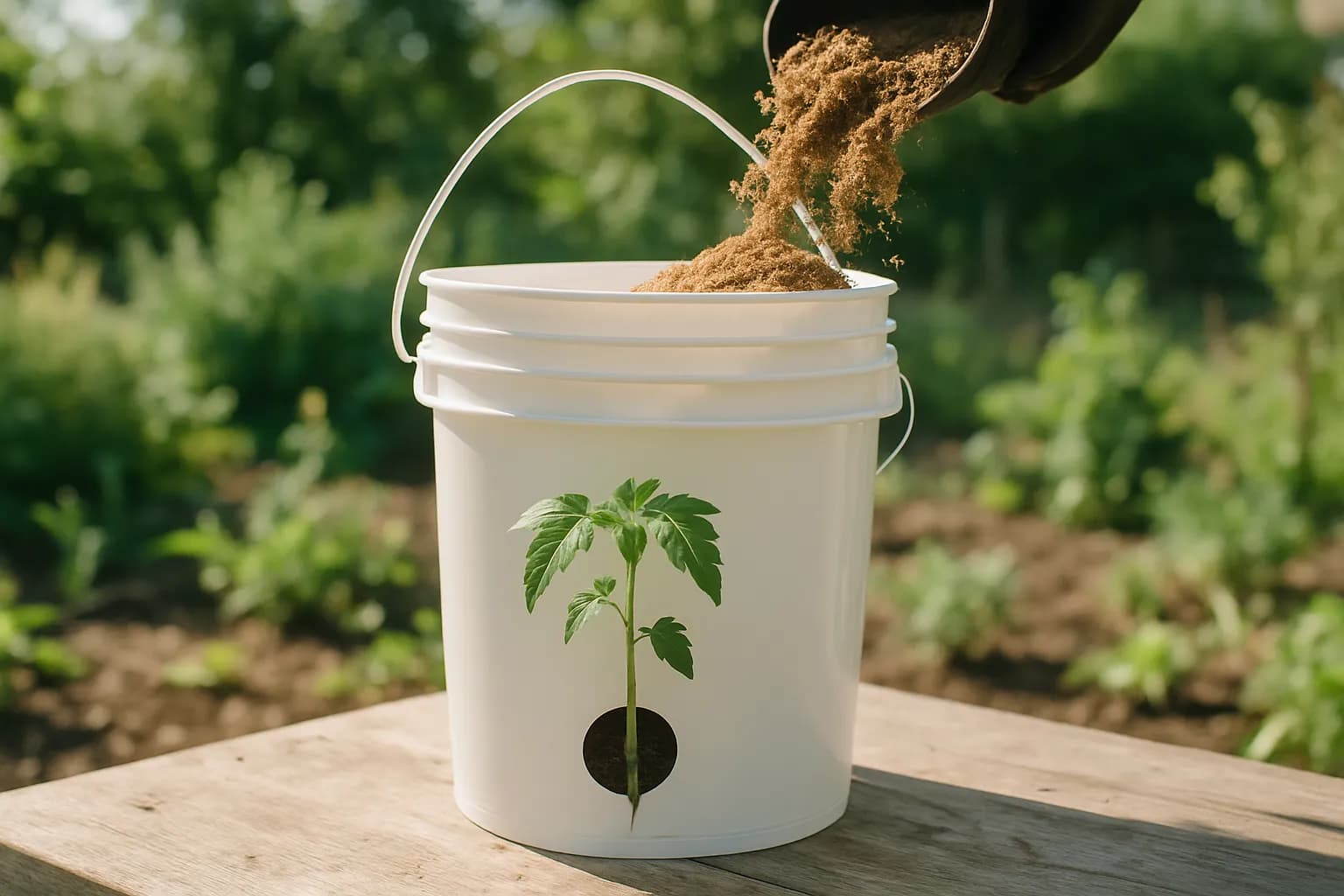
- Drill or cut a 2-inch hole in the centre of the bucket's base.
- Thread the seedling's roots up through the hole from the outside, so the leaves hang below.
- Settle a coffee filter or fabric collar around the stem inside the bucket to stop soil washing out.
- Fill the bucket with light potting mix, firming gently.
- Hang it from your sturdy support and water until it runs from the hole.
- Optional: plant herbs or lettuce in the open top for a second crop.
How much weight will it hold? (Read this before you hang it)
This is the step people skip and regret. A 5-gallon bucket full of moist potting mix and a mature plant can weigh 40–60 lb (20–30 kg) once watered. Hang it from a hook screwed into a solid ceiling joist, a pergola beam, or a purpose-built stand — never plasterboard or a flimsy bracket. If in doubt, over-spec the hook.
Watering and feeding (the make-or-break routine)
Hanging buckets dry out far faster than beds. In summer heat, expect to water every day, sometimes twice — the moment the top inch is dry, water until it runs from the hole. A self-watering spike takes the daily pressure off. Because all that watering flushes out nutrients, feed every 1–2 weeks with a liquid tomato feed once the first flowers set. Consistent watering also prevents split fruit and blossom-end rot.
Ecoxee is an Amazon Associate and may earn from qualifying purchases through these links. Learn more.

Terracotta watering spikes (12-pack)
The fix for the upside-down planter's single biggest weakness, which is drying out. These terracotta spikes wick water slowly into the soil from an ordinary bottle, so your bucket will not bake dry by mid-afternoon on a hot day and you can safely skip a watering. Twelve keep several planters happily going.

Organic tomato & vegetable liquid feed
Because the constant watering a hanging bucket needs also flushes nutrients straight out of the soil, regular feeding is what actually gets you a crop. This organic liquid feed of fish, seaweed, and molasses replaces what has washed away and keeps plants productive right through the season, on peppers and the wider veg patch too.
Troubleshooting
- Wilting or bone-dry by afternoon? Normal for hanging buckets — water more, add a watering spike, and move it out of the fiercest afternoon sun in a heatwave.
- Lots of leaves, no tomatoes? Usually too little sun (it needs 6–8 hours) or too much nitrogen — switch to a high-potassium tomato feed once it flowers.
- Support sagging or hook bending? Stop and re-hang from something rated for 30 kg+ — a joist or a dedicated stand.
- Soil washing out the bottom? The filter or fabric collar slipped — add more around the stem, or a foam collar.
- The plant is growing upward? That's normal — it's reaching for the sun. It still fruits fine.
Care through the season
Keep an eye out for the usual tomato pests; the same natural pest control tricks work here. Pick fruit as it ripens to keep the plant productive, and for more small-space ideas see vegetable container gardening.
Best varieties
Choose cherry or tumbling types (Tumbling Tom, Tiny Tim, and similar) that stay compact and crop heavily. Skip big beefsteak varieties — they get too heavy and sprawling for a hanging bucket.
Variations to try
- Double-crop it — plant herbs, lettuce, or marigolds in the open top while the tomato grows below.
- Other upside-down crops — small peppers, strawberries, and trailing herbs all work.
- A tomato wall — a row of buckets on a sturdy frame for a small-space harvest.
- Decorate the bucket — paint it to match your patio.
Ecoxee is an Amazon Associate and may earn from qualifying purchases through these links. Learn more.

Ready-made upside-down tomato planter (2-pack)
Rather not drill a bucket at all? This ready-made pair does exactly the same job straight out of the box; you just add your plants, soil, and feed. It is a tidy, no-tools shortcut to the upside-down method, and having two lets you grow a couple of different varieties side by side.

Topsy Turvy upside-down tomato planter
The original hang-and-grow planter, lightweight and ready to use the moment it arrives. It is the simplest possible way to try growing tomatoes upside down if you only want the one and do not fancy cutting into a bucket yourself, and it folds away flat for tidy storage over the winter months.
Frequently asked questions
Does upside-down growing actually work? Yes — but it's a space-saver, not a miracle. It shines on a sunny balcony or patio and for cherry or compact varieties.
What size bucket is best? A 5-gallon bucket is the sweet spot. Bigger holds more moisture but gets very heavy.
How often do I water? Often daily in summer — hanging buckets dry fast. A self-watering spike helps a lot.
Can I grow anything else upside down? Cherry tomatoes, small peppers, strawberries, and trailing herbs work well. Skip big sprawling plants.
How strong does the hook need to be? Strong enough for 40–60 lb (20–30 kg) watered — into a joist or solid frame.
Get growing
An upside-down bucket won't out-yield a good raised bed, but on a sunny balcony with no ground to spare it's a genuinely clever way to grow your own tomatoes. Pick a compact variety, hang it somewhere strong, keep it watered, and you'll be picking cherry tomatoes off the vine all summer.
Growing one this year? Tell us your variety and your best harvest in the comments at ecoxee.com.
Keep reading: Creative Layouts for a Tiny Zero-Waste Herb Garden, How to Build a Small Backyard Hugelkultur Bed, and How to Dry and Save Tomato Seeds for Next Year.