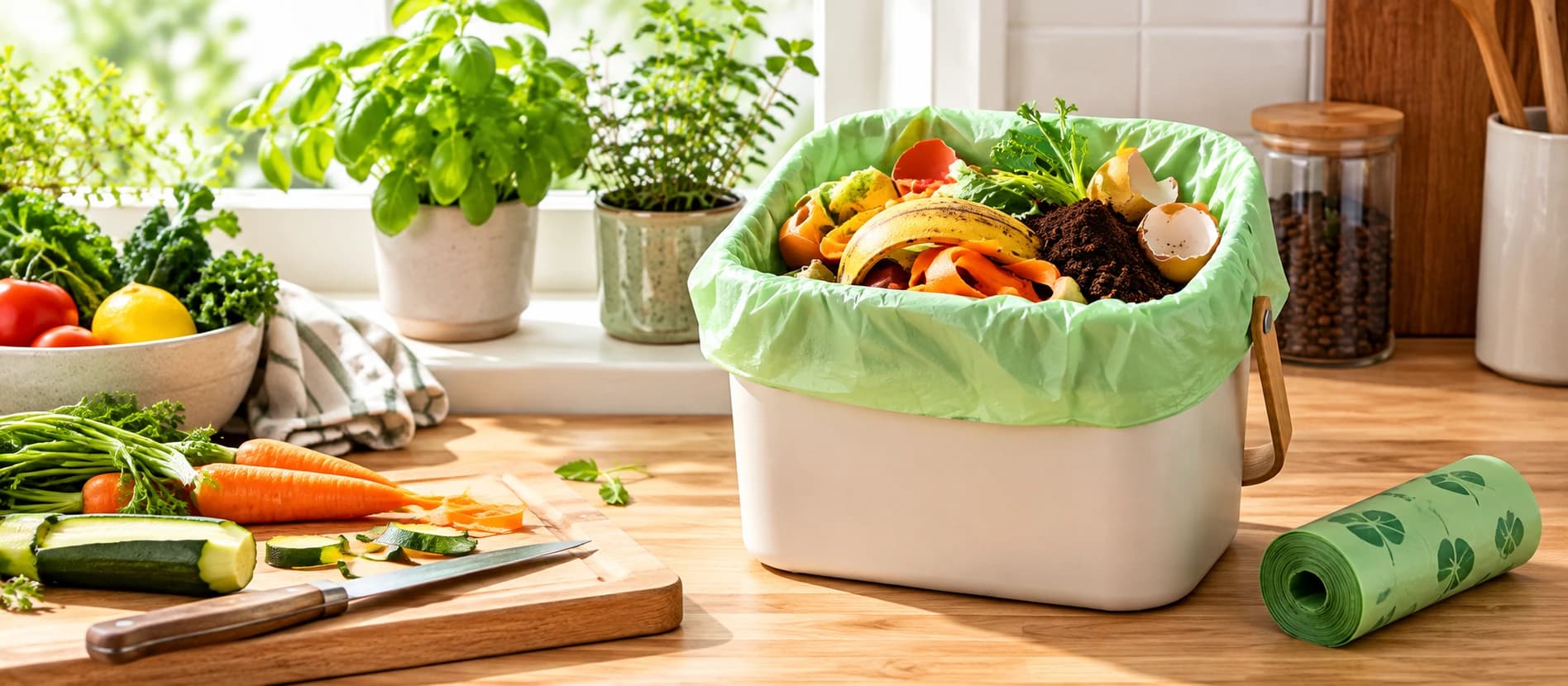
Switching to compostable trash bags feels like an obvious green win: swap the plastic sack for a plant-based one and your rubbish just breaks down, right? The reality is more interesting, and getting it right is the difference between a genuinely lower-waste home and paying a premium for a bag that ends up behaving exactly like plastic.
We dug into the certifications behind the biggest sellers and picked the ones that are the real thing, for every job from a countertop caddy to the dog walk. Just as important, we will tell you the one thing almost every product page leaves out: where these bags actually compost, and where they don't.
The 20-second version: a compostable trash bag only breaks down in industrial/municipal composting or a hot home compost pile — not in a landfill. So the swap is worth it if your area collects food or yard waste, or you compost at home. In a sealed landfill, a compostable bag lingers much like a plastic one.
The honest truth about "compostable" bags
This is the part that matters most, so we are putting it first. "Compostable" is not the same as "breaks down anywhere."
A certified compostable bag is tested to fully break down within about 180 days in a commercial composting facility — hot, aerobic, carefully managed conditions. A landfill is the opposite: sealed, airless and cold, where very little decomposes for decades. So a compostable bag sent to landfill does not deliver its promise. The US FTC treats vague "biodegradable" claims on landfill-bound products as deceptive for exactly this reason, and has warned bag makers over it.
That means compostable trash bags are genuinely worth buying if one of these is true:
- Your town or city collects food scraps or yard waste for composting.
- You compost at home (and the bag is certified for home composting, not just industrial).
- You drop compost at a community facility that accepts bags.
If none of those apply, be honest with yourself: the greenest move may be reducing waste and reusing rather than paying more for a bag that will sit in landfill. That is not what most "best compostable bags" lists will tell you, but it is the truth.
The certifications to look for
Ignore the word "biodegradable" — it is unregulated and often meaningless. Look instead for:
- BPI Certified and ASTM D6400 — the North American standard for industrial composting.
- OK Compost HOME (TÜV Austria) or NF T51-800 — the stricter mark meaning it will break down in a home compost pile too.
- Avoid oxo-biodegradable entirely: it is plastic with an additive that fragments into microplastics rather than composting.
How to choose the right one
- Match the size to the job: a 2–4 gallon bag for a countertop food caddy, 8–13 gallon for the main kitchen bin, 30+ gallon for lawn and leaf.
- Home vs industrial: if you compost in your own garden, insist on an OK Compost HOME certified bag. Industrial-only bags need a commercial facility.
- Thickness (mil/micron): thicker bags leak less but you rarely need more than ~0.9 mil for kitchen use.
- Use it fresh: compostable bags start breaking down with heat and moisture, so store them cool and dry and use within about a year.
The best compostable trash bags
Every pick below is genuinely certified — no plastic bags dressed up as green, and no oxo-biodegradable tricks.
Ecoxee is an Amazon Associate and may earn from qualifying purchases through these links. Learn more.

UNNI Compostable Trash Bags (13 Gallon, 50 Count)
Best overall. The all-rounder for your main kitchen bin. UNNI's 13-gallon bags are genuinely certified compostable (BPI and ASTM D6400), made from plant starch rather than plastic, and thick enough at 0.9 mil to handle a full week's food waste without splitting. If your town collects food scraps or you have industrial composting nearby, these turn your everyday bin liner into something that actually breaks down. Just store them cool and dry and use within a year, since heat and moisture start the process early.

UNNI Compostable Bags (2.6 Gallon, 200 Count)
Best for a countertop caddy. The right size for a countertop compost bin or a small kitchen scraps caddy. At 2.6 gallons with 200 bags in a pack, these UNNI liners are cheap per bag and certified compostable (BPI, ASTM D6400 and OK Compost Home). They line a caddy neatly so food scraps go straight to compost or municipal collection with no messy rinsing. They are thinner at 0.71 mil than the big kitchen bags, which is fine for light, frequent food-scrap duty rather than heavy household rubbish.
BioBag Compostable Food Scrap Bags (3 Gallon, 100 Count)
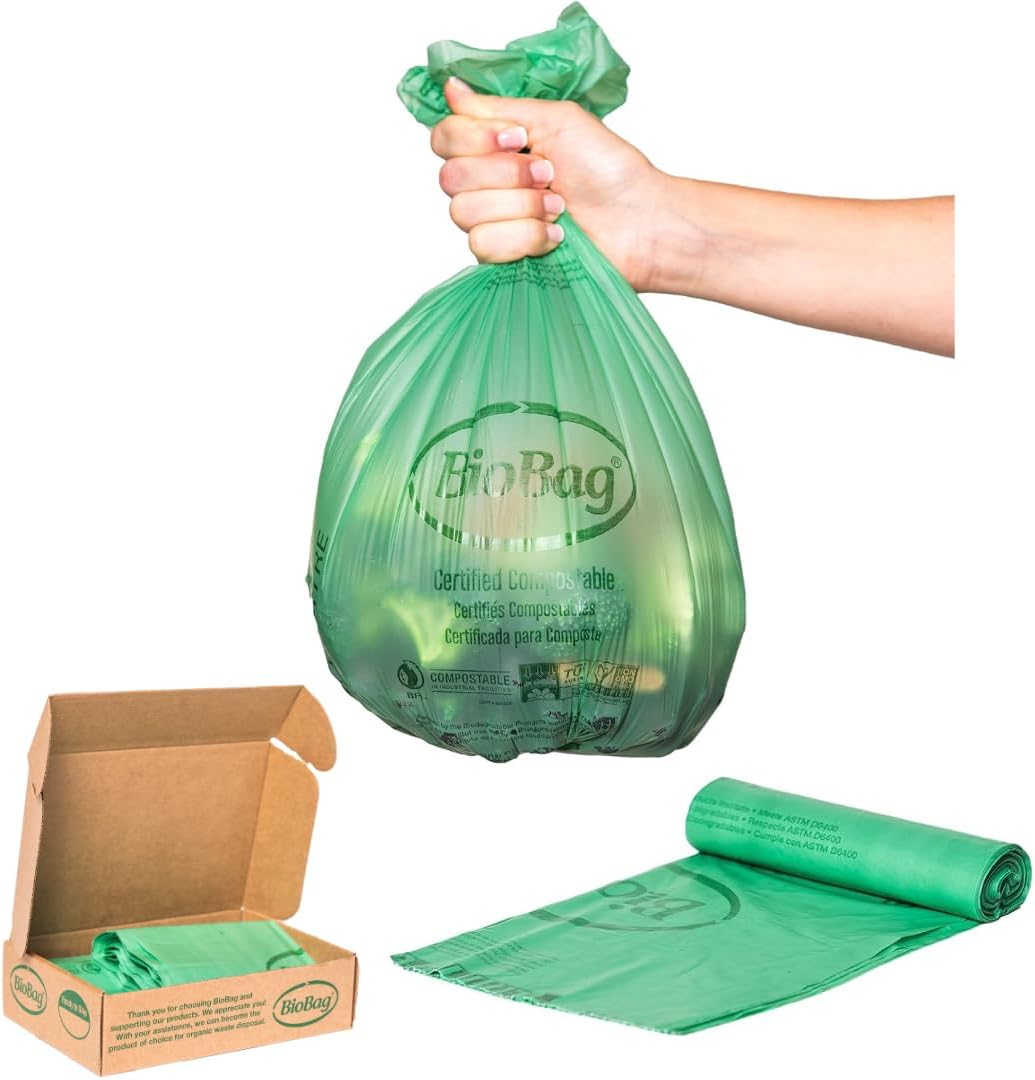
Best for food scraps. BioBag is one of the oldest and most trusted names in compostable bags, and these 3-gallon food-scrap liners are BPI certified, meet ASTM D6400, and are made in the USA. They fit standard countertop caddies and small bins, and they are designed specifically for wet food waste, so they hold up to coffee grounds, peelings and scraps without going soggy too fast. A solid, no-nonsense choice if you want a proven brand for your food-scrap collection.
Reli Compostable Trash Bags (4 Gallon, 180 Count)
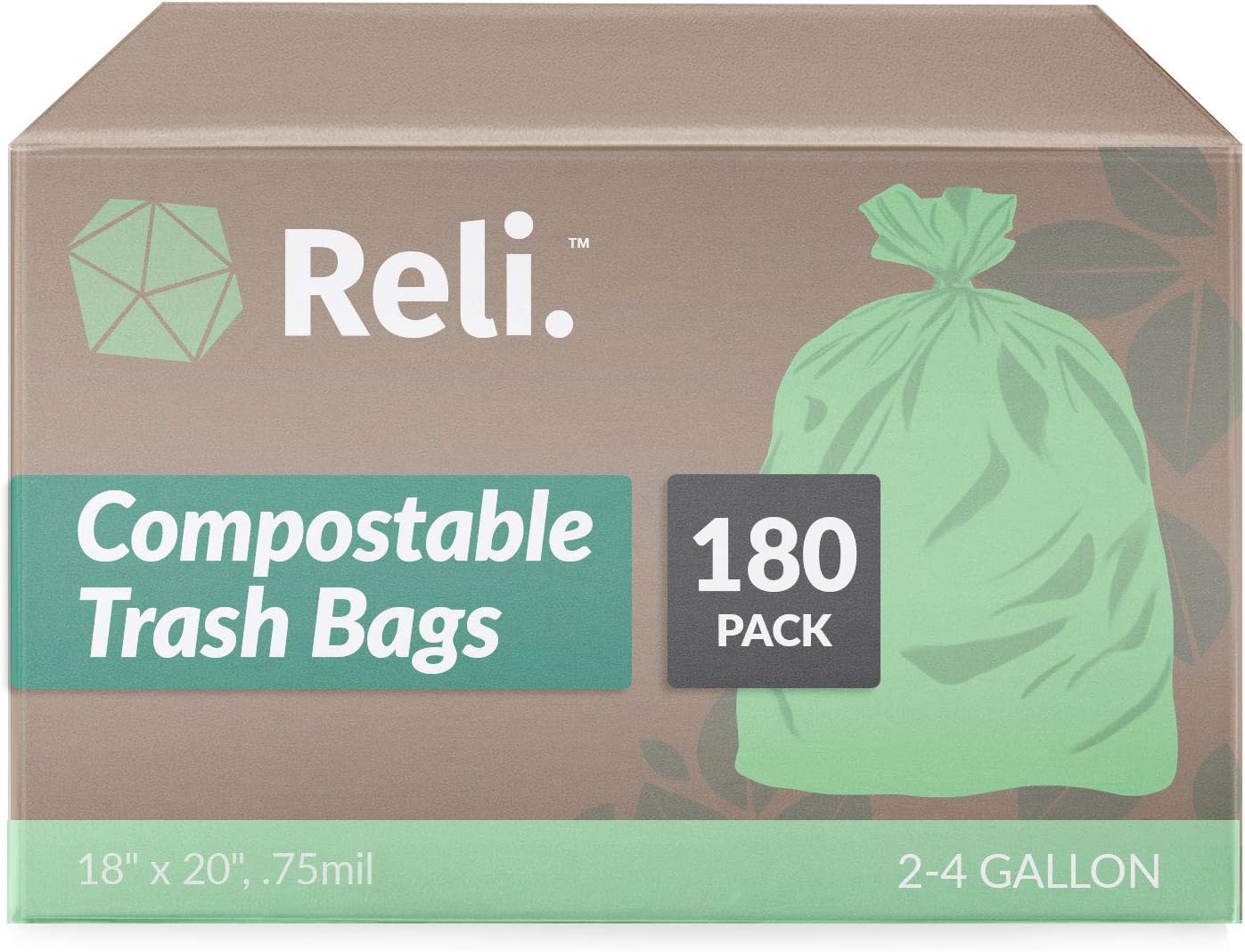
Best value. If you want compostable bags without the premium price, Reli's 4-gallon pack gives you 180 bags, making them some of the cheapest certified-compostable liners per bag. They are ASTM D6400 certified for municipal and industrial composting, plant-starch based, and sized for small kitchen, bathroom or office bins. They are industrial-compostable rather than home-certified, so they suit areas with food-waste collection. Store them cool and dry and use within a year, as heat and damp start the breakdown early.

BioBag Compostable Lawn & Leaf Bags (33 Gallon, 60 Count)
Best for lawn and leaf. Big yard clean-ups are where most compostable claims fall apart, but BioBag's 33-gallon lawn and leaf bags are the real thing: 100% certified compostable and sized for grass clippings, leaves and garden waste. They are weather-resistant enough to sit out on collection day without disintegrating, yet break down in composting alongside the yard waste they hold. If your municipality collects yard waste for composting, these are the bag to use, rather than sending a plastic sack of leaves to landfill.

Pawtria Home Compostable Dog Poop Bags (120 Count)
Best for dog waste. Most eco dog bags are recycled plastic or oxo-biodegradable, which just fragments into microplastics. Pawtria is the genuine article: made from vegetable starch and certified by TUV Austria for both home and industrial composting, plus BPI certified, meeting ASTM D6400 and EN 13432. They are thick at 20 micron, leak-proof and unscented, and they fit standard leash dispensers. Worth knowing: pet waste cannot go in most municipal compost, so these shine if you home-compost pet waste or have a service that takes it.
How to actually use compostable bags
A few habits make them work far better:
- Don't line the bin weeks early. Fill and empty within a few days; a damp compostable bag left sitting will soften and tear.
- Keep the roll cool and dry. Heat, sunlight and humidity start the composting process before you have even used the bag.
- Only put compostable things in a compostable bag. A bag full of non-compostable trash cannot be composted, so it just goes to landfill with everything else — and there it breaks down no faster than plastic.
- Check what your program accepts. Some municipal composters accept certified bags; others want food loose or in paper only. A quick check saves contaminating the batch.
Frequently asked questions
Do compostable trash bags actually break down? Yes — but only in the right conditions. Certified bags fully compost within about 180 days in an industrial composting facility, and home-certified ones will break down in a hot home compost pile. In a landfill, they break down very slowly, much like regular plastic.
Can I just put a compostable bag in my regular trash? You can, but you lose most of the benefit. Sent to landfill, a compostable bag behaves close to a plastic one. The point of these bags is to carry food or yard waste to composting.
Are compostable bags as strong as plastic? Modern plant-starch bags (PLA, PBAT, cornstarch) are impressively strong and leak-proof for everyday use. They are best used fresh, though, since they naturally soften over time and with moisture.
What's the difference between home and industrial compostable? Industrial compostable (BPI, ASTM D6400) needs the high, sustained heat of a commercial facility. Home compostable (OK Compost HOME) is a stricter standard that also breaks down in a cooler backyard pile. If you compost at home, buy the home-certified ones.
Can I compost dog waste in these? Only if you have a system that accepts pet waste — most municipal compost programs do not. A home-compostable dog bag (like our pick) plus a dedicated pet-waste composter or a service that takes it is the way to do it properly.
Where to compost them
A compostable bag only delivers if you have somewhere to compost the waste it carries. If you do not yet, these guides will get you started:
- Composting for beginners: how to start — the simplest way to begin, whatever your space.
- Apartment composting without a garden — compact, low-mess options for flats and balconies.
- How to start a worm composting bin — an easy indoor system for food scraps.
And to green the rest of your cleaning routine, see our zero-waste cleaning products guide.
The bottom line
Compostable trash bags are a genuinely good swap — but only paired with somewhere to compost them. If your area collects food or yard waste, or you compost at home, the UNNI 13-gallon bags are the best all-round choice, with the UNNI 2.6-gallon for a countertop caddy, BioBag for food scraps and lawn & leaf, Reli for value, and Pawtria for dog waste. Buy certified (BPI / ASTM D6400, or OK Compost HOME for backyard piles), use them fresh, and put only compostable waste inside.
For more low-waste swaps, browse our zero-waste home guides or the full Ecoxee shop.
Keep reading: 26 Best Reusable Products to Reduce Waste, Best Eco-Friendly iPhone Cases (2026), and Birdfy vs Bird Buddy: Which Camera Wins?.