Plastic is the waste stream most of us most want to cut — and the one where the advice is most misleading. The uncomfortable truth is that you cannot recycle your way out of it: most plastic is never actually recycled, so the real wins come from using less in the first place. Here's how to genuinely reduce plastic at home, in order of impact.
Where your household plastic actually comes from
Before swapping anything, notice the biggest sources — usually food packaging, drinks bottles, toiletries and cleaning products, and bags/film. A quick look in your bin tells you where to aim first (the trash-audit habit again). Cut the biggest streams and the rest follows.
The honest hierarchy: refuse and reduce first
Reducing plastic follows the 5 Rs: refuse what you can avoid, reduce what you buy, reuse durable alternatives — and only then worry about recycling. Reaching for the recycling bin first is the common mistake; a household that refuses and reduces well simply creates far less plastic to deal with.
Room by room
- Groceries are the biggest lever: buy loose produce, shop the bulk aisle, and bring your own bags and jars — see package-free grocery shopping.
- Kitchen: swap cling film and zip bags for reusable wraps and pouches, and plastic sponges/brushes for natural ones — the full list is in plastic-free kitchen swaps.
- Bathroom is the easiest room to de-plastic: bars, refills and metal razors, all in plastic-free bathroom swaps.
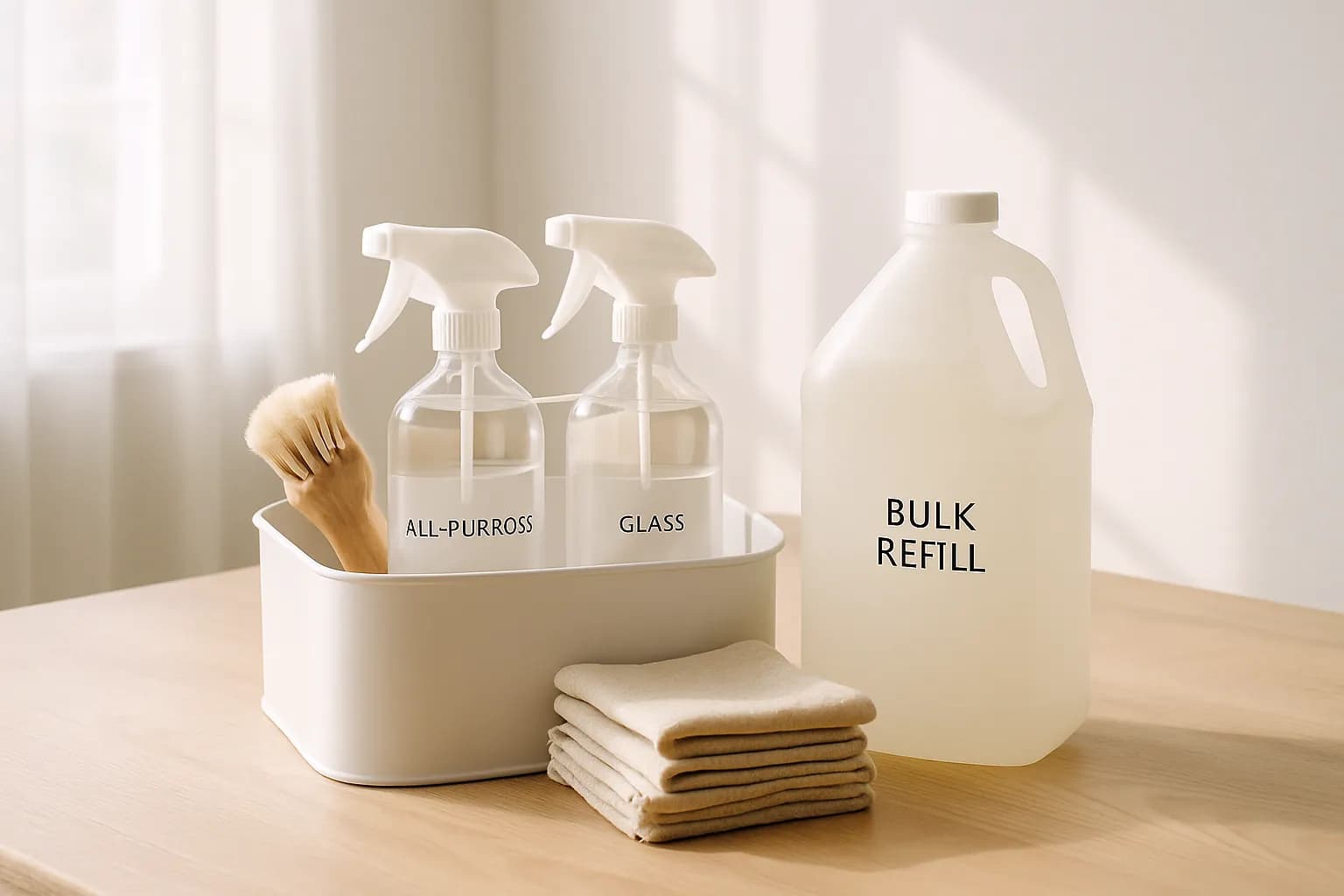
- Cleaning: move to refillable sprays and concentrates instead of a new plastic bottle each time.
- Laundry: ditch the plastic detergent jug and cut synthetic-fibre shedding — see the zero-waste laundry room.
Don't forget microplastics
Not all plastic waste is visible. Synthetic clothes shed microfibres in the wash, and plastic sponges and some "reusable" microfibre cloths shed as they wear. Washing synthetics in a filter bag, choosing natural-fibre textiles and cloths, and avoiding single-use plastics all cut the microplastic you send down the drain. (Silicone, by the way, is not the same as plastic — we explain the difference here.)
What about the plastic you can't avoid?
Some plastic is genuinely hard to skip. For that, recycle it properly — clean, dry and to your local rules — but treat it as the safety net, not the plan. Our guide to recycling properly covers what actually gets recycled and what quietly doesn't. And be wary of "biodegradable" or "compostable" plastic marketed as a free pass — those claims are slippery, as we cover in compostable vs biodegradable.
Frequently asked questions
What's the best way to reduce plastic waste? Use less in the first place — buy loose and in bulk, switch to bars and refills, and choose durable reusables. Prevention beats recycling, because most plastic is never actually recycled.
Can't I just recycle plastic instead? Recycling helps, but it's leaky — a large share of plastic collected for recycling is landfilled, incinerated or downcycled. It's a fallback after refusing and reducing, not a substitute for them.
Where should I start? Groceries and the bathroom. Loose produce, bulk shopping and bring-your-own bags cut a lot of packaging fast, and the bathroom swaps (bars, refills, metal razor) are cheap and easy.
Are compostable plastics a good alternative? Not usually a simple win — they need specific conditions to break down and can behave like normal plastic in landfill. Reducing real plastic beats swapping to compostable versions of single-use items.
The bottom line
You cannot recycle your way out of plastic — you have to use less of it. Audit your bin, cut the biggest streams (groceries, toiletries, kitchen film), switch to durable reusables room by room, and mind the microplastics. Recycle what's genuinely left, properly, and ignore the "biodegradable plastic" marketing. Refuse and reduce first, and the plastic problem shrinks at the source.
Keep reading: How to Remove Stains Naturally, How to Set Up a Refillable Cleaning System, and How to Shop Secondhand (and Thrift Well).