Compostable plastics — cups, cutlery and packaging made from PLA and similar plant-based materials — are marketed as guilt-free single-use. The reality is more complicated: they can be better than conventional plastic, but only under specific conditions that most people don't actually have. Here's the honest picture.
What compostable plastics are
Most are PLA (polylactic acid), made from plant sugars like corn starch rather than oil. On paper that's appealing — a renewable feedstock, and a material designed to break down rather than persist for centuries. That's the promise.
The catches that matter
- They usually need industrial composting. Most PLA only breaks down in hot, managed commercial facilities — not a home compost pile, and definitely not a landfill. If you don't have access to industrial composting or a municipal food-waste service that accepts it, it may never break down as intended (this is the core point of compostable vs biodegradable).
- In landfill, they behave like plastic — and can release methane as they slowly degrade in low-oxygen conditions.
- They contaminate recycling. PLA looks like conventional plastic but ruins batches of PET if it ends up in the recycling — see how to recycle properly. It can't go in either bin safely for most people.
- "Compostable" doesn't mean you can compost it. The label describes lab conditions, not your backyard.
- They're still single-use. Even a perfect compostable cup was made, shipped and used once — reducing beats swapping the material.
When compostable plastics genuinely help
They're a real improvement in the right setting:
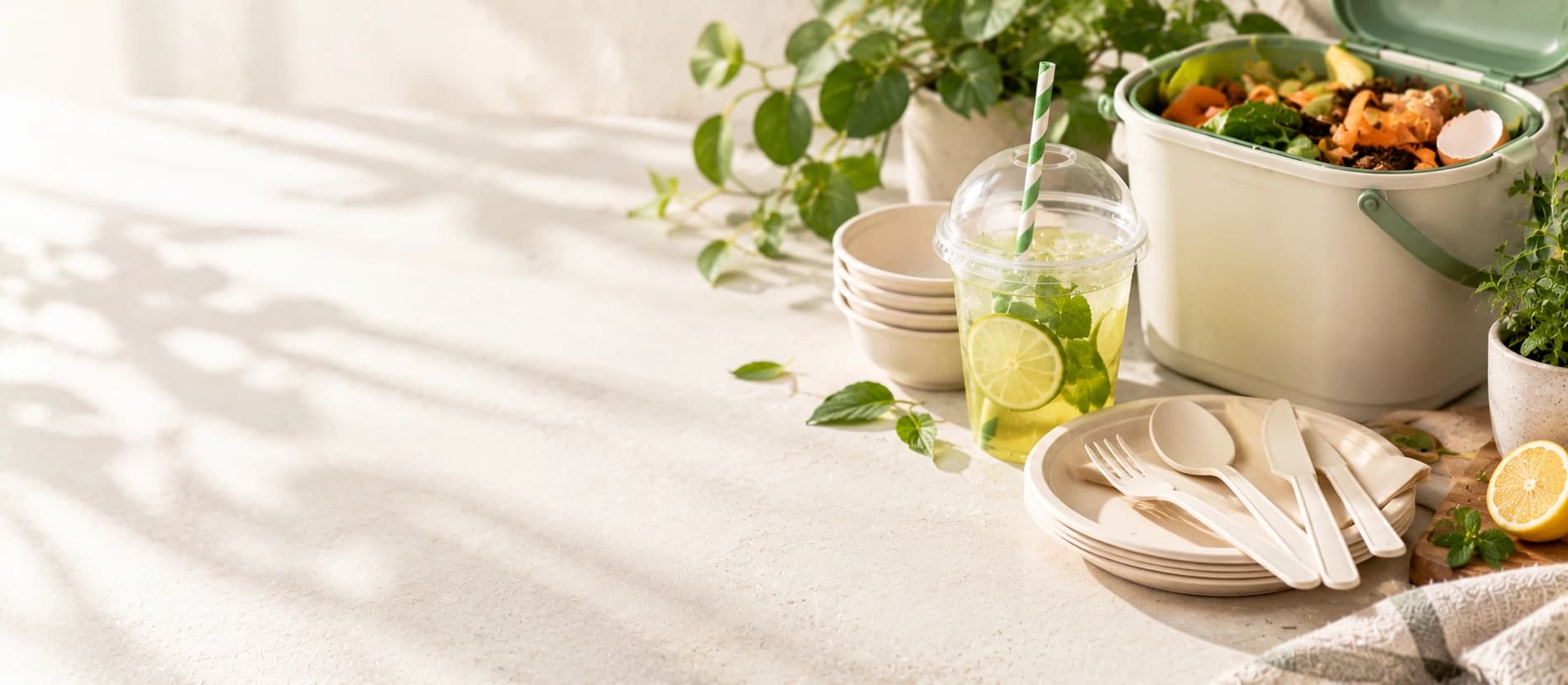
- At events or venues with commercial composting where all the "plates and cutlery" go to an industrial composter — that's what PLA is designed for.
- Where a municipal food-waste collection accepts them and sends them to a facility that reaches the required heat.
- Certified home-compostable items (marked OK Compost HOME) that you actually put in a working home compost.
Outside those, the benefit largely evaporates.
Watch out for oxo-biodegradable
Not to be confused with compostable: oxo-biodegradable plastic is conventional plastic with an additive that makes it fragment into microplastics rather than truly break down. It's worse than useless and banned in some regions. If you see it, avoid it.
What to do with them
- Have industrial composting or municipal food-waste collection that accepts PLA? Use that route.
- Certified home-compostable? Home compost or worm bin.
- Neither? It sadly goes in general waste — not recycling (it contaminates), and not a home pile that won't break it down.
- Best of all: skip the single-use item entirely and reuse.
Frequently asked questions
Do compostable plastics break down at home? Usually not. Most PLA needs an industrial composter's sustained heat; only items certified "home compostable" (OK Compost HOME) will break down in a backyard pile.
Are compostable plastics better than regular plastic? Only if they actually reach the composting conditions they need. Sent to landfill they behave much like normal plastic, and in recycling they cause contamination — so the setting matters more than the material.
Can I put compostable plastic in the recycling? No — it contaminates conventional plastic recycling. Compost it (if you have the right facility) or, failing that, put it in general waste.
Is PLA the same as biodegradable plastic? PLA is a specific compostable bioplastic with defined standards; "biodegradable plastic" is a vaguer, often meaningless claim. Avoid oxo-biodegradable plastic especially, which just fragments into microplastics.
The bottom line
Compostable plastics aren't a free pass — they're only genuinely eco-friendly when they reach the industrial (or certified home) composting they're built for, which most people can't provide. In landfill they act like plastic; in recycling they cause harm. If you have the right composting route, use it; if not, the honest move is to reduce single-use altogether rather than swap it for a plant-based version that ends up in the same bin.
Keep reading: Common Recycling Myths, Debunked, Compostable vs Biodegradable: The Difference, and Do Natural Cleaners Actually Disinfect?.