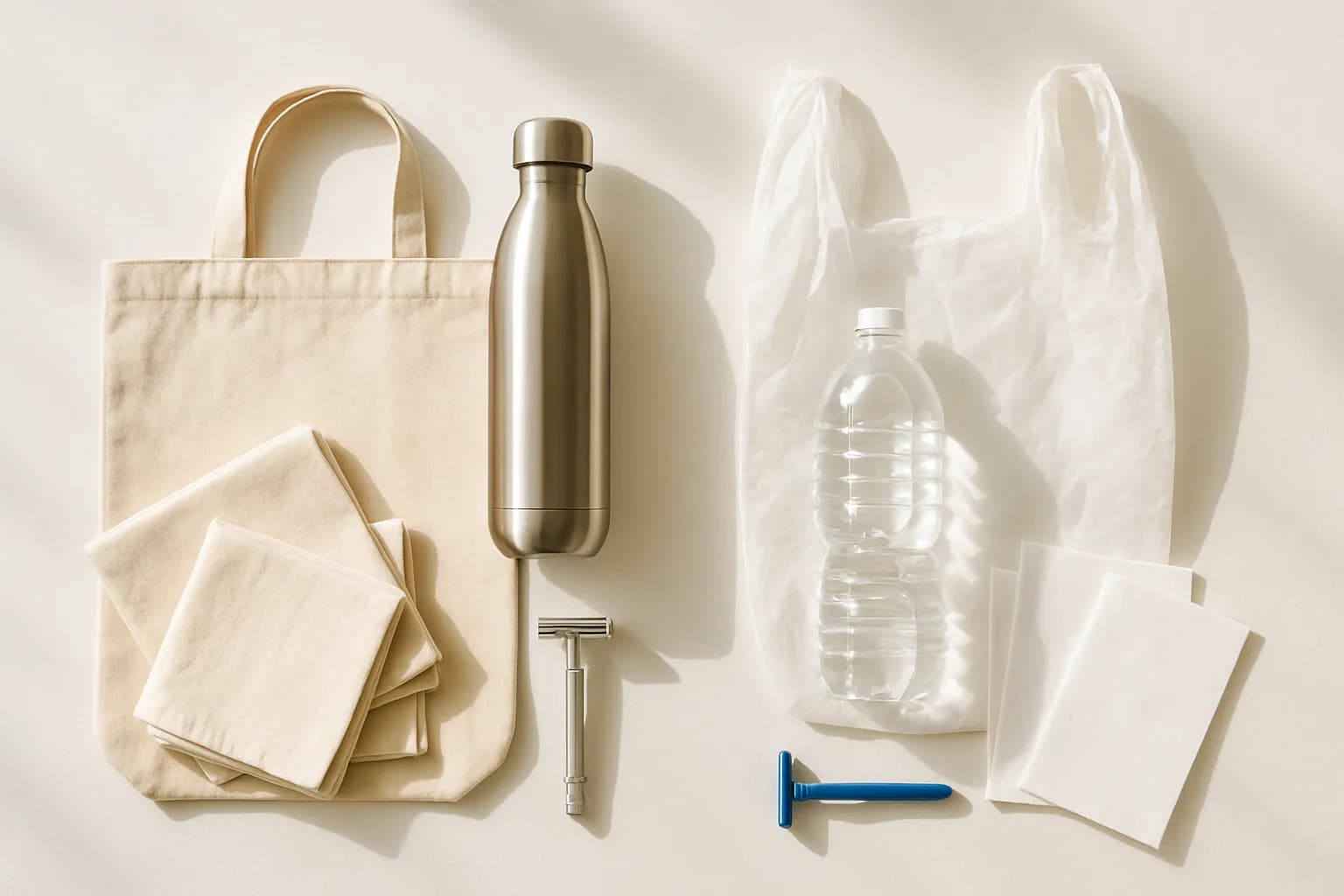
Short answer: not exactly. Silicone is not a conventional plastic, but it is not a natural material either. It is a synthetic polymer that sits somewhere between plastic and rubber — which is why you will see it called a "hybrid," and why even experts disagree on whether to file it under "plastic." Here is what that actually means for the silicone bags, lids, and baking mats in your kitchen.
So what is silicone, really?
Every plastic and silicone is a polymer — a long chain of repeating molecules. The difference is what the chain is built from. Conventional plastics have a carbon backbone. Silicone has a backbone of silicon and oxygen (called siloxane), with the silicon coming from silica — the main ingredient in ordinary sand and quartz.
But "made from sand" is only half the story. To turn silica into silicone, the silicon is reacted with hydrocarbons derived from fossil fuels. So silicone is a genuinely synthetic, fossil-fuel-touched material — just built on a different, more stable skeleton than everyday plastic.
That is why the honest answer to "is silicone plastic?" is sort of: it behaves like a very durable, heat-resistant plastic, but chemically it is its own thing.
Silicone vs plastic, side by side
| Silicone | Conventional plastic | |
|---|---|---|
| Backbone | Silicon + oxygen | Carbon |
| Made from | Silica (sand) + fossil-fuel hydrocarbons | Fossil fuels |
| Heat resistance | High (up to about 230°C) | Low — melts easily |
| Durability | Very long-lasting | Degrades, turns brittle |
| Sheds microplastics | Resists it | Readily |
| Biodegradable | No | No |
| Recyclable | Specialist facilities only | Limited curbside |
Does silicone have microplastics?
This is the question that matters most for your health and the ocean, and the answer is reassuring but not absolute. Silicone's stable molecular structure means it does not crumble into microplastics the way petroleum plastics do as they age. That is a real advantage.
The honest caveat: silicone can still break into small pieces if it is cut, torn, or worn against sharp edges, and those pieces can end up in waterways. It is far more stable than plastic, but "does not shed microplastics like plastic" is not the same as "microplastic-free." Independent research on its long-term impacts is still limited.
Is silicone eco-friendly, then?
It is better than single-use plastic — but not a green material in its own right. Weigh both sides:
In its favour: it lasts for years, is reusable, resists heat and cold, and is chemically stable, so food-grade silicone does not leach the way some plastics do. Every silicone item you reuse for years replaces a mountain of disposables — a single reusable silicone food bag can keep hundreds of single-use plastic bags out of the bin every year.
Against it: making silicone is energy-intensive and relies on fossil-fuel hydrocarbons, it is not biodegradable, and it cannot go in your curbside recycling — only specialist facilities can process it.
To check you are buying pure, food-grade silicone rather than a cheap filled blend, twist or pinch a flat part. Pure silicone stays its colour; a filler-heavy piece turns white where you twist it. Look for "food-grade," "platinum-cured," or "LFGB" on the label.
The verdict: is silicone a good zero-waste swap?
Yes — with one condition: you have to actually keep and reuse it for years. Silicone earns its footprint only through long, repeated use. Bought as a novelty and tossed in a season, it is just an expensive, non-recyclable synthetic. Bought to replace something disposable — cling film, sandwich bags, parchment paper — and used for a decade, it is one of the better swaps you can make.
So do not treat silicone as "natural" or guilt-free, but do treat a well-used silicone bag or baking mat as a solid, durable upgrade over single-use plastic. When it finally wears out, send it to a specialist silicone recycler rather than the bin.
For more myth-busting on everyday materials and swaps, browse our zero-waste home guides.
Keep reading: How to Make Homemade Natural Cleaning Products, How to Make Reusable Beeswax Wraps at Home, and How to Store Herbs & Greens Without Plastic.