Decluttering feels virtuous — until it becomes a car boot full of stuff heading straight to landfill. Sustainable decluttering is about rehoming, not dumping: getting your unwanted things to someone who'll use them, and keeping the true waste to a minimum. Here's how to clear out without the guilt.
The sustainable declutter hierarchy
Work down this order — bin is genuinely last:
- Keep or repair what you'll actually use.
- Sell things with resale value.
- Donate or give what's usable.
- Recycle what can't be reused.
- Bin only what's truly beyond saving.
Step 1: Sort honestly
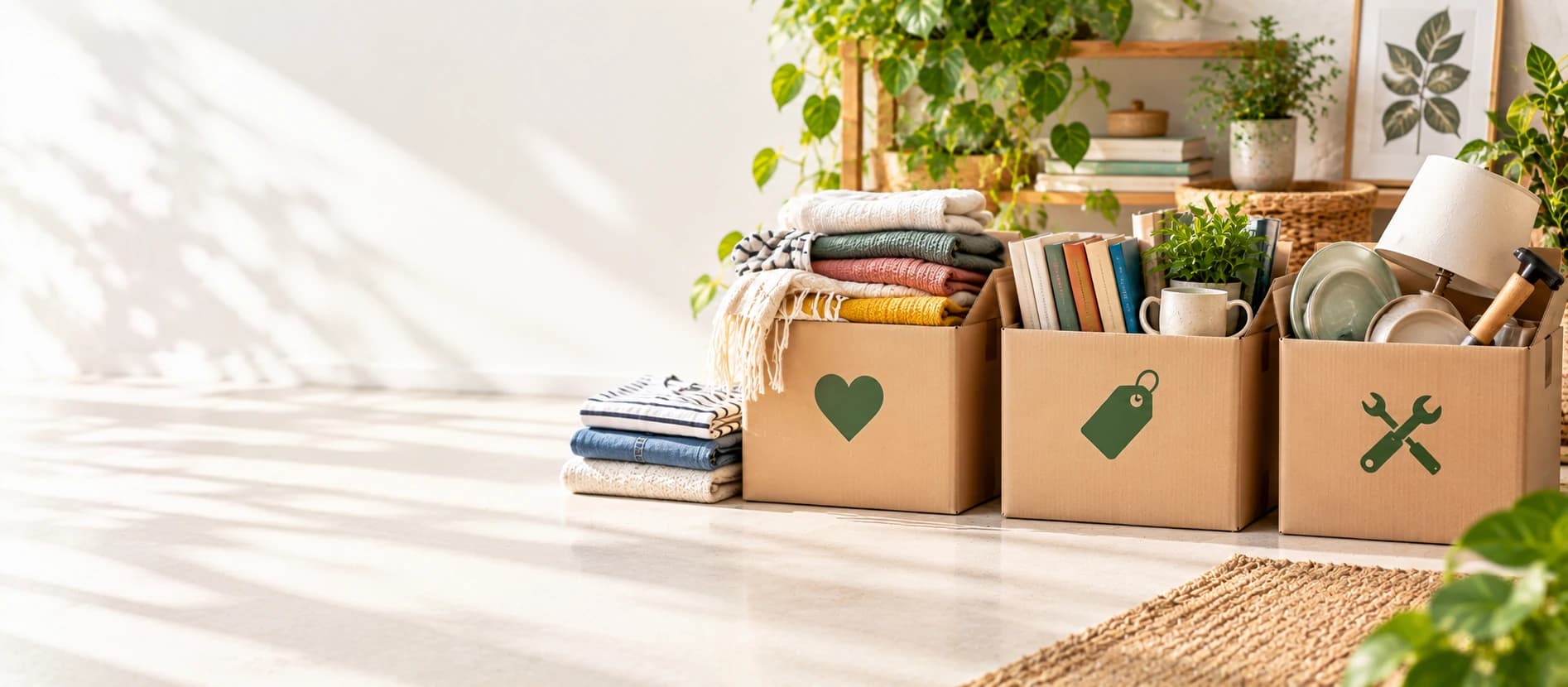
Make clear piles — keep, repair, sell, donate/give, recycle. Be honest in the "keep" pile (the goal is less stuff, not reshuffled stuff), and don't let "it might be useful someday" refill your cupboards.
Step 2: Rehome the usable stuff
This is where most of it should go:
- Sell — online marketplaces and apps for anything with value.
- Donate — charity shops, shelters, schools, animal rescues (they often need towels and bedding), libraries (books).
- Give — "buy nothing" and local giveaway groups rehome things fast and free.
- Swap — with friends, so one person's clear-out is another's find.
Step 3: Recycle what can't be reused
For things past use, don't default to the bin:
- Textiles — clothing banks and take-back schemes (even worn-out fabric can be recycled).
- Electronics — e-waste recycling points, never general waste.
- Everything else — check what's genuinely recyclable in our recycling guide.
Step 4: Buy less next time
The most sustainable declutter is the one you don't have to do. Clutter comes from over-buying, so the real fix is upstream — pause before purchases with our questions to ask before you buy, and lean on Refuse and Reduce from the 5 Rs. (This is where minimalism and zero waste meet: fewer things in means less to clear out.)
Frequently asked questions
How do I declutter without creating waste? Rehome instead of binning: sell or donate usable items, give things away in local groups, recycle textiles and electronics at proper points, and send only genuinely unusable things to landfill.
Where can I donate things that charity shops won't take? Try shelters (bedding, towels), schools and nurseries (craft supplies, toys), animal rescues (old towels), "buy nothing" groups, and specialist textile or electronics recycling for worn-out items.
Is decluttering actually good for the environment? Only if you rehome responsibly — dumping it all in landfill isn't. Done thoughtfully, decluttering keeps usable items in circulation and out of the bin.
How do I stop clutter coming back? Buy less in the first place — pause before purchases, buy quality over quantity, and adopt a "one in, one out" habit. Clutter is a buying problem more than a tidying one.
The bottom line
Decluttering sustainably means treating your unwanted things as resources, not rubbish: keep or repair, then sell, donate, give and recycle, with landfill as the last resort. Rehome thoughtfully — and then buy less, so the clear-out shrinks every time. A tidy home and a light bin aren't in conflict; they come from the same habit of consuming a little more consciously.
Keep reading: How to Freeze Food to Reduce Waste, How to Pack a Zero-Waste Lunch, and How to Recycle Properly (What's Actually Recyclable).