Here's a question worth answering honestly, because a lot of "natural cleaning" content skips it: cleaning and disinfecting are not the same thing, and most natural cleaners do the first far better than the second. Knowing the difference lets you clean green and stay safe where it actually matters.
Cleaning vs disinfecting
- Cleaning removes dirt, grease and most germs from a surface (largely by lifting them so they rinse away). This is what 95% of home cleaning needs.
- Disinfecting kills germs to a specific standard. It's only genuinely needed in a few situations.
Natural cleaners are excellent at cleaning. They are mostly not registered disinfectants.
What vinegar, bicarb and soap actually do
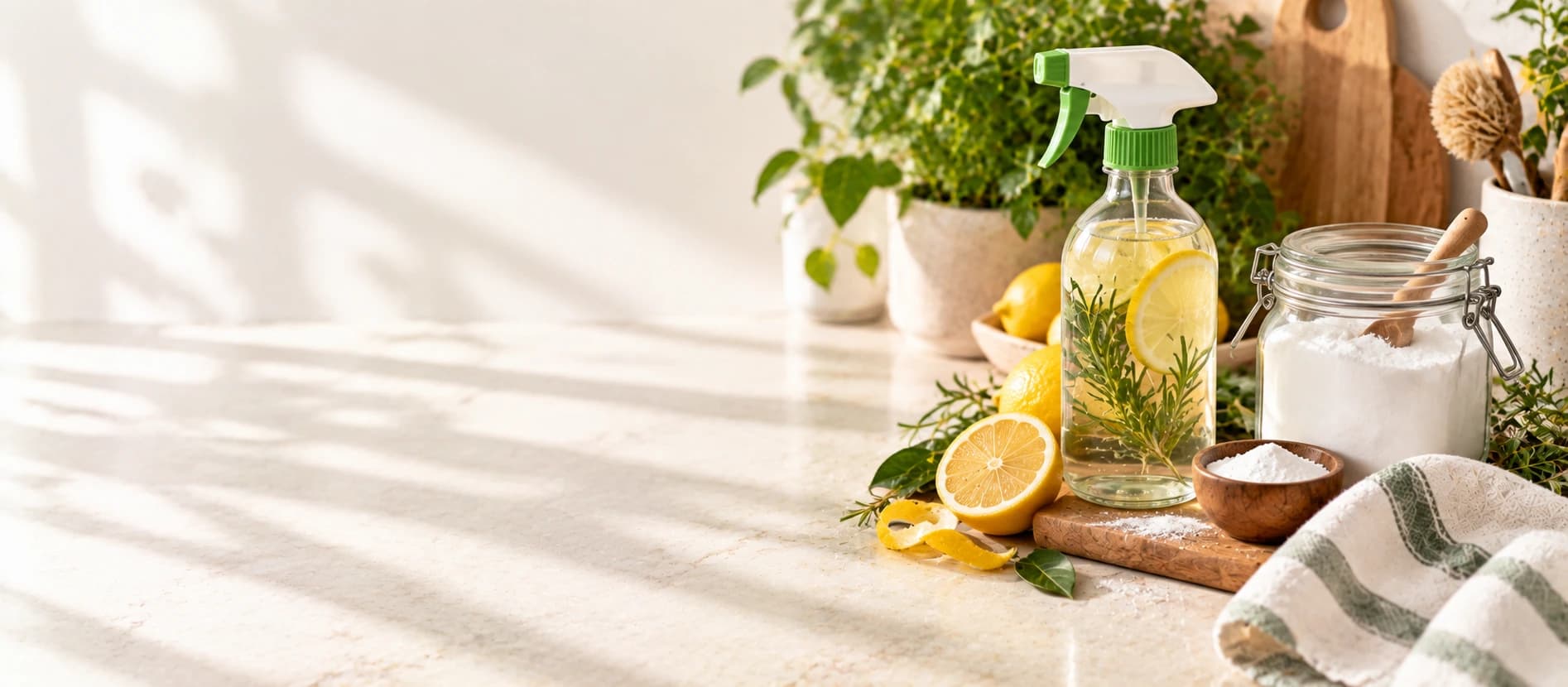
- White vinegar — cuts grease and limescale, deodorises, and has mild antibacterial properties, but it does not disinfect to a registered standard.
- Bicarbonate of soda — a gentle abrasive and deodoriser; not a disinfectant.
- Castile / bar soap — cleans and lifts germs so they rinse away; not a disinfectant.
They clean beautifully. Just don't trust a "kills 99.9%" claim on a natural product unless it's actually registered and tested — a good moment for spotting greenwashing.
What genuinely disinfects (and greener ways to do it)
When you do need to kill germs:
- Heat and steam — a steam cleaner or boiling water disinfects with no chemicals at all.
- Hydrogen peroxide and 70% alcohol — effective and relatively low-impact.
- A registered disinfectant, used only where truly needed.
When you actually need to disinfect
Honestly, not as often as cleaning-product marketing implies. Reserve disinfecting for: after handling raw meat, during illness in the house, and occasionally in the bathroom. Everyday surfaces just need cleaning — over-disinfecting isn't healthier.
Frequently asked questions
Does vinegar disinfect? It cleans, deodorises and has mild antibacterial action, but it is not a registered disinfectant and won't reliably kill all germs. Use it for everyday cleaning, not for disinfecting after raw meat or illness.
Can I disinfect without harsh chemicals? Yes — heat and steam disinfect chemical-free, and hydrogen peroxide or 70% alcohol are effective, lower-impact options for when you genuinely need to kill germs.
Is homemade cleaner good enough for a normal home? For everyday cleaning, absolutely — vinegar, bicarb and soap clean very well. Keep a proper disinfecting method on hand only for the few high-risk situations.
Do I need to disinfect every surface? No — most surfaces just need cleaning. Over-disinfecting offers little benefit for a typical home; save it for raw-meat areas, illness and the odd bathroom job.
The bottom line
Natural cleaners clean excellently — use your homemade sprays for the everyday. They mostly don't disinfect, so for the rare moments that call for killing germs, reach for heat, steam, peroxide or alcohol. Match the method to the job, ignore inflated "kills 99.9%" natural claims, and you'll clean green without cutting corners on safety.
Keep reading: Eco-Friendly Gift Wrapping Ideas, Glass vs Aluminium vs Plastic: What's Greener?, and How to Declutter Sustainably (Without Landfill).