A cupboard under the sink is often where household plastic quietly piles up: a different coloured spray bottle for every surface, a pack of disposable wipes, a roll of paper towels. The good news is you can replace almost all of it with a small, plastic-free cleaning kit that works just as well and costs less over time. Here is how to build one, and the honest truth about the DIY recipes everyone recommends.
You do not need a different cleaner for every surface. One refillable multi-surface spray and one reusable cloth handle the vast majority of household cleaning. Simplifying is itself a zero-waste win.
The plastic-free cleaning kit
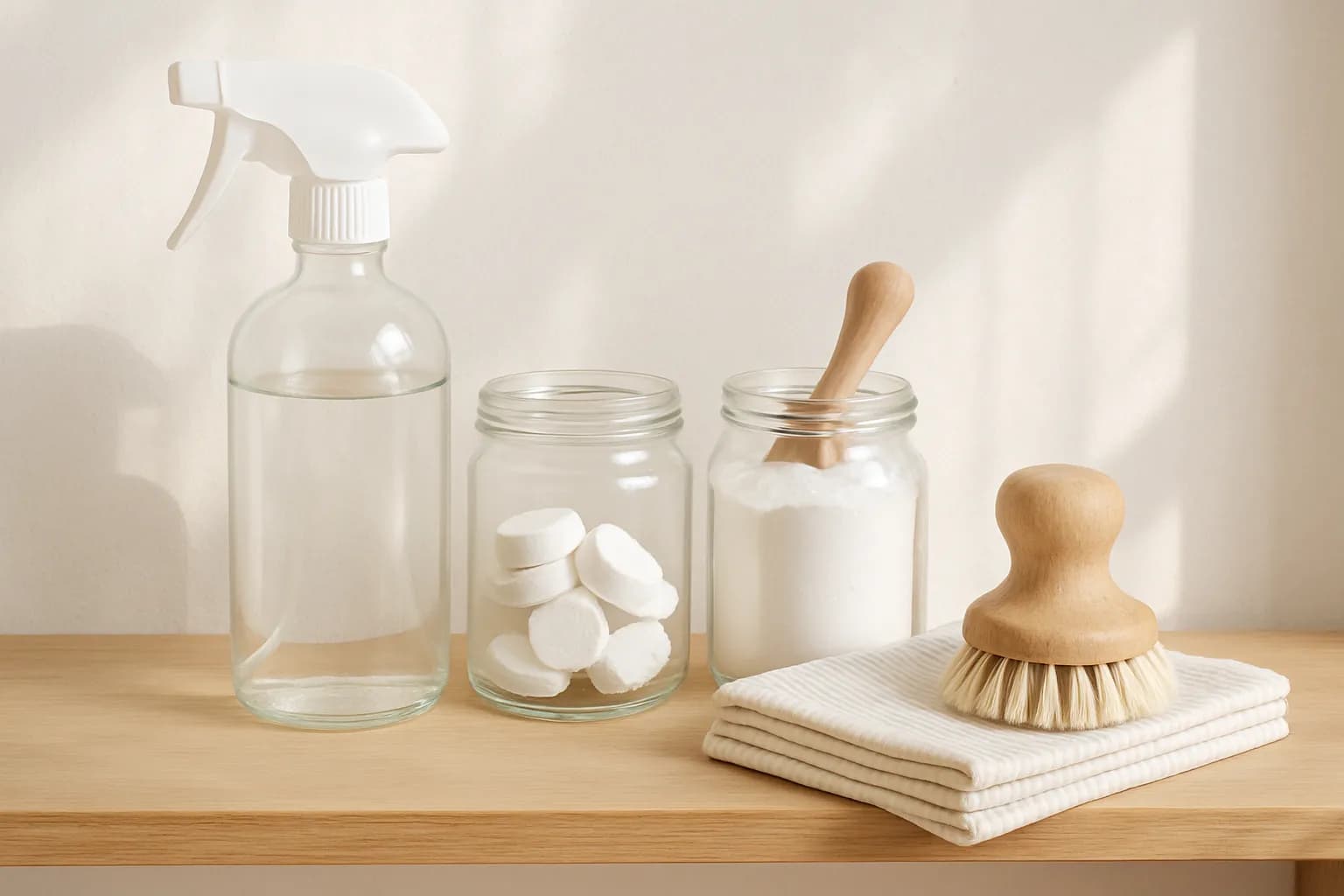
A genuinely low-waste cleaning setup comes down to four things:
- Refillable spray bottles you keep for years
- Cleaning concentrates or tablets to refill them, instead of new plastic bottles
- Reusable cloths in place of paper towels and disposable wipes
- A couple of DIY basics for the jobs they suit
Get those four right and the rotating cast of single-use plastic under your sink mostly disappears.
Refill sprays and cleaning tablets
The biggest, easiest swap is to stop buying the bottle every time. Cleaning tablets or concentrates dissolve in water inside a refillable bottle you keep indefinitely, so you buy the cleaning power without buying the plastic again and again. They clean identically to the ready-mixed sprays, since ready-mixed spray is mostly water anyway, and the packaging drops to a tablet in a paper wrapper.
The honest truth about DIY (vinegar and bicarb)
DIY cleaners are cheap and package-free, and for a lot of everyday jobs they genuinely work, but the internet oversells them, so here is the honest version:
- White vinegar is a great everyday cleaner and descaler for glass, taps and general grime. But do not use it on natural stone (marble, granite, some tiles), where the acid etches the surface, and it is not a reliable disinfectant for high-risk jobs.
- Bicarbonate of soda is a gentle abrasive, brilliant for scrubbing sinks, ovens and pans.
- Do not mix vinegar and bicarb together expecting a super-cleaner. They neutralise each other into salty water and fizz, which is fun but leaves you with a weaker cleaner than either alone. Use them for different jobs, not mixed in one bottle.
Used for what they are actually good at, vinegar and bicarb replace several specialist sprays. Used wrongly, they disappoint, which is why so many people give up on DIY.
Ditch paper towels and disposable wipes
The single biggest source of cleaning waste for most homes is not the bottles at all: it is paper towels and disposable wipes, used once and binned by the roll and the packet. Swapping them for washable cloths is the highest-impact change you can make.
Our pick of Swedish dishcloths out-absorbs paper towels and composts at the end, while the Skoy scrubbers replace the disposable sponge. Between them they retire most of your throwaway cleaning paper.
Dish and laundry: the two big ones
Two rooms deserve their own quick swaps, and we have full guides on both:
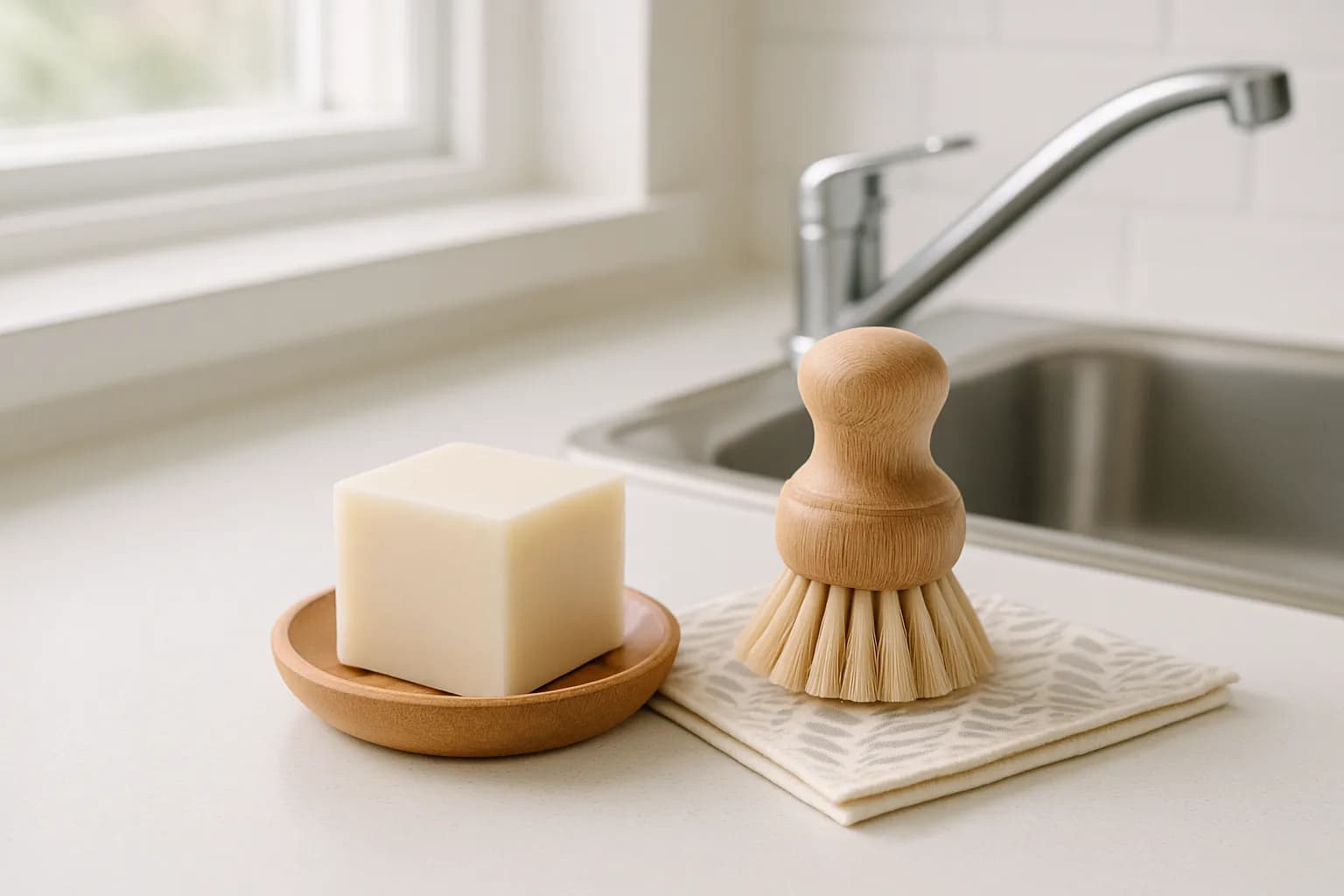
- At the sink, a solid block plus a compostable scrubber beats the bottle-and-sponge routine. See zero-waste dish soap.
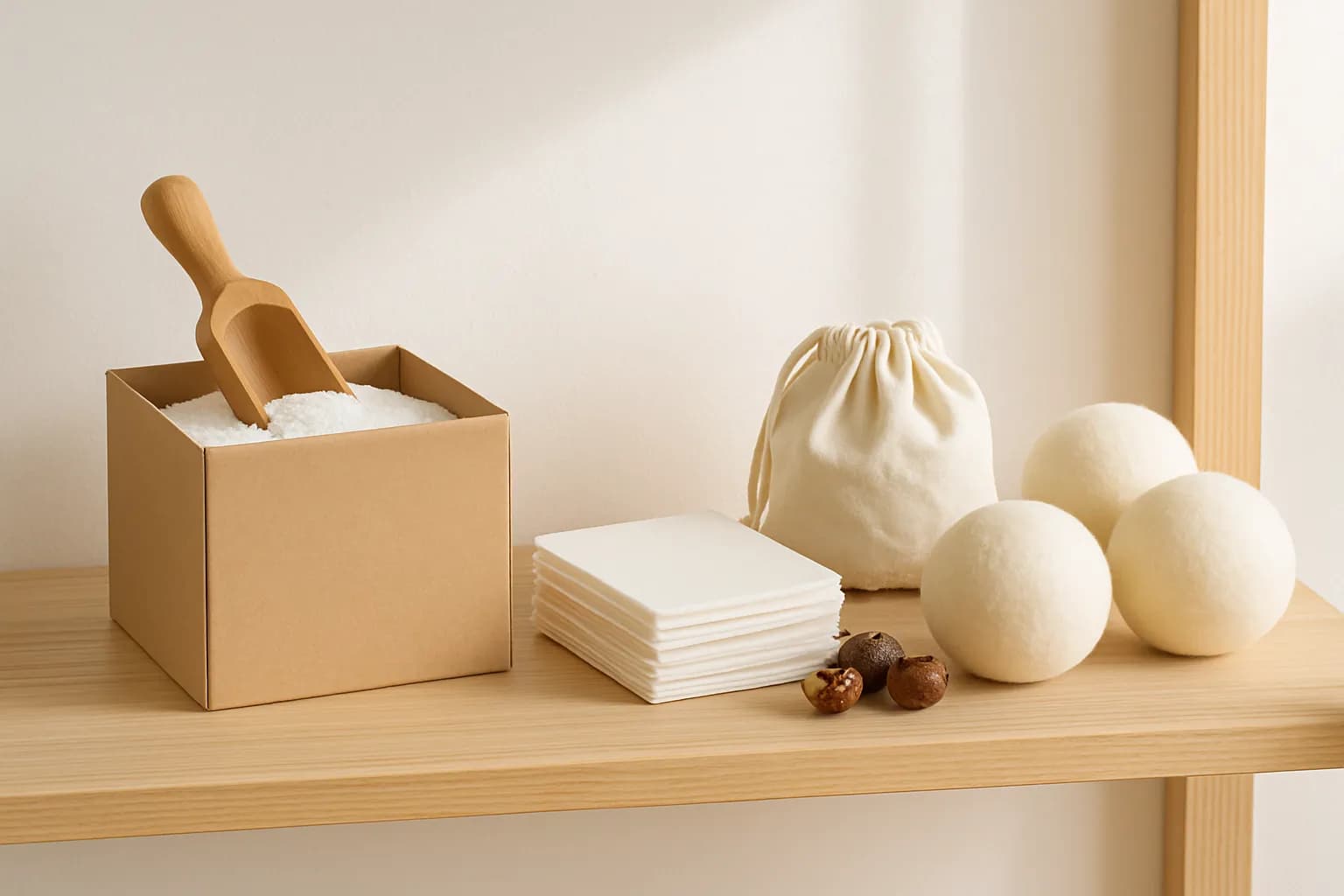
- For washing, a cardboard-box powder or a well-chosen strip drops the plastic jug entirely. See zero-waste laundry detergent.
A note on disinfecting
A zero-waste kit cleans brilliantly, but for the few jobs that need germs killed rather than cleaned away, see do natural cleaners actually disinfect?
The bottom line
A plastic-free cleaning kit is simpler, not harder: refillable sprays with tablets, reusable cloths instead of paper, and vinegar and bicarb used correctly for the jobs they suit. You do not need a shelf of specialist products, and you do not need to mix questionable potions. Keep it simple, keep the bottles, and your cleaning cupboard stops being a plastic problem.
Ecoxee is an Amazon Associate and may earn from qualifying purchases through these links. Learn more.
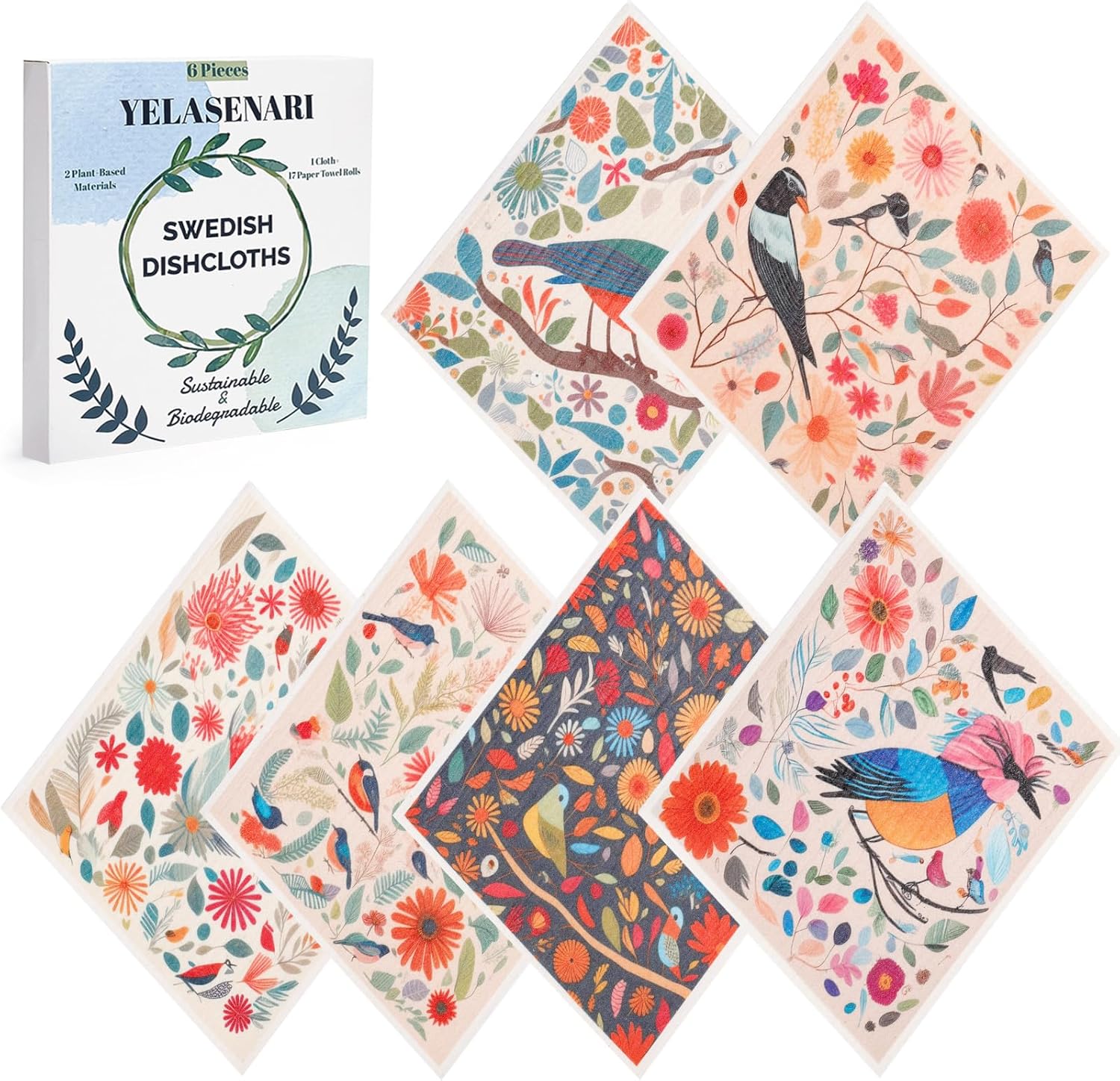
Swedish Dishcloths (6-pack)
Super-absorbent cellulose-and-cotton cloths that soak up far more than a paper towel, wash clean, and compost at the end: the swap that finally replaces the paper-towel roll.
Read our full review →
Skoy Reusable Dish Scrubbers (4-pack)
Flat, quick-drying cellulose-and-cotton scrubbers that replace disposable sponges: non-scratch, dishwasher-safe, and compostable at the end of their long life.
Read our full review →
Friendsheep Wool Dryer Balls (3-pack)
Handmade organic-wool balls that soften laundry, cut static, and shorten drying time, replacing both single-use dryer sheets and plastic-bottled fabric softener.
Read our full review →
Reusable Microfiber Mop Pads (Swiffer-compatible)
Washable microfiber pads that clip onto the Swiffer Sweeper you already own, in place of the disposable throwaway sheets: the same clean floor without the daily waste.
Read our full review →For more low-waste swaps, browse our zero-waste home guides or the full Ecoxee shop.
Keep reading: Zero-Waste Deodorant: Bars, Jars & Refills, Zero-Waste Dish Soap: Plastic-Free Ways to Wash Up, and Zero-Waste Laundry Detergent: Strips, Powder & More.