Home & Kitchen · Review
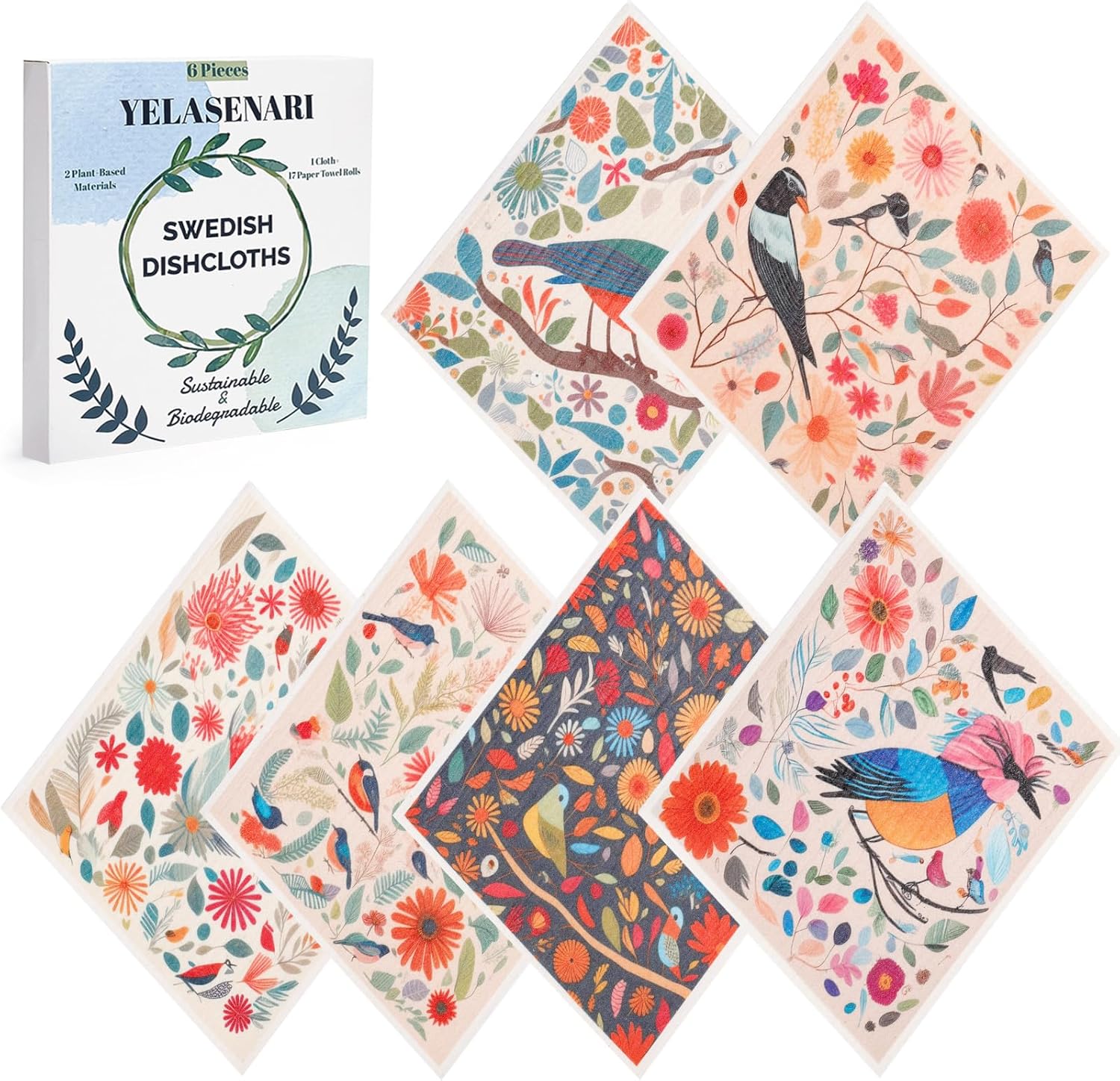
Swedish Dishcloths (6-pack)
Super-absorbent cellulose-and-cotton cloths that soak up far more than a paper towel, wash clean, and compost at the end: the swap that finally replaces the paper-towel roll.
🌿 Ecoxee decision: One of the easiest paper-towel swaps there is.
These do the job a paper towel does, but wash and reuse for months and compost at the end. Cheap, effective, and genuinely hard to argue with unless you already clean with cloths.
Ecoxee is an Amazon Associate and may earn from qualifying purchases. Learn more.
Best for
Not ideal for
Before you buy: do you actually need this?
Worth buying if…
- You get through rolls of paper towels
- You want a washable, compostable alternative
- You wipe counters and spills daily
- You will wash them rather than bin them
Probably skip it if…
- You already clean with rags or cloths
- You rarely use paper towels
- You will not wash and reuse them
The most sustainable option is often the one you already own.
Overview
Paper towels are convenience made wasteful: a roll used up and thrown away every week. Swedish dishcloths are the swap that finally sticks, because each cellulose-and-cotton cloth soaks up far more than a paper towel and wrings out clean.
Rinse and reuse them through the day, then toss them in the dishwasher or washing machine to sanitise. They are quick-drying and odour-resistant, so they do not develop that damp funk, and the prints make them nice enough to leave out.
Each cloth replaces around fifteen rolls of paper towels over its life and composts when it is worn through. The honest limits: they are not for heavy grease, they will not deep-scrub baked-on grime, and they dry stiff, though they soften the moment they are wet.
What we like
- Absorb far more than a paper towel
- Washable and reusable for months
- Quick-drying and odour-resistant
- Compostable at the end of life
- Cheap and come in pretty prints
Worth knowing
- Not for heavy grease (bin those)
- Dry stiff (they soften when wet)
- Will not deep-scrub baked-on grime
- Need washing to stay fresh
- Wear out eventually, then compost
The honest trade-offs
The nuance most reviews leave out.
- Cellulose and cotton have a footprint to make, but each cloth replaces roughly fifteen rolls of paper towels, so the trade is firmly worth it.
- They need washing, which uses a little water and energy, though far less than making new paper towels.
- For big greasy messes, a paper towel you bin is sometimes the more hygienic choice.
- If you already clean with rags you own, you do not need these.
Sustainability breakdown
Our honest read on how eco-friendly this really is. Where we cannot verify something, we say so rather than guess.
Cellulose (wood pulp) and cotton: natural, renewable fibres.
Each cloth lasts months and replaces around fifteen paper-towel rolls.
Fully compostable when worn out, unlike paper towels that are used once.
Typically ships in plastic-free, recyclable packaging.
Materials are stated, but sourcing detail varies by seller.
If you don't buy it
If you already wipe up with rags or cloths you own, you do not need these, so keep using them. Buy a pack when you are genuinely trying to get off the paper-towel roll and want something more absorbent than an old tea towel.
The Ecoxee verdict
Swedish dishcloths are one of the most satisfying, no-regret swaps in the kitchen: they out-absorb paper towels, wash clean, last for months, and compost when they are done. Keep a couple by the sink and you will reach for the paper roll far less. The only reason to skip is if you already clean with cloths you own; otherwise, at this price, it is an easy yes.
Check Price on AmazonMore Home & Kitchen picks

Owala FreeSip Insulated Stainless Steel Water Bottle
Buy only if it replaces something.

Bee's Wrap Beeswax Wrap Roll
A great swap for cling film, with real limits.

KeepCup Brew Glass Reusable Coffee Cup
Worth it, if you actually carry it.