A single shampoo bar can replace two or three plastic bottles, ships without water weight, and lasts for ages. It is one of the best-value plastic swaps in the bathroom. But shampoo bars have a reputation for a greasy, waxy transition that puts people off, and the honest truth is that this is usually avoidable once you know what causes it. Here is how to switch and make a bar actually work for your hair.
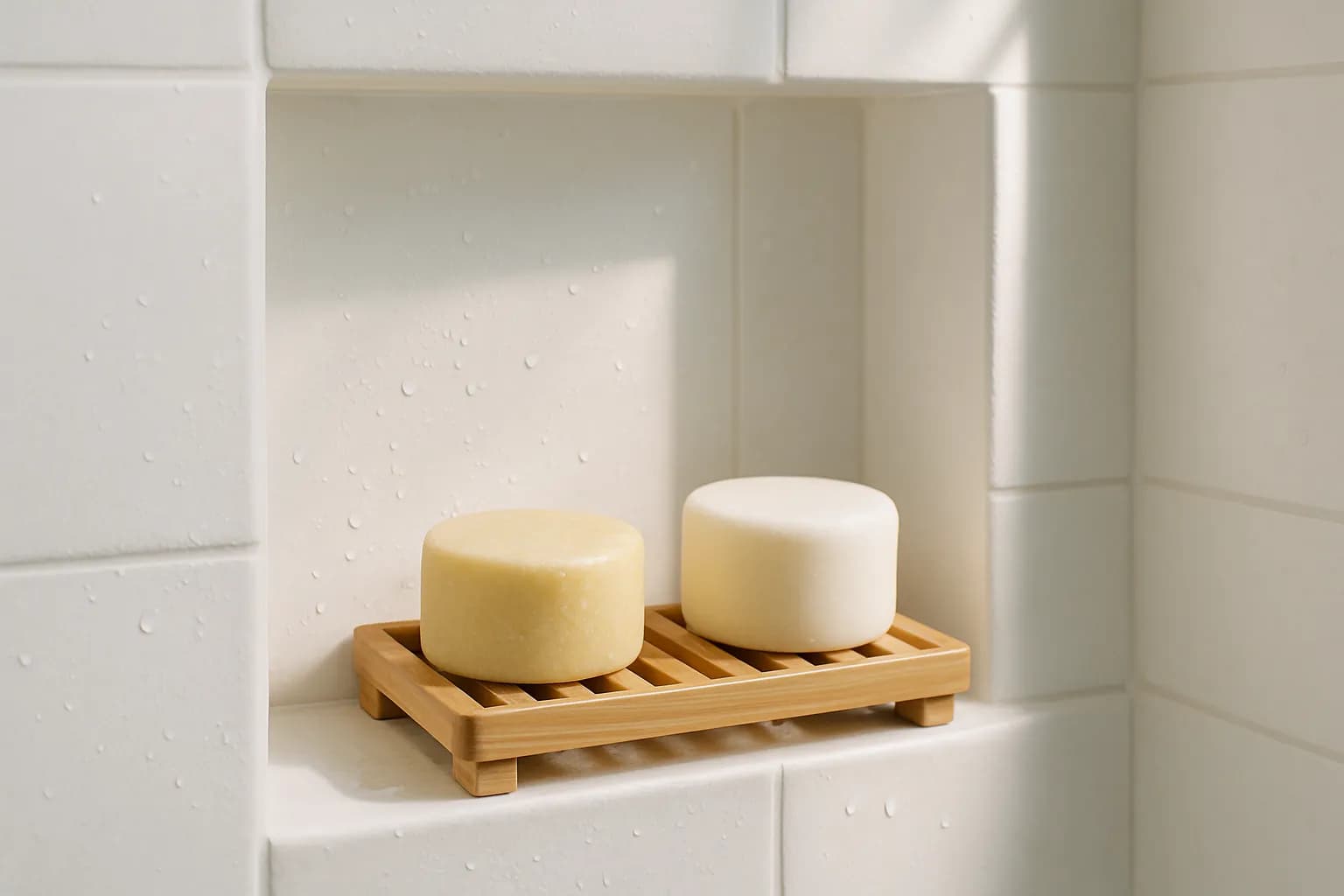
Store your bar somewhere it can dry out between washes: a slatted or draining soap dish, not a puddle in the shower tray. A bar left sitting in water turns to mush and lasts a fraction as long.
Why a shampoo bar
The maths is simple. A concentrated solid bar contains no water to ship, comes in paper or no packaging, and outlasts the bottles it replaces several times over. For a bathroom staple most of us buy again and again, that is a genuine, repeatable cut in plastic.
How to use a shampoo bar
There are two easy methods. Either rub the wet bar directly onto your scalp a few times to build up lather, then massage with your hands; or work the bar between your palms to make a lather and apply that. Focus on the scalp, not the lengths, rinse thoroughly, and follow with conditioner. That is all there is to it.
The transition phase, and how to skip it
Here is the honest part. Some people switch to a shampoo bar and find their hair feels waxy, greasy or dull for a couple of weeks. This is the phase that gives bars a bad name, and it is very often avoidable.
The cause is usually one of two things:
- Residue meeting hard water. Traditional soap-based bars can react with the minerals in hard water to leave a film. A conditioning (surfactant-based) bar rather than a true soap bar largely avoids this.
- Buildup from your old products. A one-off clarifying wash or an apple cider vinegar rinse (one tablespoon in a cup of water, poured through and rinsed out) strips the film and resets your hair.
Do that, choose the right type of bar for your water, and most people never really have a bad transition at all.
Hard water is usually the real culprit
If your bar keeps leaving hair waxy no matter what, your water is probably hard. A periodic ACV rinse helps, a surfactant-based (rather than soap-based) bar helps more, and some people in very hard-water areas are simply happier with a refillable liquid shampoo. That is not a failure of zero-waste; it is just matching the product to your water.
The honest caveats before you buy
- Not every bar is truly plastic-free. Check that the bar itself ships in paper or cardboard, not shrink-wrap.
- A "shampoo bar" and a "soap bar" are not the same. A gentle, hair-formulated (surfactant) bar behaves far better than a bar of bath soap used on hair.
- Conditioner bars exist too, and pairing them is the easiest way to keep longer hair smooth.
- Curly, colour-treated or very fine hair can be pickier, so expect to try one or two before you find your match.
The bottom line
A shampoo bar is a high-value, satisfying plastic swap, and the dreaded waxy phase is mostly a hard-water-and-residue problem you can design out: pick a conditioning bar suited to your water, do a clarifying or ACV rinse if hair feels filmy, and keep the bar dry between washes. Get that right and you will replace a steady stream of plastic bottles without a second thought.
Ecoxee is an Amazon Associate and may earn from qualifying purchases through these links. Learn more.

The Earthling Co. Shampoo & Conditioner Bar Set
A plastic-free shampoo and conditioner bar set that uses gentle surfactants, not soap, so it lathers, rinses clean, and skips the waxy transition that gives bar shampoo a bad name.
Read our full review →
Bambaw Reusable Metal Safety Razor
A weighted metal razor that takes cheap, recyclable blades: sustainable, plastic-free shaving that also saves money over time. One of the highest-impact bathroom swaps there is.
Read our full review →For more low-waste swaps, browse our zero-waste home guides or the full Ecoxee shop.
Keep reading: Zero-Waste Toothpaste: Tabs, Powder & Jars, DIY Bathtub Cleaner: A Non-Toxic Tub Scrub That Works, and How to Make Liquid Soap from Bar Soap.