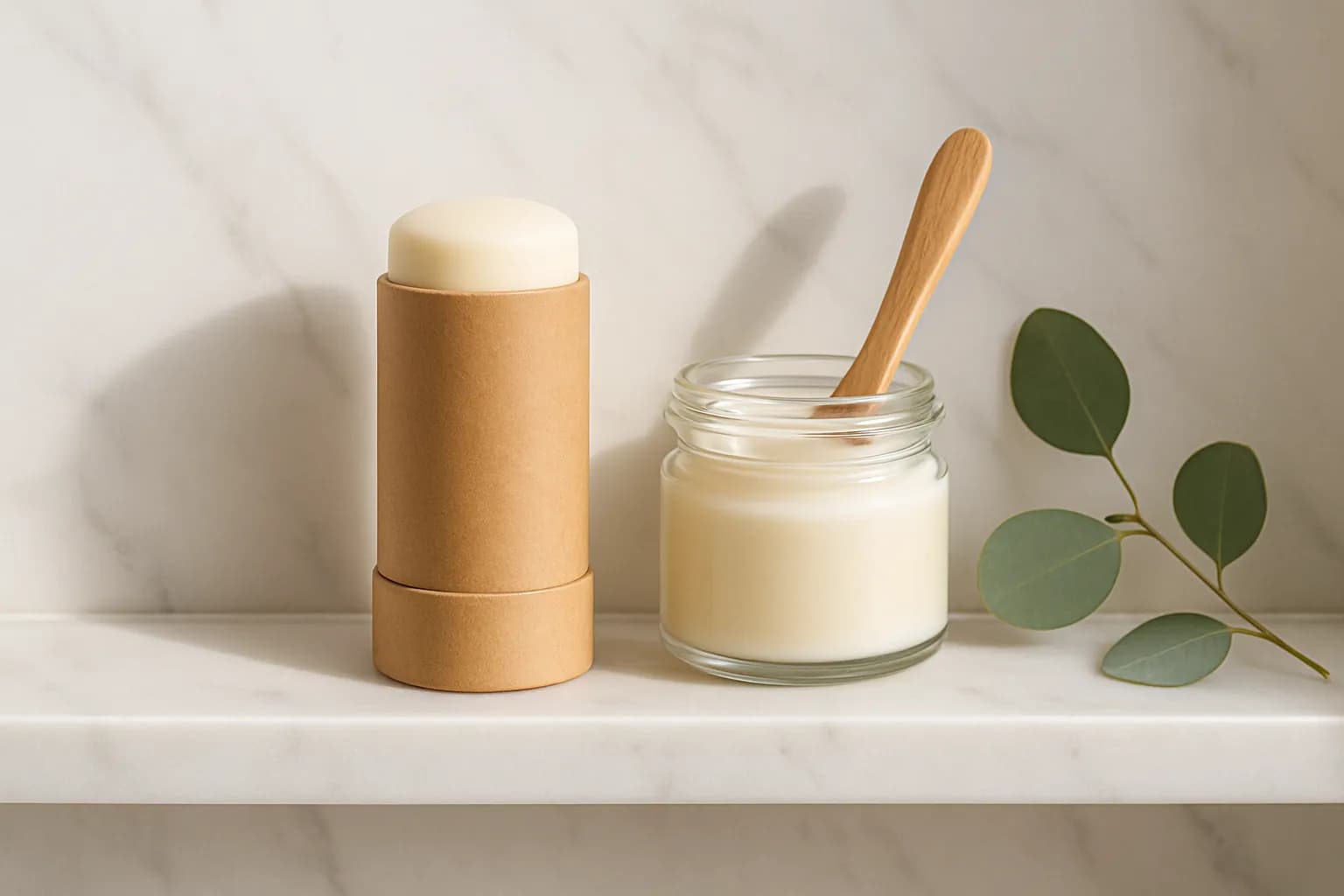
A plastic deodorant stick or aerosol can is used up in a few weeks and thrown away, and the applicators in particular are almost never recycled. Zero-waste deodorant swaps them for paperboard sticks, glass jars and refills. It genuinely works, but there is one honest thing to understand before you switch, and it is the difference between a deodorant and an antiperspirant.
Give any new deodorant a full week or two before you judge it. Your skin and scent adjust, and a fair test is a fortnight, not a nervous first morning.
Why regular deodorant is a plastic problem
Between the plastic twist-up applicators and the aerosol cans, conventional deodorant is a steady stream of hard-to-recycle packaging, replaced monthly, per person. The product inside is fine; it is the throwaway delivery that piles up. That is exactly what zero-waste formats are designed to fix.
Deodorant vs antiperspirant: the honest bit
This is the part most eco guides skip. Almost every zero-waste option is a deodorant, which tackles odour, not an antiperspirant, which uses aluminium salts to reduce how much you sweat. Mainstream antiperspirants stop wetness; natural deodorants do not.
So if you have relied on an antiperspirant to stay dry, switching to a plastic-free deodorant will feel different: you will still sweat, you just should not smell. For most people that is completely fine once they adjust. If staying visibly dry matters to you, know that going in, rather than deciding the deodorant "does not work."
Your zero-waste deodorant options
- Paperboard push-up sticks apply just like a normal stick, but the tube is cardboard you compost or recycle. The most familiar format.
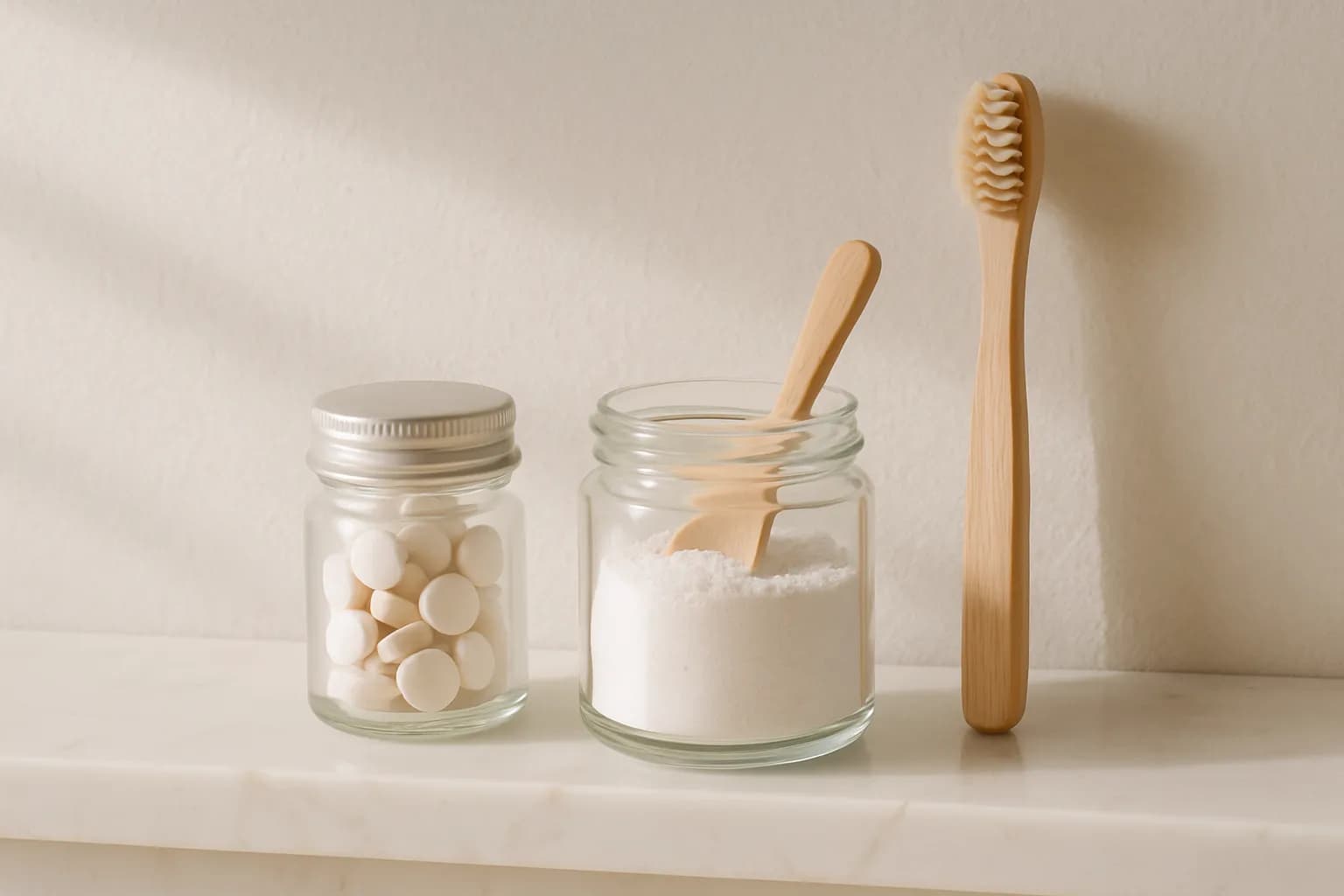
- Deodorant balms in a glass jar are scooped or fingertip-applied. A little goes a long way and the jar is endlessly reusable, though application is less tidy.
- Refillable deodorants use a durable case you refill, cutting packaging to almost nothing over time.
- DIY from coconut oil, arrowroot and bicarb is cheap and package-free, but see the warning below before you reach for the baking soda.
The "adjustment period" is real; the "detox" is not
You will read that your armpits need to "detox" from antiperspirant. There is no such thing; your body does not store toxins in your armpits. What is real is a short adjustment: as you stop blocking sweat, your skin's normal moisture and bacteria rebalance, which can take a week or two. Push through that fortnight before judging, but do not buy into detox products or dramatic claims. It is adjustment, not detoxification.
The baking soda warning
Many natural deodorants, and most DIY recipes, use baking soda to neutralise odour, and it works well, but it is alkaline and a common cause of armpit irritation, redness and rashes, especially on sensitive skin or after shaving. If a natural deodorant makes you itch or sting, baking soda is the usual culprit. Switch to a clearly labelled baking-soda-free formula, which uses gentler ingredients like magnesium or arrowroot, and the problem usually disappears.
The bottom line
Zero-waste deodorant is an easy plastic swap once you set expectations: it controls odour, not sweat, it needs a fortnight to settle, and if it irritates you, go baking-soda-free. A paperboard push-up stick is the simplest starting point for most people, with a refillable case the lowest-waste option long term. Get the format and expectations right and you will not miss the plastic tube.
Ecoxee is an Amazon Associate and may earn from qualifying purchases through these links. Learn more.

HiBAR Fragrance-Free Sensitive Deodorant
A plastic-free, baking-soda-free deodorant in a cardboard push-up tube: fragrance-free and gentle enough for sensitive skin, from a well-known zero-waste brand.
Read our full review →
Bambaw Reusable Metal Safety Razor
A weighted metal razor that takes cheap, recyclable blades: sustainable, plastic-free shaving that also saves money over time. One of the highest-impact bathroom swaps there is.
Read our full review →For more low-waste swaps, browse our zero-waste home guides or the full Ecoxee shop.
Keep reading: Zero-Waste Dish Soap: Plastic-Free Ways to Wash Up, Zero-Waste Laundry Detergent: Strips, Powder & More, and Zero-Waste Shampoo Bars: How to Switch.