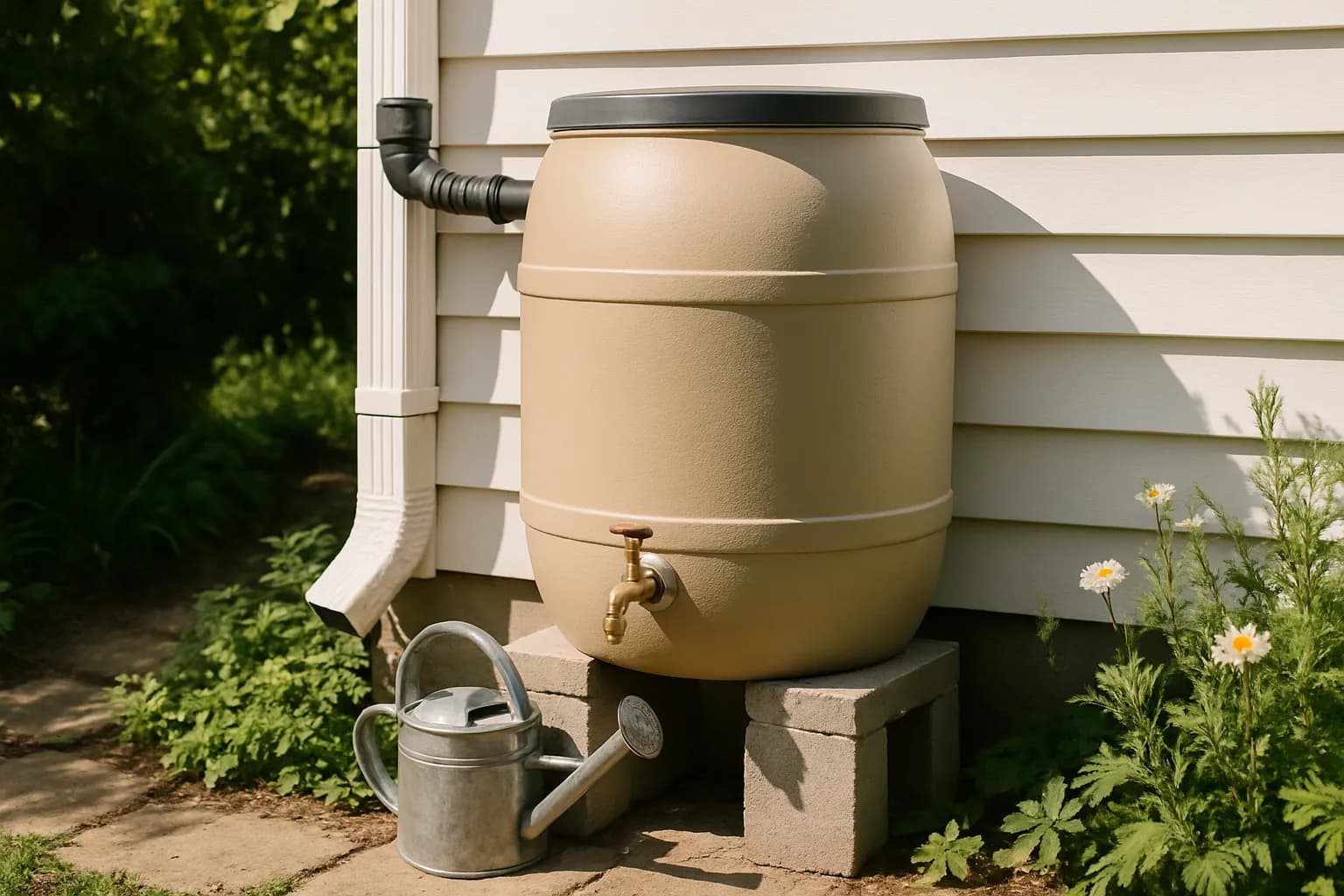
Every rainstorm sends gallons of free water rushing off your roof and down the drain — a rain barrel catches it instead. Rainwater harvesting is one of the simplest sustainability wins for any garden: it cuts your water bill, keeps plants growing through dry spells, and rainwater is gentler on plants than tap.
Here's how to set up a DIY rain barrel from a bin, safely and without any plumbing skills.
What you'll need
- A clean, food-grade barrel or sturdy lidded bin (200 litres is common)
- A spigot or tap kit for the outlet
- A downpipe diverter kit
- Fine mesh or screen
- Blocks or a stand to raise it
- A drill with a hole saw
Build it step by step
- Choose a barrel with a lid, and if it's reused, be certain it never held anything toxic.
- Fit the tap. Drill a hole near the base and seal the spigot in with a washer or silicone.
- Screen the inlet. Cut an opening in the lid and cover it with fine mesh to keep out debris and stop mosquitoes breeding.
- Connect the diverter. Fit a diverter into your gutter downpipe and run it to the inlet — diverters send overflow back down the pipe automatically.
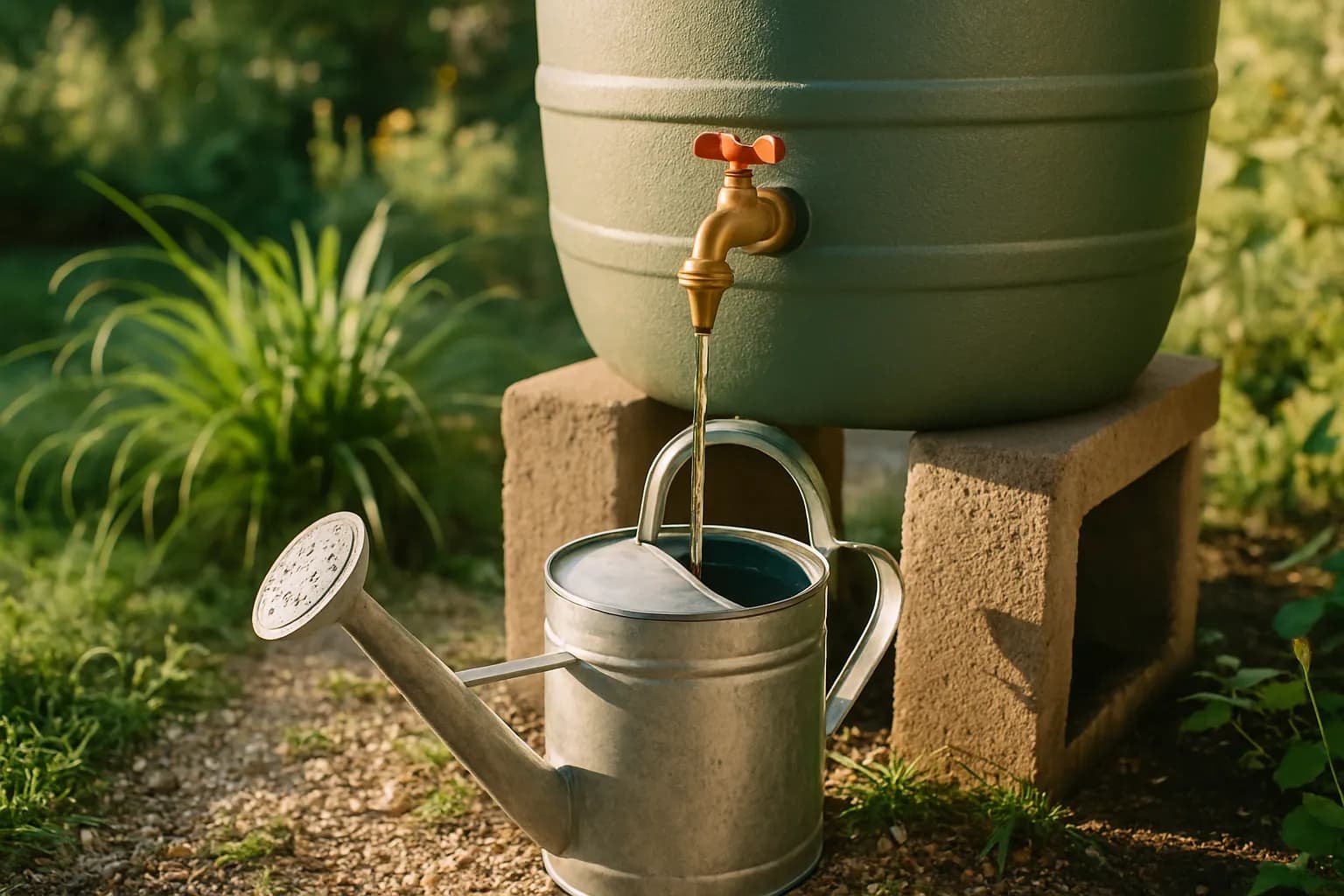
- Raise it on blocks. Height gives you gravity pressure at the tap and room to fit a watering can underneath.
- Add an overflow near the top, directed well away from the house foundations.
- Wait for rain — the first good downpour fills it.
Using rainwater wisely
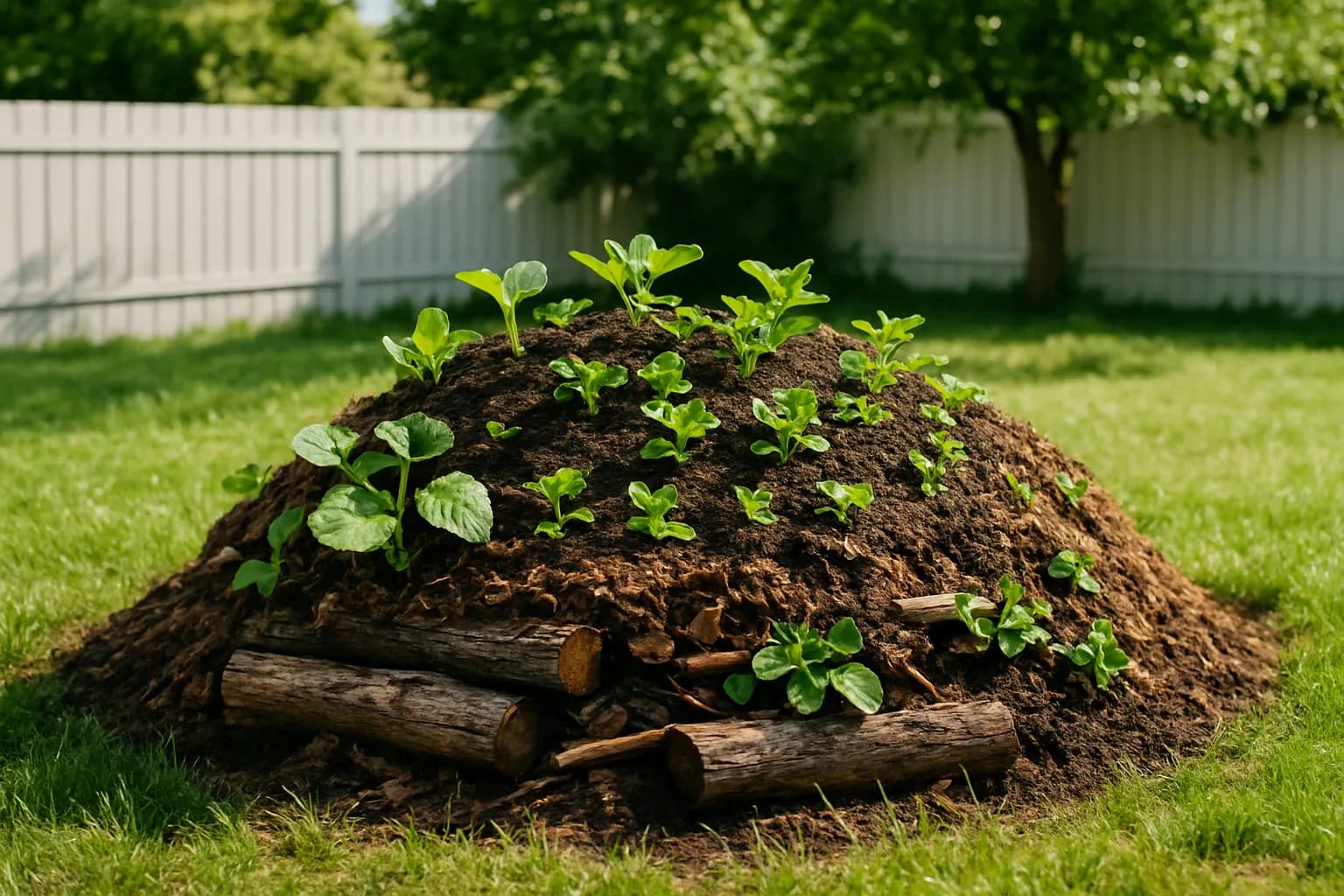
Rainwater is perfect for lawns, borders, ornamentals, and watering the base of vegetables. As a sensible precaution — roof runoff can carry contaminants — water the soil rather than edible leaves you'll eat raw, keep the barrel covered, use the water reasonably fresh, and don't drink it. It pairs beautifully with moisture-holding beds like a hugelkultur bed.
Set up a barrel of your own? Share your build in the comments at ecoxee.com — every liter saved counts.
Keep reading: Vegetable Container Gardening for Small Spaces, Apartment Composting: No Garden, No Smell, and How to Make Seed Envelopes (DIY Seed Packets).