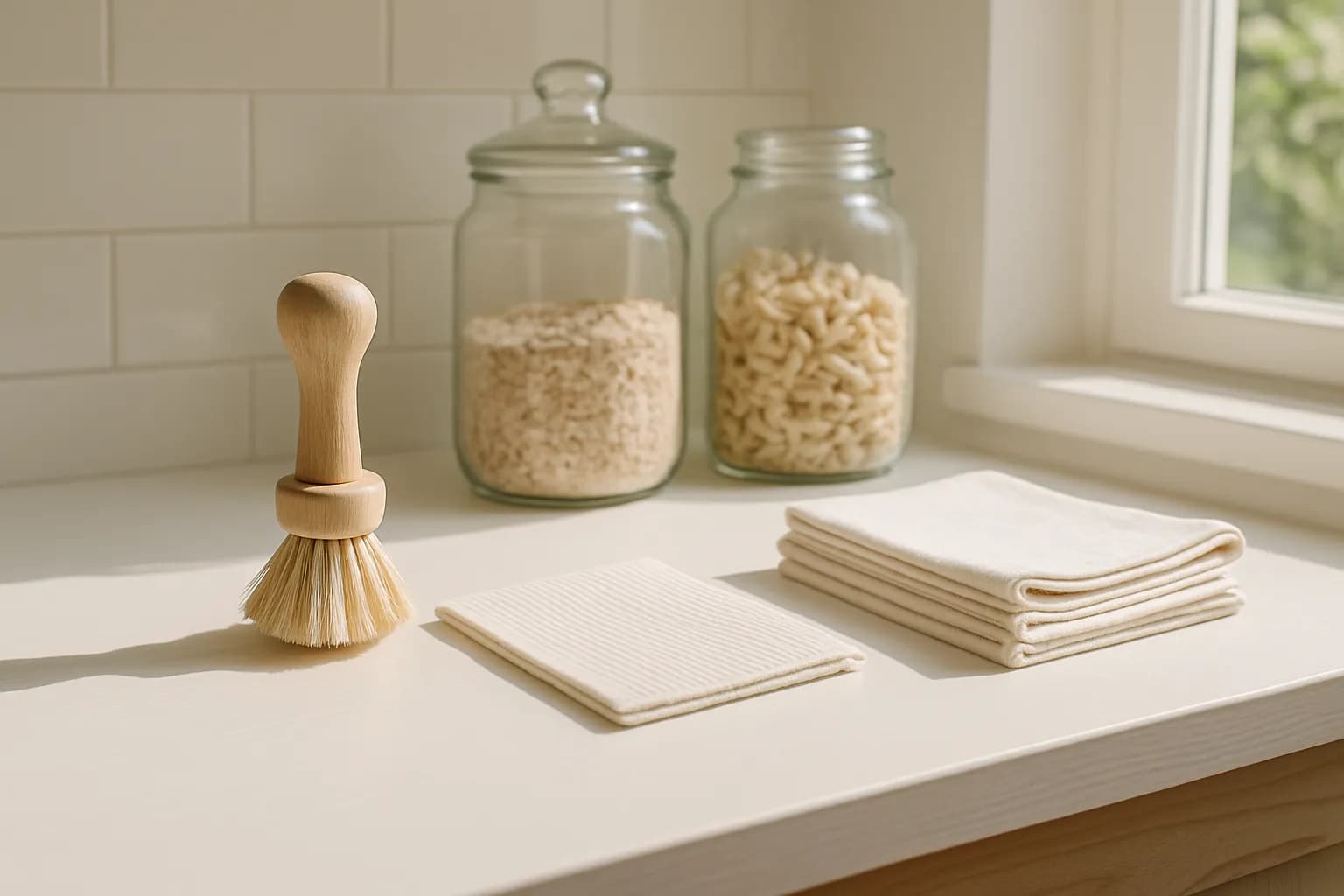
The humble kitchen sponge is a surprisingly bad actor: most are plastic foam that sheds microplastics as it wears, harbours bacteria, and ends up as landfill within weeks. Plenty of plastic-free alternatives clean just as well (or better), last longer, and compost at the end. Here are the best.
The alternatives
- Swedish dishcloths — cellulose-and-cotton cloths that are super-absorbent, dry fast (so they don't smell), replace rolls of paper towels, and compost at the end. A brilliant all-rounder — see our review of the best ones.
- Natural scrubbers — coconut-fibre, walnut or loofah pads tackle stuck-on food without scratching, and compost when worn.
- Wooden dish brushes — a bamboo handle with natural bristles (ideally a replaceable head) keeps your hands out of the water; see the best plastic-free kitchen brushes.
- Unpaper cloths and rags — cut-up old towels or cotton cloths for wiping.
Keeping them hygienic
The reason sponges get gross is they stay wet. Natural alternatives avoid this if you:
- Wring out and let them dry fully between uses (a fast-drying dishcloth or brush beats a soggy sponge).
- Wash cloths regularly with your laundry.
- Replace or compost them when worn, rather than clinging to a disintegrating one.
Ecoxee is an Amazon Associate and may earn from qualifying purchases through these links. Learn more.
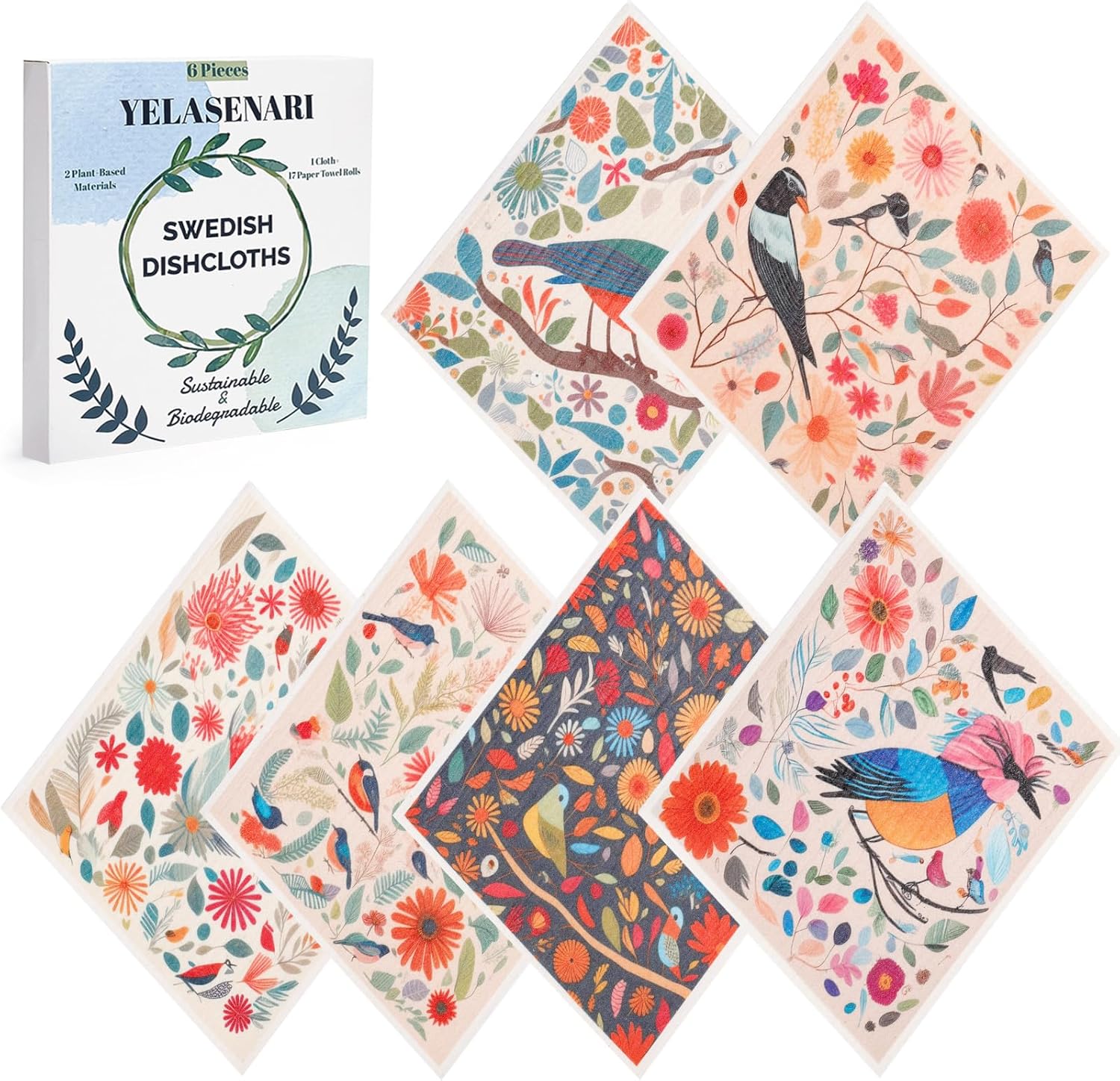
Swedish Dishcloths (6-pack)
Super-absorbent cellulose-and-cotton cloths that soak up far more than a paper towel, wash clean, and compost at the end: the swap that finally replaces the paper-towel roll.
Read our full review →
Skoy Reusable Dish Scrubbers (4-pack)
Flat, quick-drying cellulose-and-cotton scrubbers that replace disposable sponges: non-scratch, dishwasher-safe, and compostable at the end of their long life.
Read our full review →Frequently asked questions
Are kitchen sponges bad for the environment? Most are plastic foam that sheds microplastics, harbours bacteria, and goes to landfill quickly. Natural, compostable alternatives are cleaner in both senses.
What can I use instead of a sponge? Swedish dishcloths, natural coconut or loofah scrubbers, wooden dish brushes, and cut-up cotton rags — all clean well, last longer, and compost at the end.
Are Swedish dishcloths better than sponges? In most ways, yes — more absorbent, faster-drying (so less smelly and bacterial), longer-lasting, and compostable. One replaces both a sponge and rolls of paper towels.
How do I keep plastic-free scrubbers hygienic? Let them dry fully between uses, wash cloths with your laundry, and compost or replace them when worn. Staying dry is what keeps any of them fresh.
The bottom line
Swap the plastic foam sponge for a Swedish dishcloth, a natural scrubber, and a wooden brush, and you'll clean just as well while ditching the microplastics, the bacteria and the landfill. Let them dry between uses, wash or compost when worn — a small change that quietly upgrades one of the most-used, most-wasteful items in the kitchen.
Keep reading: Plastic-Free Kitchen Swaps That Actually Work, Questions to Ask Before You Buy Anything, and Reusable Cotton Rounds & Zero-Waste Makeup Removal.