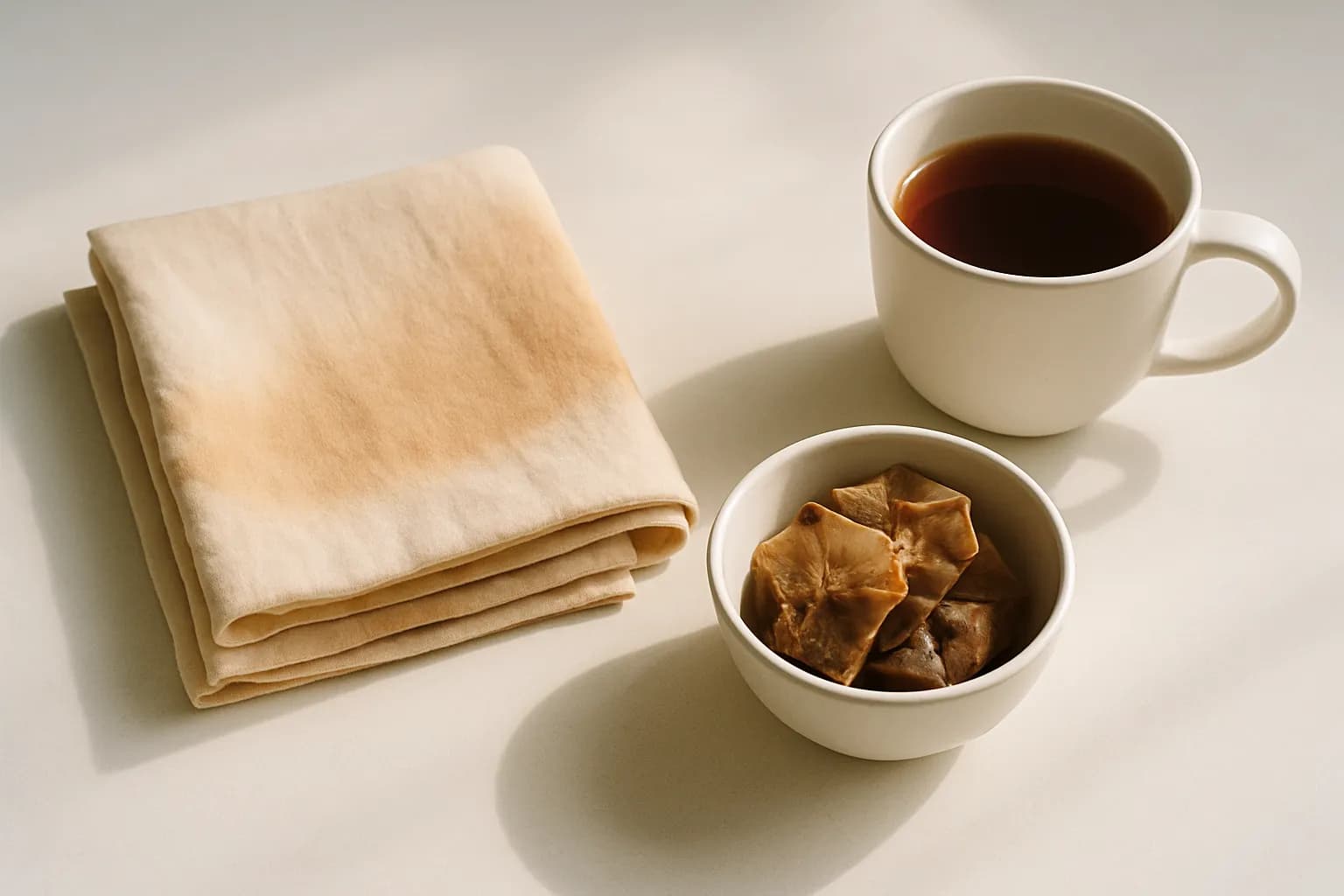
Tea dyeing is the gentlest, most natural way to give plain or stained fabric a warm, antique tint — using nothing but tea bags and hot water. Let's be honest up front: it won't give you bright colour. But for a soft cream-to-tan, lived-in look — antiquing white cotton, rescuing a stained shirt, ageing costume fabric — tea dyeing fabric is lovely, and practically free.
What tea dyeing can (and can't) do
Tea gives muted, warm tones — ivory, tan, soft brown — not vibrant colour. It's perfect for an antique or vintage look, evening out yellowed whites, or hiding a stain on old cotton. Two honest limits: it works only on natural fibres (cotton, linen, silk, wool) — polyester and other synthetics won't take it — and it's more a gentle stain than a permanent dye, so it softens and fades over time unless you help set it (below).
What you'll need
- Black tea bags — the more you use, the deeper the shade (a strong batch might be 10–20 bags)
- A large stainless or enamel pot (not aluminium)
- Natural-fibre fabric — cotton, linen, or silk
- Hot water, and optionally a little salt or white vinegar to help hold the colour
How to tea-dye fabric, step by step
- Wash the fabric first so it takes the colour evenly (new fabric often has a finish that resists dye).
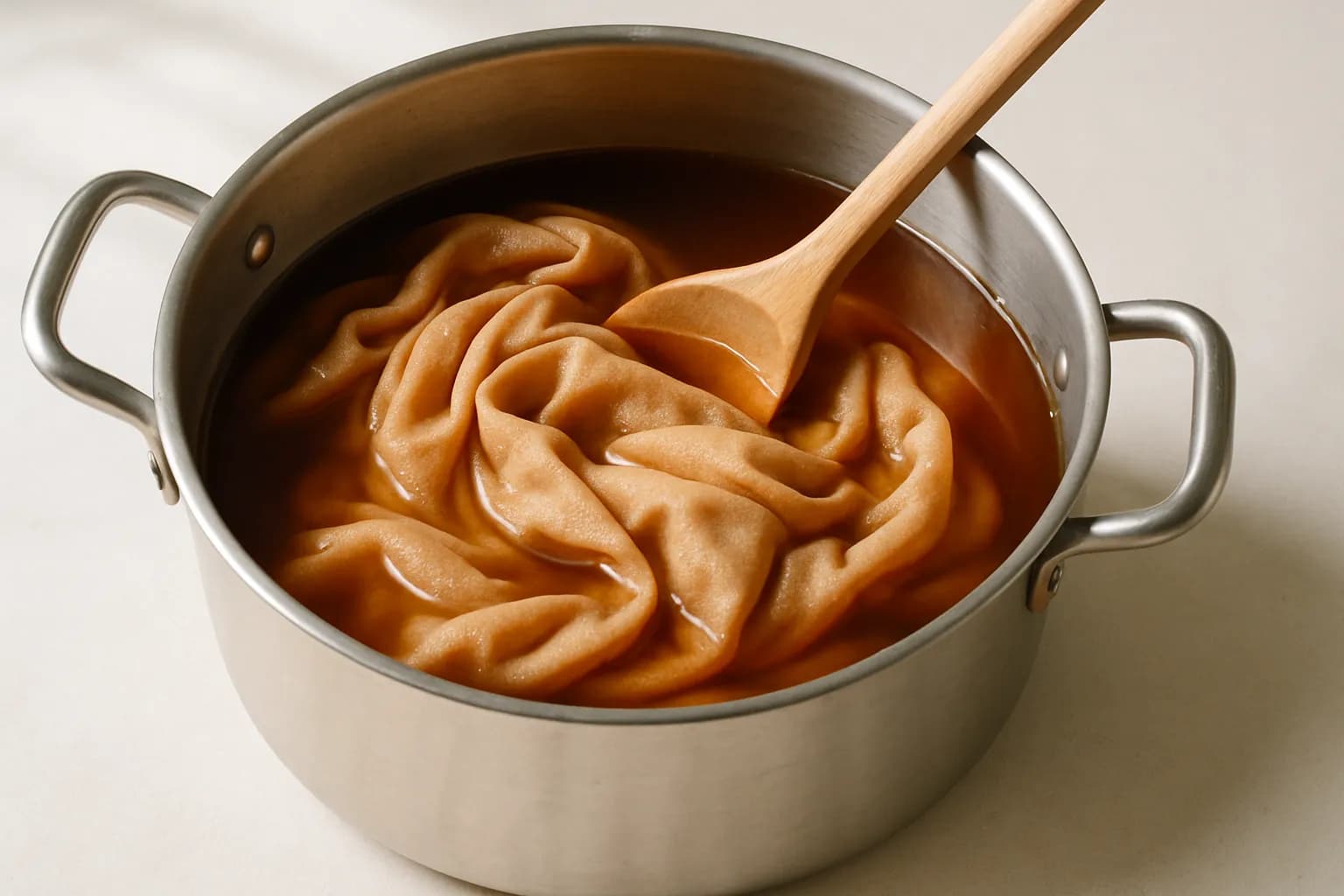
- Brew it strong. Boil water and steep a big batch of tea for 15+ minutes — more bags and longer steeping mean a darker result. Remove the bags.
- Soak the fabric. Wet it first, then submerge it in the warm tea and keep it moving so it dyes evenly. Leave anywhere from 30 minutes to overnight; longer means deeper.
- Aim darker than you want — fabric always dries a shade or two lighter than it looks wet.
- Rinse cool. A splash of vinegar in the rinse helps set the colour.
- Line-dry, and press if needed.
Tea-dyeing a shirt or clothes
The same method works for a tea dye shirt or other clothes — just use a tub big enough to move the garment around freely. Keep stirring so it doesn't blotch, submerge it fully for an even tone, and remember natural fibres only. It's a lovely way to soften a too-bright white tee or refresh a tired one, in the same spirit as upcycling an old cotton t-shirt.
Which tea gives which shade
- Black tea — tan to soft brown; the workhorse. More bags, longer soak, darker.
- Rooibos or red tea — warmer, slightly rosy tan.
- Green tea — the palest, most subtle tint.
- Coffee — not a tea, but it dyes a deeper brown if you want more.
Ecoxee is an Amazon Associate and may earn from qualifying purchases through these links. Learn more.
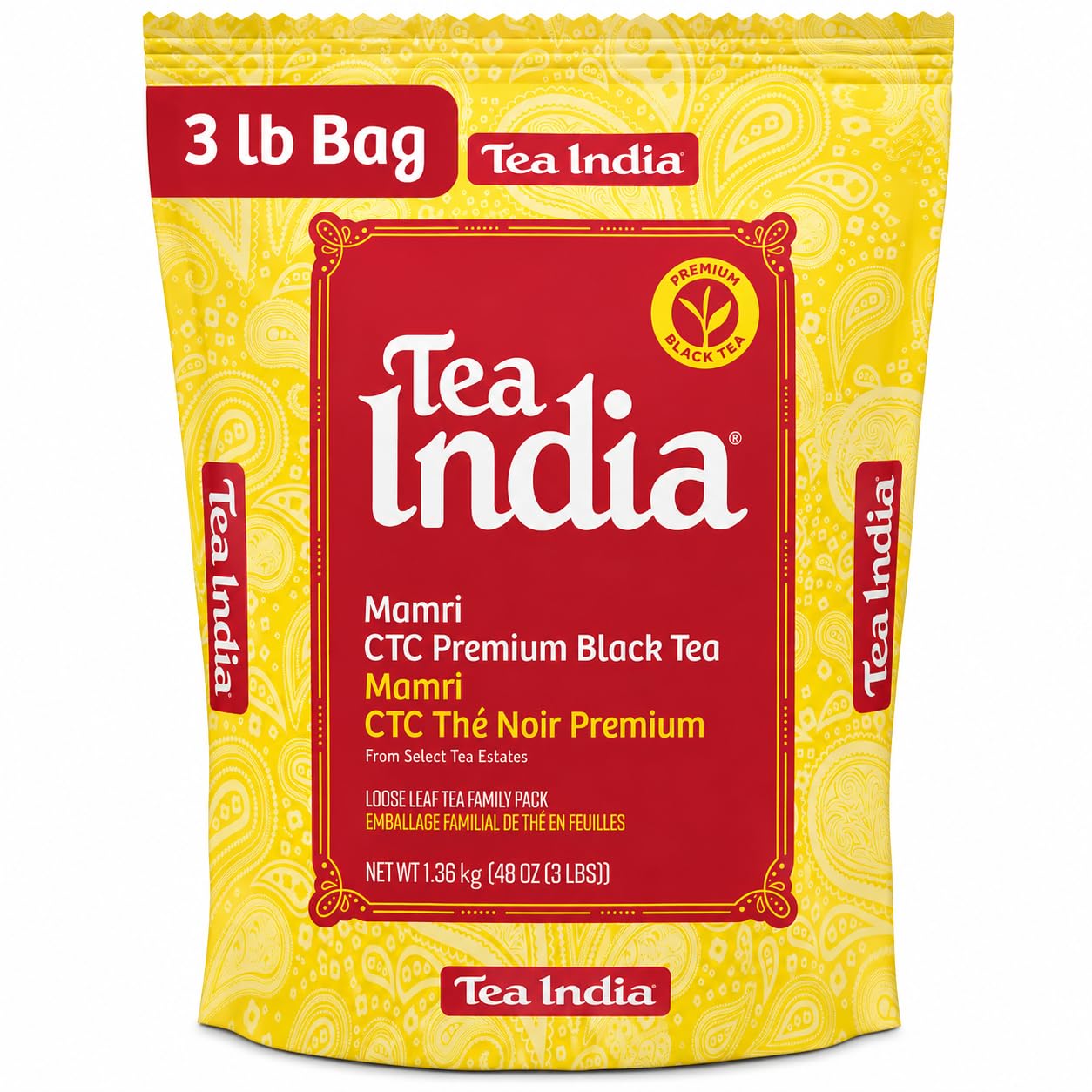
Bulk Assam black tea (CTC loose leaf, 3 lb)
Tea dyeing needs strong, generous baths, and buying loose black tea in bulk is by far the cheapest way to get them without raiding your teabag box. Three pounds of CTC Assam steeps dark and fast, giving deep tan tones, and it lasts for project after project with plenty spare for actual drinking.

Unbleached cotton muslin (10 yards)
Natural, unbleached cotton is the ideal tea-dye canvas: it takes the tint smoothly and evenly, where synthetics simply will not hold the colour at all. Ten yards of this medium-weight muslin goes a very long way for napkins, backdrops, wraps, and all the practice pieces you will want while dialling in your shade.

Retayne colour fixative (16 oz)
Optional, but if you want a tea-dyed piece to survive regular washing rather than gently fading, this fixative helps set the colour into cotton, linen, and rayon far more permanently. Worth keeping on the shelf if you are dyeing something you will actually launder often, like napkins, a table runner, or a tote bag.
Making the colour last
Tea colours fabric with tannin, a natural dye that isn't very colourfast, so a tea-dyed piece will gently fade with washing — which is part of its soft, evolving charm. To hold it longer: add salt or vinegar to the bath, wash the item rarely and by hand in cool water, and keep it out of harsh sun. If you need a truly permanent result, a commercial dye fixative helps, but for most projects the gentle patina is the point.
What to tea-dye
Antique white cotton and linen, lace and doilies, plain tote bags and t-shirts, costume and quilting fabric, and even paper for a vintage look. It's especially handy for matching new fabric to old — tea-stain a fresh patch until it blends with a well-loved piece.
Troubleshooting
- Blotchy result? Pre-wash the fabric and keep it moving in the bath — uneven contact causes patches.
- Too light? Use more tea bags, steep stronger, and soak longer; remember it dries lighter.
- Colour won't take at all? The fabric is probably synthetic — tea only dyes natural fibres.
- Smells of tea? Rinse thoroughly and air-dry; the scent fades.
Frequently asked questions
Does tea dye wash out? It fades gradually rather than washing straight out. Set it with a vinegar rinse and wash rarely in cool water to keep it longer.
Can you dye clothes with tea? Yes — natural-fibre clothes take a soft tan tint. Synthetics won't hold it.
What fabric works best for tea dyeing? Cotton, linen, and silk. The lighter the starting colour, the more the tint shows.
Is tea dye permanent? No — it's a gentle, fading stain rather than a permanent dye, which gives it that lived-in, vintage look.
Steep and see
Tea dyeing is the kind of project you can start on a whim with what's already in the cupboard. Brew a strong pot, drop in a plain white scrap, and watch it turn the colour of old letters — then you'll be eyeing every tired white in the house.
Tried it? Show us your softest tea-dyed find in the comments at ecoxee.com.
Keep reading: Natural Fall Craft Ideas for Adults, Scrap Yarn Crafts for Adults, and Zero-Waste Lip Balm: How to Make Your Own.