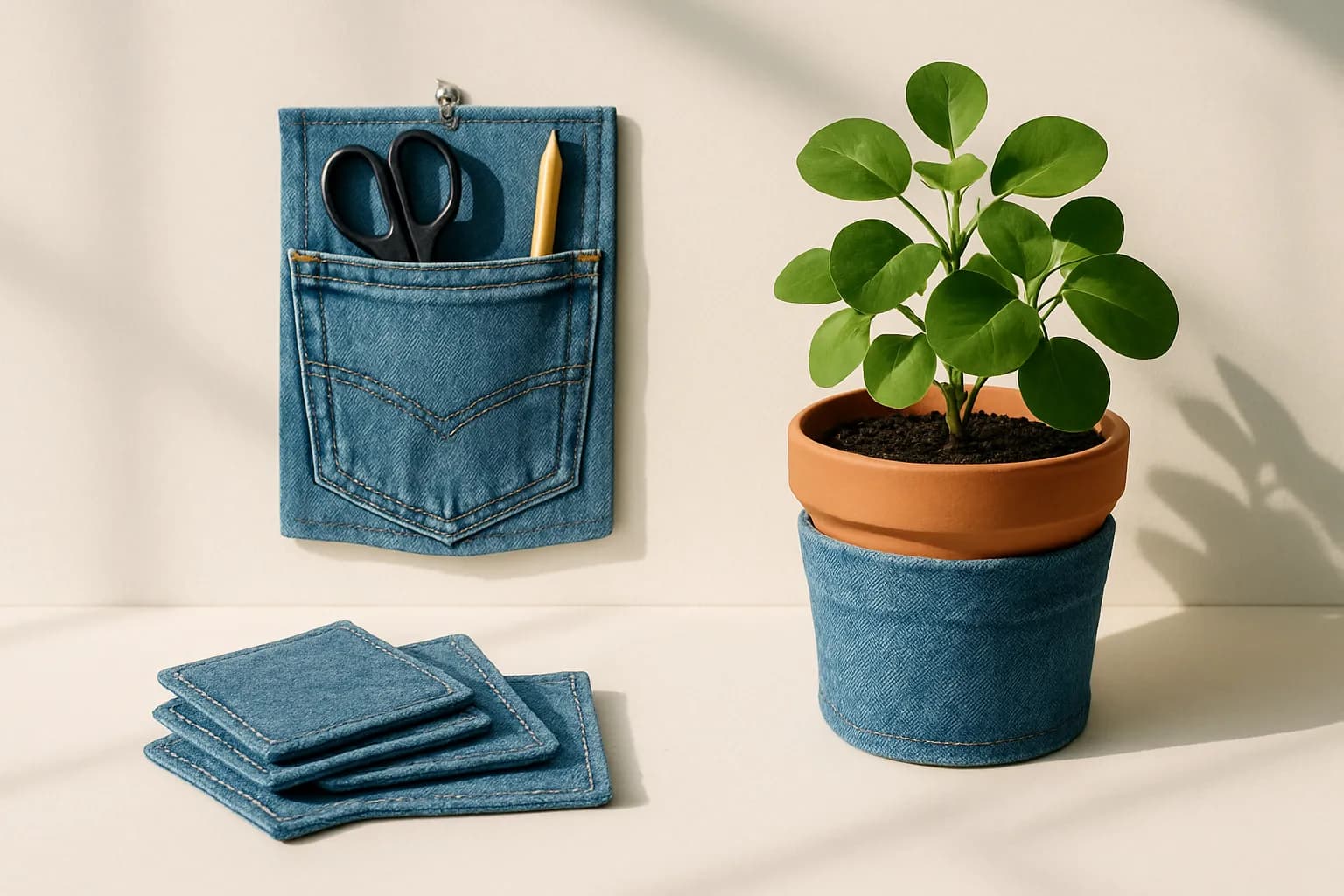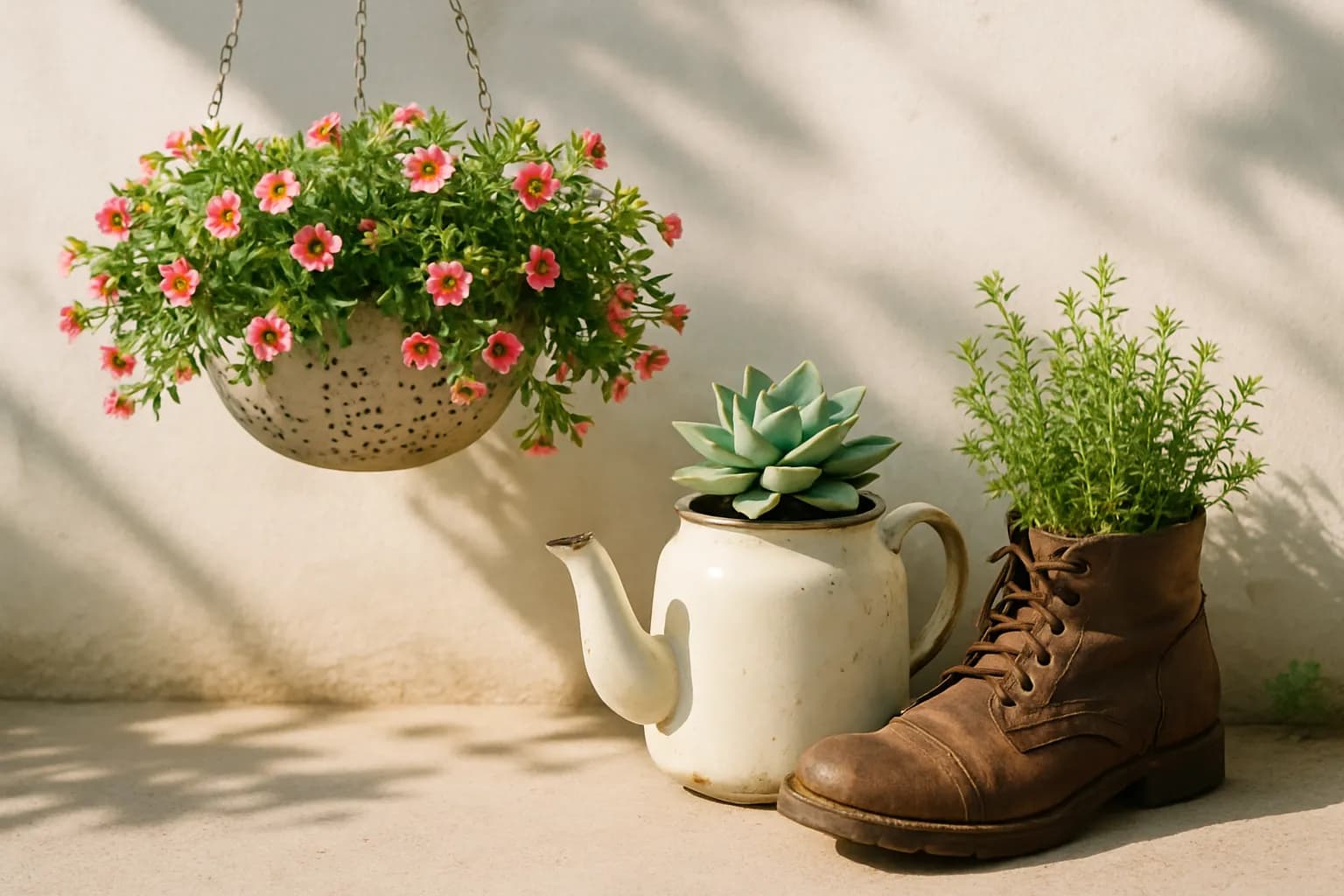
Almost anything that holds soil can become a planter — and the more unexpected the container, the more charming the result. A leaky colander, a chipped teapot, an old boot, a wooden drawer: all of them upcycle into plant homes that cost nothing and look boutique.
Here's how to turn everyday household items into planters, plus the one thing you must get right: drainage.
The one rule: drainage
Roots rot in standing water, so every planter needs a way for water to escape. Either drill or punch holes in the base, or — for items you can't pierce — add a deep layer of pebbles (and a little charcoal) and water sparingly.
How to prep any container
- Check it never held anything toxic, and make sure it's sturdy.
- Add drainage — drill holes with the right bit for metal, plastic, or ceramic, or use the pebble-layer method.
- Line if needed — porous baskets and wood with plastic (poke a drainage hole), rusty metal with a liner.
- Fill and plant with potting mix, then site it to suit the plant.
Unexpected planters to try
- A colander — built-in drainage makes it the perfect instant hanging basket.
- Teapots and teacups, for a single succulent.
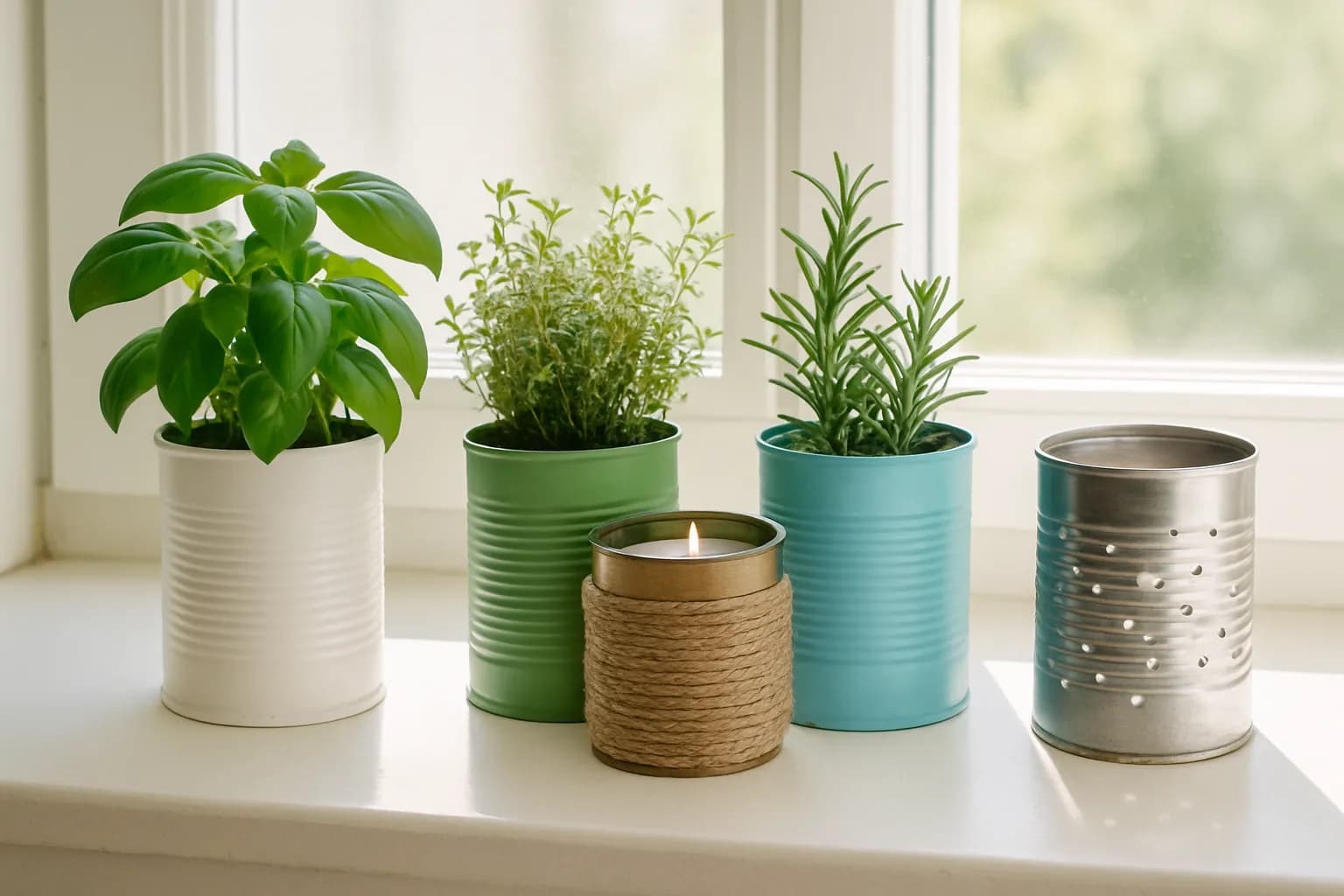
- Tin cans, prepped safely.
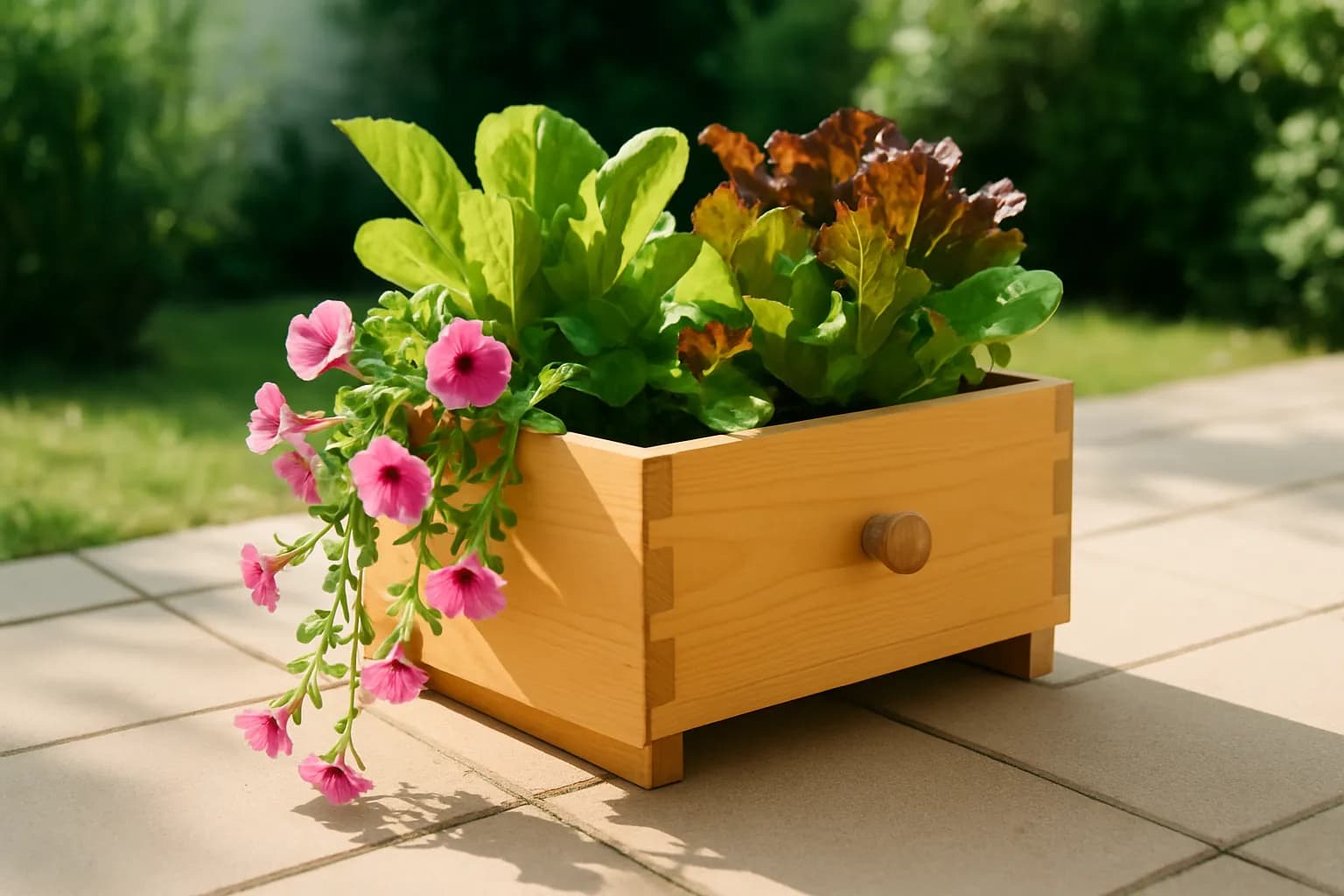
- Old boots or wellies, drawers, watering cans, buckets, kettles, and baskets (lined).
- Wooden crates — see crate shelves and boxes.
Match the container to the plant
Shallow containers (colanders, drawers) suit succulents, herbs, and salad; deep ones (boots, buckets) suit flowers and veg; and indoor pieces make lovely houseplant homes. It all pairs beautifully with a tiny herb garden.
Planted something unexpected? Share it in the comments at ecoxee.com — the odder the container, the better.
Keep reading: Wine Cork Crafts: Creative Ideas Using Saved Corks, Creative Uses for Old Picture Frames, and How to Make Shelves From Wooden Crates.